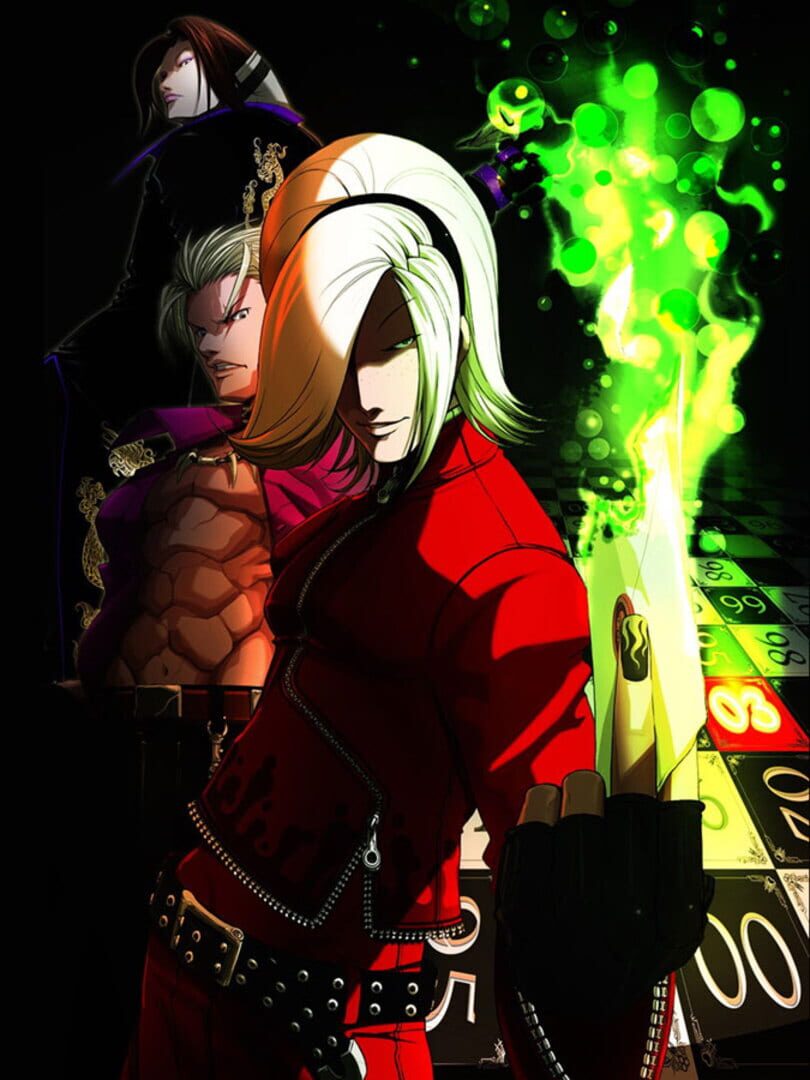

The King of Fighters 2003 is the tenth game in The King of Fighters series. It is the last game of the series to be based on the Neo-Geo MVS hardware, and the first game in the series that was developed and published under the SNK Playmore custody. It is also the first chapter of the "Tales of Ash Saga", the third story arc of the series, and the last game of the series with the year's release in the title.
The game revolves around The King of Fighters, an elite fighting competition. In this competition, Rugal is defeated and the Orochi are sealed away. The tournament at the centre of the game is sponsored by an unknown patron, whose identity becomes a matter of public interest in the country. Perhaps as a result of this, it attracts a large number of contestants. With the inception of the new "multi-shift" rule in this KOF tournament, wherein competitors can freely tag off during battles, the competition becomes a 'hot topic' and provokes widespread discussion. It also leads to a speedy execution of the match with unified team strategies. In preparation for the tournaments, stadiums with the capacity to hold tens of thousands of people are procured from cities across the world and established in city centres. Schedules are completed and spectators move from one location to another to watch the preliminary matches. To create the atmosphere of a true street fight, competitions are broadcast live on giant screens.
Fighting / Arcade / Action / Fantasy
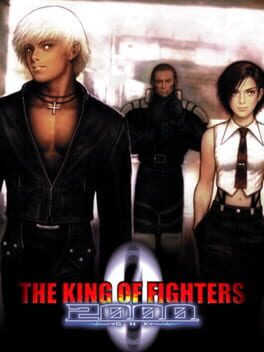
The final King of Fighters game released by SNK in its original state, The King of Fighters 2000 expands on the story and gameplay presented in The King of Fighters '99. This year's tournament is sponsored by the Ikari Warriors in an attempt to discover more about the NESTS organization, and to derail the plans of potential NESTS agents K' and Maxima. Not everything is as straight-forward as it usually is, however, and even the Ikari Warriors themselves are at risk of being betrayed from within by the end of the tournament. The King of Fighters 2000 features an improved Striker call system with the Active Striker System, which allows the player to call his Striker character in any situation, whether he is attacking or being attacked by the opponent, allowing him to use their strikers in combos. Moreover, in addition to the numerous nostalgic SNK characters returning as Another and Maniac Strikers, KOF 2000 welcomes newcomers such as Ramon, Vanessa, Seth, Lin, Hinako Shijo, and Kula Diamond.

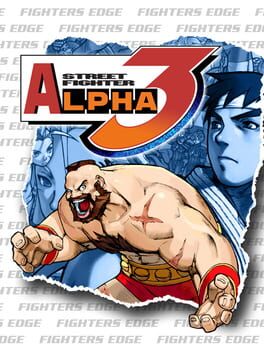
The PlayStation port of Street Fighter Alpha 3 has added new characters to the roster, including Juli, Juni, Balrog, Dee Jay, Fei Long and T. Hawk. They come with new portraits and their own scenarios. Guile, Evil Ryu and Shin Akuma have also been added as secret characters that can be unlocked through World Tour mode, a mode that allows players to strengthen and customize the fighting style of their chosen character while traveling the world.

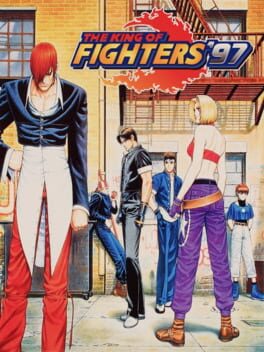
The King of Fighters '97 is a 1997 fighting game produced by SNK for the Neo Geo arcade and home console. It is the fourth game in The King of Fighters series. It was ported to the Neo-Geo CD, as well as the PlayStation and the Sega Saturn in Japan only.

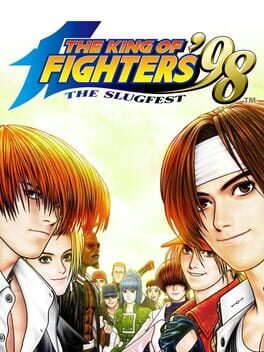
The All-Star dream battle is here at last: It's King of Fighters '98! Here come 38 of your favorite characters from the King of Fighters series. Your favorite characters and teams are back! Filled with new surprises like the Roulette Team Edit and Advantage System, King '98 will pop your cork with unrelenting excitement! The King of Fighters '98 is the fifth game in The King of Fighters series by SNK.

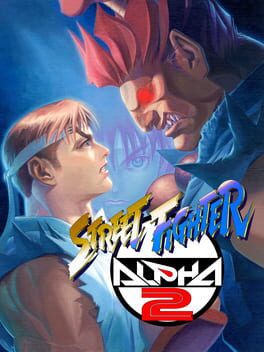
The PlayStation port of Street Fighter Alpha 2 features an arranged soundtrack and Shin Akuma as a selectable character via a secret code.

Bloody Roar, known as Bloody Roar: Hyper Beast Duel in Europe and Japan, is a fighting video game originally developed by Raizing (now Eighting) as an arcade game. It was later adapted for the PlayStation by Hudson Soft and published by Sony Computer Entertainment for the PlayStation. The arcade version was released on July 7, 1997 and was titled Beastorizer in North America. The PlayStation version was released in Japan on November 6, 1997, in North America (under the title Bloody Roar) on October 31, 1997 and in Europe on March 1998. Bloody Roar is the first game in the Bloody Roar video game series and was followed by four sequels on multiple platforms. The game's story centers on a group of warriors known as "zoanthropes", who have the power to transform into half-human half-animal "Beasts", and the Tylon Corporation, and underground organization that seeks to use zoanthropes as mind-controlled weapons. The game received generally positive reviews from critics for its originality and graphics, while the audio received mixed opinions. The game's success resulted in its re-release for The Best range on October 14, 1999. The game was re-released on the PlayStation Network in North America on August 20, 2009.

Fighting / Arcade / Action / Historical
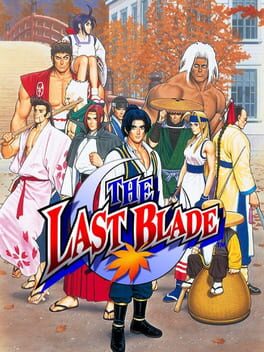
The Last Blade is a fighting game developed and published by SNK and released in arcades in 1997. It is set in a fictional version of late 19th-century Japan and features a roster of sword-wielding characters. The game uses a weapon-based combat system with selectable fighting styles that emphasize speed or power. Its presentation draws heavily on historical themes and traditional Japanese aesthetics.

Fighting / Arcade / Action / Historical
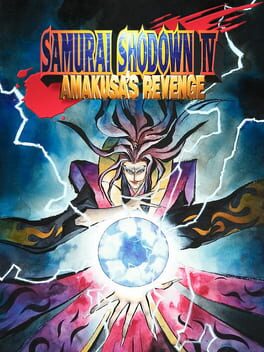
Samurai Shodown IV: Amakusa's Revenge, also known as Samurai Spirits: Amakusa's Descent in Japan, is the fourth in SNK's flagship Samurai Shodown series of fighting games. Chronologically, it is the second and final chapter of a story between Samurai Shodown and Samurai Shodown II, with Samurai Shodown III being the first chapter.