Bloody Roar, known as Bloody Roar: Hyper Beast Duel in Europe and Japan, is a fighting video game originally developed by Raizing (now Eighting) as an arcade game. It was later adapted for the PlayStation by Hudson Soft and published by Sony Computer Entertainment for the PlayStation. The arcade version was released on July 7, 1997 and was titled Beastorizer in North America. The PlayStation version was released in Japan on November 6, 1997, in North America (under the title Bloody Roar) on October 31, 1997 and in Europe on March 1998. Bloody Roar is the first game in the Bloody Roar video game series and was followed by four sequels on multiple platforms. The game's story centers on a group of warriors known as "zoanthropes", who have the power to transform into half-human half-animal "Beasts", and the Tylon Corporation, and underground organization that seeks to use zoanthropes as mind-controlled weapons. The game received generally positive reviews from critics for its originality and graphics, while the audio received mixed opinions. The game's success resulted in its re-release for The Best range on October 14, 1999. The game was re-released on the PlayStation Network in North America on August 20, 2009.
There are people known as Zoanthropes that have the ability to transform themselves into animal hybrids at their will. Tylon, a bio-corporation, experiments on Zoanthropes in an attempt to turn them into military weapons. The multinational organization uses its creations as advanced troops in global military invasions. Yugo, a wolf Zoanthrope, is trying to avenge his father who was previously killed in a war against Tylon. In his journey, he meets Gado, an old comrade in the arms of his father. Together they promise to destroy Tylon, liberate all the hostages, and put an end to Tylon's brutal experiments. However, It's not counting on Uriko, the secret weapon of Tylon. Uriko is a young girl who was brainwashed by the corporation and with the power to transform herself into a powerful Zoanthrope, the Chimera. The battle against Uriko has proven difficult but Yugo was not only supported by Gado but, also, Alice, a previous hostage of Tylon who knew Uriko before her brainwashing, and Mitsuko, Uriko's mother. As they teamed up, Yugo, Gado, Mitsuko, and Alice succeed to restore Uriko's conscience and freeing her. Following this victory, Gado annihilates the Tylon HQ and reveals to the world their experiment but also the existence of the Zoanthropes, introducing the humanity into a new era.
Fighting / Sport / Arcade / Action / Horror
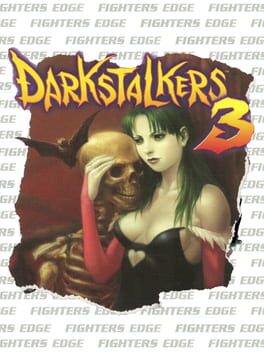
Darkstalkers 3 is the second sequel in the Darkstalkers series of fighting games by Capcom, originally released for the arcades in 1997. The game was originally planned to be released as Darkstalkers: Jedah's Damnation in the United States, but this title was only used in the arcade version. New characters added in this version are Donovan, Huitzil (Phobos in Japan), and Pyron, with hidden characters of Dark Talbain and Oboro Bishamon .

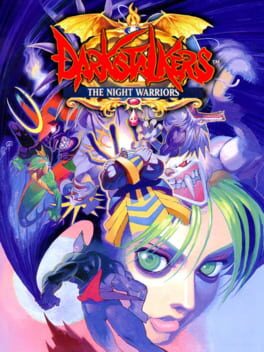
The DarkStalkers have been unleashed! All the creatures from your darkest dreams have materialized to wage an eternal war for domination of the night. The fate of all humanity rests on who wins this epic struggle. You control the power of your favorite supernatural monster to combine their special attacks and unique abilities in a head to head fighting challenge. It's a fierce and brutal conflict for supremacy in the monster hit of the year!

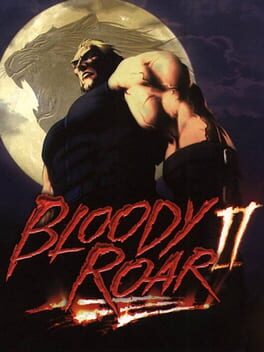
Bloody Roar 2, is a brawler arcade game developed by Eighting/Raizing in 1999. (Also known as Bloody Roar 2: Bringer of the New Age in Japan/Europe and Bloody Roar II: The New Breed in the United States.) Bloody Roar series differs from other fighting games as every character has a beast mode that can be used to use new attacks, recover some of lost health and generally to be faster and/or more powerful with their attacks.

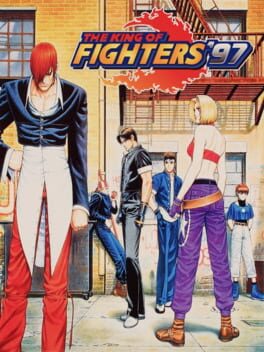
The King of Fighters '97 is a 1997 fighting game produced by SNK for the Neo Geo arcade and home console. It is the fourth game in The King of Fighters series. It was ported to the Neo-Geo CD, as well as the PlayStation and the Sega Saturn in Japan only.

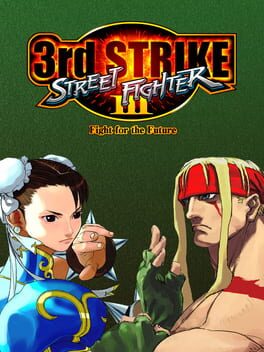
Street Fighter III: 3rd Strike is the second follow-up to Street Fighter III. The game increased the character roster by adding five new characters and also added further refinements to the previous game's play mechanics and rules. All the returning characters from the previous Street Fighter III games were given new stages, endings, and voice actors for certain characters, continuing the overall storyline from where the first two games left off.

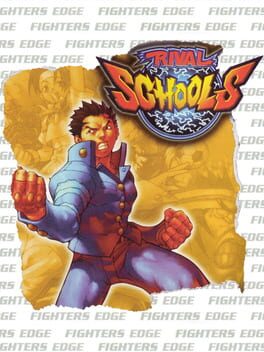
The main fighting game is best described as a polygonal Marvel vs. Capcom game, with some notable differences. Control wise, the game varies from other Capcom fighting games by only having four buttons (two punches and two kicks, which is closer to the SNK game format) rather than the standard six. A player chooses a team of two characters, and fights against another two character team. The actual fights, however, are one-on-one fights, with the partner only participating by being called in when a player has enough 'vigor' for a Team Up attack, done by pressing a punch and kick button of the same pressure. The Team Ups would be some kind of double team attack by the character and partner, or (for most female characters' Team Ups) would heal the main character or give them more vigor. After the end of a round, a player (win or lose) has a choice to fight the next round with the partner from the previous round, or to keep their main character in play. The 'vigor' meter (essentially a super meter) could go up to 9 levels, with Team Ups costing two levels and super moves from a single person all costing one level of vigor. Much like the Marvel vs. Capcom games, launchers can be done that allow air combos to be performed, with all characters having universal low and high launchers. The game also had a few defensive techniques. Tardy Counters acted much like Alpha Counters from Street Fighter Alpha, allowing a player to immediately counter-attack from a blocking position. However, the restrictions on Tardy Counters are very lax; any hard normal, special or super attack can be used to Tardy counter (Alpha counters are only limited to certain special moves for each character), and Tardy Counters do not cost any extra vigor to perform (Alpha Counters required at least a level of Super Combo gauge to do). Attack Cancels allowed a player to cancel an incoming hit simply by timing their own hit with the attack, which would cancel out both attacks (though it does not nullify the remaining hits of a multi-hit move). Also, one additional level of vigor is awarded.

Fighting / Adventure / Arcade / Action
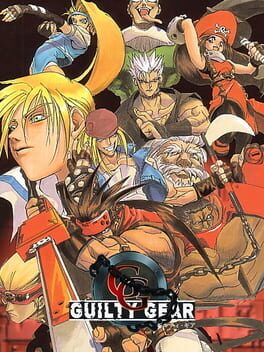
Guilty Gear is a 2D fighting game, in which you can play as one of 10 very different kind of characters. There is a selection of fighters from Holy Order knights, Armed Air Force soldiers, Mafia members and mad scientists. Each character has his/her own storyline that will be fully revealed during the final showdown. In battles, you can charge up for special attacks, as well as perform Deathblow moves, which would kill the opponent instantly. You can either choose to finish the Arcade mode, challenge your friends to a Versus battle, or either train your skills out in the Training mode.

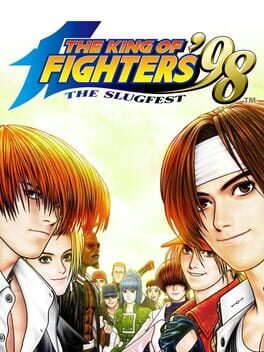
The All-Star dream battle is here at last: It's King of Fighters '98! Here come 38 of your favorite characters from the King of Fighters series. Your favorite characters and teams are back! Filled with new surprises like the Roulette Team Edit and Advantage System, King '98 will pop your cork with unrelenting excitement! The King of Fighters '98 is the fifth game in The King of Fighters series by SNK.