Guilty Gear is a 2D fighting game, in which you can play as one of 10 very different kind of characters. There is a selection of fighters from Holy Order knights, Armed Air Force soldiers, Mafia members and mad scientists. Each character has his/her own storyline that will be fully revealed during the final showdown. In battles, you can charge up for special attacks, as well as perform Deathblow moves, which would kill the opponent instantly. You can either choose to finish the Arcade mode, challenge your friends to a Versus battle, or either train your skills out in the Training mode.
In 22th century, the scientists, learning the ancient ways of magic, discovered a new technique that made it possible to create artificial beings by mixing the DNA of humans and animals. Those new creatures were called "gears". They had no will of their own and were destined to obey the humans forever. However, a gear named Justice was, for a mysterious reason, capable of disobeying the humans and making decisions of his own. He organized a rebellion of gears, that was later repressed by the knights of the Sacred Order, who put him in a prison. But recently, Justice broke free, and the Order organized a tournament to find out who is capable of hunting him down again. Among the main contestant is a man with unclear past, Sol Badguy, and his rival Ky Kiske, one of the most skilled knights of the order. The conditions of the tournament are, however, very strange. It is allowed to spill blood, and the first prize is also not very usual: any wish of the winner will be fulfilled...
Fighting / Sport / Arcade / Action / Horror
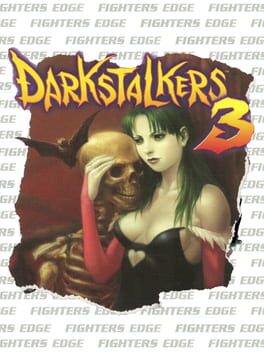
Darkstalkers 3 is the second sequel in the Darkstalkers series of fighting games by Capcom, originally released for the arcades in 1997. The game was originally planned to be released as Darkstalkers: Jedah's Damnation in the United States, but this title was only used in the arcade version. New characters added in this version are Donovan, Huitzil (Phobos in Japan), and Pyron, with hidden characters of Dark Talbain and Oboro Bishamon .

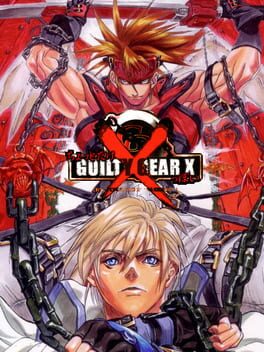
Guilty Gear X is the sequel to 1998's Guilty Gear, a 2D fighting game for the Sony PlayStation that became extremely popular in Japan. Featuring beautiful hand-drawn artwork and animation, as well as balanced, fun, high-energy gameplay, Guilty Gear X aspires to be the king of 2D fighters. The goal in Guilty Gear X is simple: get your opponent's Life Bar down to zero within the allotted time to win. Winning a round nets you a point; getting two points will win you the match. There are 14 different characters to choose from, each with their own personal style and moves. There might even be some hidden ones, too...

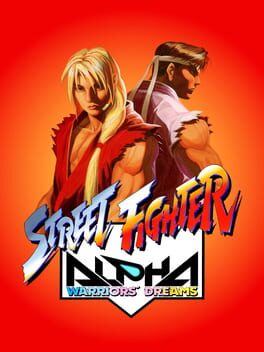
Street Fighter Alpha: Warriors' Dreams was the first all new Street Fighter game produced by Capcom since the release of Street Fighter II. It introduces several new features, expanding on the Super Combo system previously featured in Super Street Fighter II Turbo with graphics drawn in the same animated style Capcom employed in Darkstalkers. Street Fighter Alpha revamps the Super Combo system introduced in Super Street Fighter II Turbo by adding a three-level Super Combo gauge that fills in as the player performs regular and special moves.

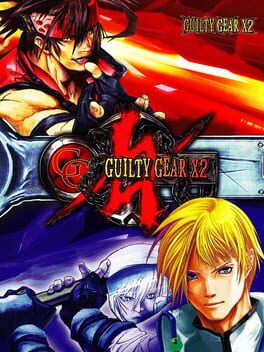
Guilty Gear X2, also known as Guilty Gear XX and subtitled The Midnight Carnival in Japan, is a fighting game developed by Arc System Works and published by Sammy Studios. The third installment of the Guilty Gear series, Guilty Gear X2 furthered the plot of the series, as well as introduced new characters and gameplay mechanics. A sequel to Guilty Gear X, it was first announced in January 2002, and was released on May 23, 2002, for the arcades, in Japan. It was later ported to the PlayStation 2 and published in North America and Europe.

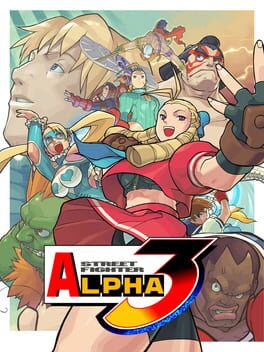
Street Fighter Alpha 3 is the third game in the Street Fighter Alpha series. It features a complete gameplay overhaul with the addition of three selectable fighting styles, new stages, over seven new and returning characters and an exclusive soundtrack. The game's illustrations, select screens, soundtrack and sound effects all have a similar style to the Final Fight series, unlike the previous games.

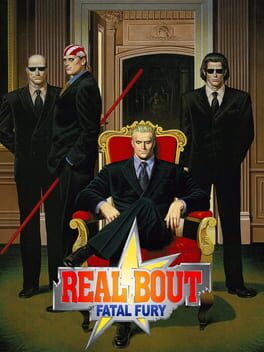
Real Bout changes the play controls from the previous Fatal Fury games, reducing the number of attack buttons from four to three: a standard Punch and Kick button, a "Strong Attack" button which can be either a stronger punch or kick attack, depending on the character. The game retains the three-plane "oversway" system from Fatal Fury 3, which features a main lane for fighting, with foreground and background planes used to avoid attacks or leap towards the opponent. A dedicated button is now used to make an "oversway" (or change plane) towards the background or foreground. Real Bout introduces a Power Gauge, which fills up as the player performs normal or special techniques against their opponent or defend themselves, similar to many super move gauges featured in other fighting games. The Power Gauge allows players to perform one of three types of Special Techniques, depending of the level of the Power Gauge. Real Bout also introduces stages with ring-outs, a gameplay feature previously introduced in 3D fighting games such as Virtua Fighter. If the player performs certain attacks on their opponent while next to the boundaries, the character will eventually destroy the barrier keeping the opponent in the ring and be able to knock them out of the stage for an easy win.

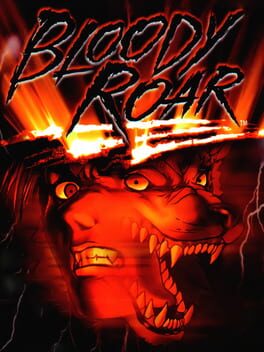
Bloody Roar, known as Bloody Roar: Hyper Beast Duel in Europe and Japan, is a fighting video game originally developed by Raizing (now Eighting) as an arcade game. It was later adapted for the PlayStation by Hudson Soft and published by Sony Computer Entertainment for the PlayStation. The arcade version was released on July 7, 1997 and was titled Beastorizer in North America. The PlayStation version was released in Japan on November 6, 1997, in North America (under the title Bloody Roar) on October 31, 1997 and in Europe on March 1998. Bloody Roar is the first game in the Bloody Roar video game series and was followed by four sequels on multiple platforms. The game's story centers on a group of warriors known as "zoanthropes", who have the power to transform into half-human half-animal "Beasts", and the Tylon Corporation, and underground organization that seeks to use zoanthropes as mind-controlled weapons. The game received generally positive reviews from critics for its originality and graphics, while the audio received mixed opinions. The game's success resulted in its re-release for The Best range on October 14, 1999. The game was re-released on the PlayStation Network in North America on August 20, 2009.

Platform / Role-playing (RPG) / Adventure / Action / Horror
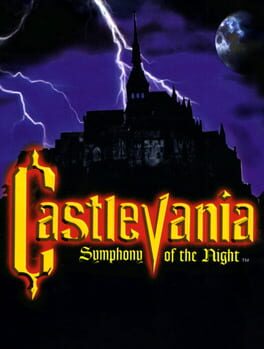
Having been awoken from his eternal slumber by the reappearance of Castlevania, Alucard must once again face the evil minions of darkness. Use your vampiric powers, along with weapons, potions, and other magical relics to change the tide of battle. A mixture of platform and role-playing action with many hidden areas and secrets. Can you discover them all?