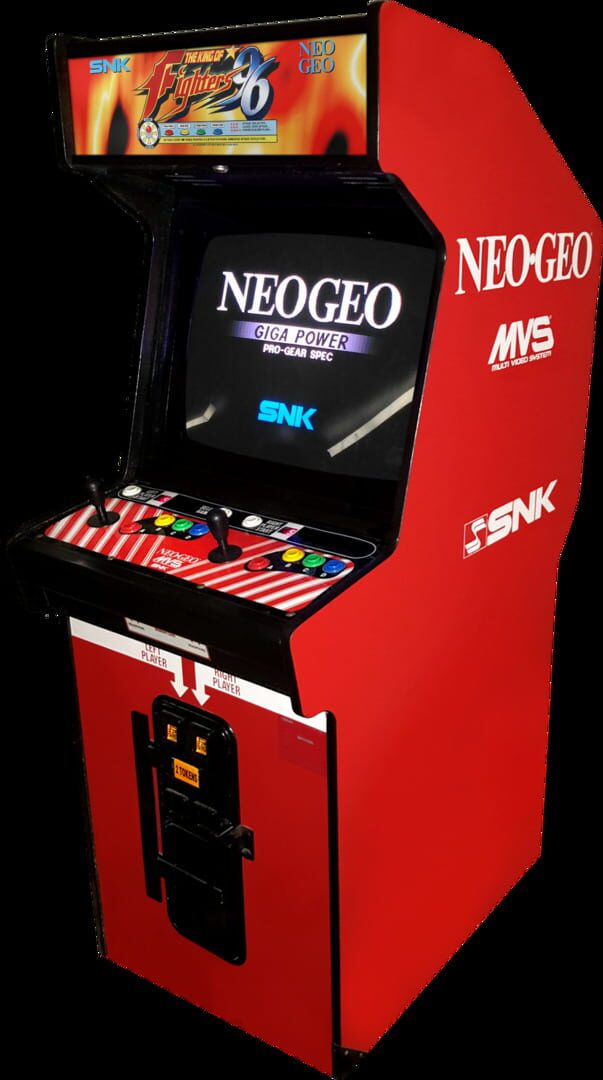
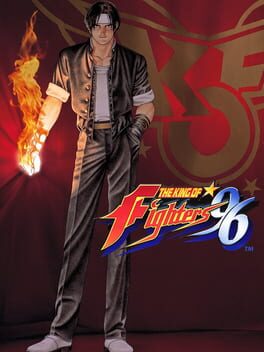

The King of Fighters '96 is a 1996 fighting game. It is the third game in The King of Fighters series, following The King of Fighters '95. SNK's flagship series returns for another year. Many of the changes in this year's KOF release come in the form of improved graphics, sound effects, music and totally redone character sprites. The gameplay of the system has been altered with the addition of "Rush" multi-hit combos and new moves for practically every character. The storyline of the series receives heavy focus in this release with the Orochi Saga swinging into high-gear. The King of Fighters '96 has 27 regular characters plus 2 boss characters (who can be unlocked with the use of a code). Newcomers to the tournament include Mr. Big from the Art of Fighting series, the bosses from Fatal Fury (Wolfgang Krauser and Geese Howard), and completely original characters like Leona Heidern, Mature and Vice. Other features carried over from the previous year include the ability to choose between the default "Team Fighting" mode or the traditional "Single Fighter" style of gameplay, plus the "Versus" and "Survival" gameplay modes.
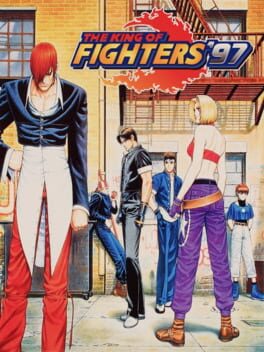
The King of Fighters '97 is a 1997 fighting game produced by SNK for the Neo Geo arcade and home console. It is the fourth game in The King of Fighters series. It was ported to the Neo-Geo CD, as well as the PlayStation and the Sega Saturn in Japan only.

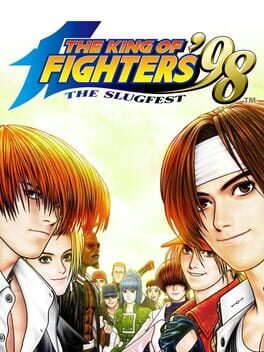
The All-Star dream battle is here at last: It's King of Fighters '98! Here come 38 of your favorite characters from the King of Fighters series. Your favorite characters and teams are back! Filled with new surprises like the Roulette Team Edit and Advantage System, King '98 will pop your cork with unrelenting excitement! The King of Fighters '98 is the fifth game in The King of Fighters series by SNK.

The King of Fighters '95 is a 1995 fighting game produced by SNK for the Neo Geo arcade and home console. It is the sequel to The King of Fighters '94 and the second game in The King of Fighters series. It is also the first game in the series to be ported to other home consoles besides the Neo Geo AES and Neo-Geo CD, with versions released for the PlayStation, Sega Saturn and Game Boy. It was also rereleased in The King of Fighters Collection: The Orochi Saga in 2008 for the PlayStation 2, PlayStation Portable and Wii. The King of Fighters '95 introduces Kyo Kusanagi's rival Iori Yagami, and firmly places Kyo as the main character for the rest of the series. The gameplay of The King of Fighters '95 is essentially unchanged from the previous title, though it does introduce the "team edit" concept which would remain as a standard feature of the series. Using the "team edit" feature, it is possible to create a totally customized team using any of the available fighters, or use one of the default teams if you wish.

The main fighting game is best described as a polygonal Marvel vs. Capcom game, with some notable differences. Control wise, the game varies from other Capcom fighting games by only having four buttons (two punches and two kicks, which is closer to the SNK game format) rather than the standard six. A player chooses a team of two characters, and fights against another two character team. The actual fights, however, are one-on-one fights, with the partner only participating by being called in when a player has enough 'vigor' for a Team Up attack, done by pressing a punch and kick button of the same pressure. The Team Ups would be some kind of double team attack by the character and partner, or (for most female characters' Team Ups) would heal the main character or give them more vigor. After the end of a round, a player (win or lose) has a choice to fight the next round with the partner from the previous round, or to keep their main character in play. The 'vigor' meter (essentially a super meter) could go up to 9 levels, with Team Ups costing two levels and super moves from a single person all costing one level of vigor. Much like the Marvel vs. Capcom games, launchers can be done that allow air combos to be performed, with all characters having universal low and high launchers. The game also had a few defensive techniques. Tardy Counters acted much like Alpha Counters from Street Fighter Alpha, allowing a player to immediately counter-attack from a blocking position. However, the restrictions on Tardy Counters are very lax; any hard normal, special or super attack can be used to Tardy counter (Alpha counters are only limited to certain special moves for each character), and Tardy Counters do not cost any extra vigor to perform (Alpha Counters required at least a level of Super Combo gauge to do). Attack Cancels allowed a player to cancel an incoming hit simply by timing their own hit with the attack, which would cancel out both attacks (though it does not nullify the remaining hits of a multi-hit move). Also, one additional level of vigor is awarded.

The DarkStalkers have been unleashed! All the creatures from your darkest dreams have materialized to wage an eternal war for domination of the night. The fate of all humanity rests on who wins this epic struggle. You control the power of your favorite supernatural monster to combine their special attacks and unique abilities in a head to head fighting challenge. It's a fierce and brutal conflict for supremacy in the monster hit of the year!

Real Bout changes the play controls from the previous Fatal Fury games, reducing the number of attack buttons from four to three: a standard Punch and Kick button, a "Strong Attack" button which can be either a stronger punch or kick attack, depending on the character. The game retains the three-plane "oversway" system from Fatal Fury 3, which features a main lane for fighting, with foreground and background planes used to avoid attacks or leap towards the opponent. A dedicated button is now used to make an "oversway" (or change plane) towards the background or foreground. Real Bout introduces a Power Gauge, which fills up as the player performs normal or special techniques against their opponent or defend themselves, similar to many super move gauges featured in other fighting games. The Power Gauge allows players to perform one of three types of Special Techniques, depending of the level of the Power Gauge. Real Bout also introduces stages with ring-outs, a gameplay feature previously introduced in 3D fighting games such as Virtua Fighter. If the player performs certain attacks on their opponent while next to the boundaries, the character will eventually destroy the barrier keeping the opponent in the ring and be able to knock them out of the stage for an easy win.

Fighting / Arcade / Action / Fantasy
PS1 port of "Fatal Fury: Wild Ambition" It was ported to the Sony PlayStation on June 24 in Japan and November 30 in North America, making it the only Hyper Neo Geo 64 game to receive a port for a home system. The game was re-released as a downloadable game for PlayStation 3 and PlayStation Portable via the PlayStation Network in Japan on April 25, 2007.

Fighting / Role-playing (RPG) / Adventure / Action
The King of Fighters: Kyo is a visual novel on the The King of Fighters series developed by Yumekobo and released by SNK on the PlayStation on August 27, 1998. The art for this game was produced by the same illustrator of the manga, Masato Natsumoto. It was re-released on PSN as a PSOne Classics on June 28, 2007. An unofficial Spanish translation was released in 2013.