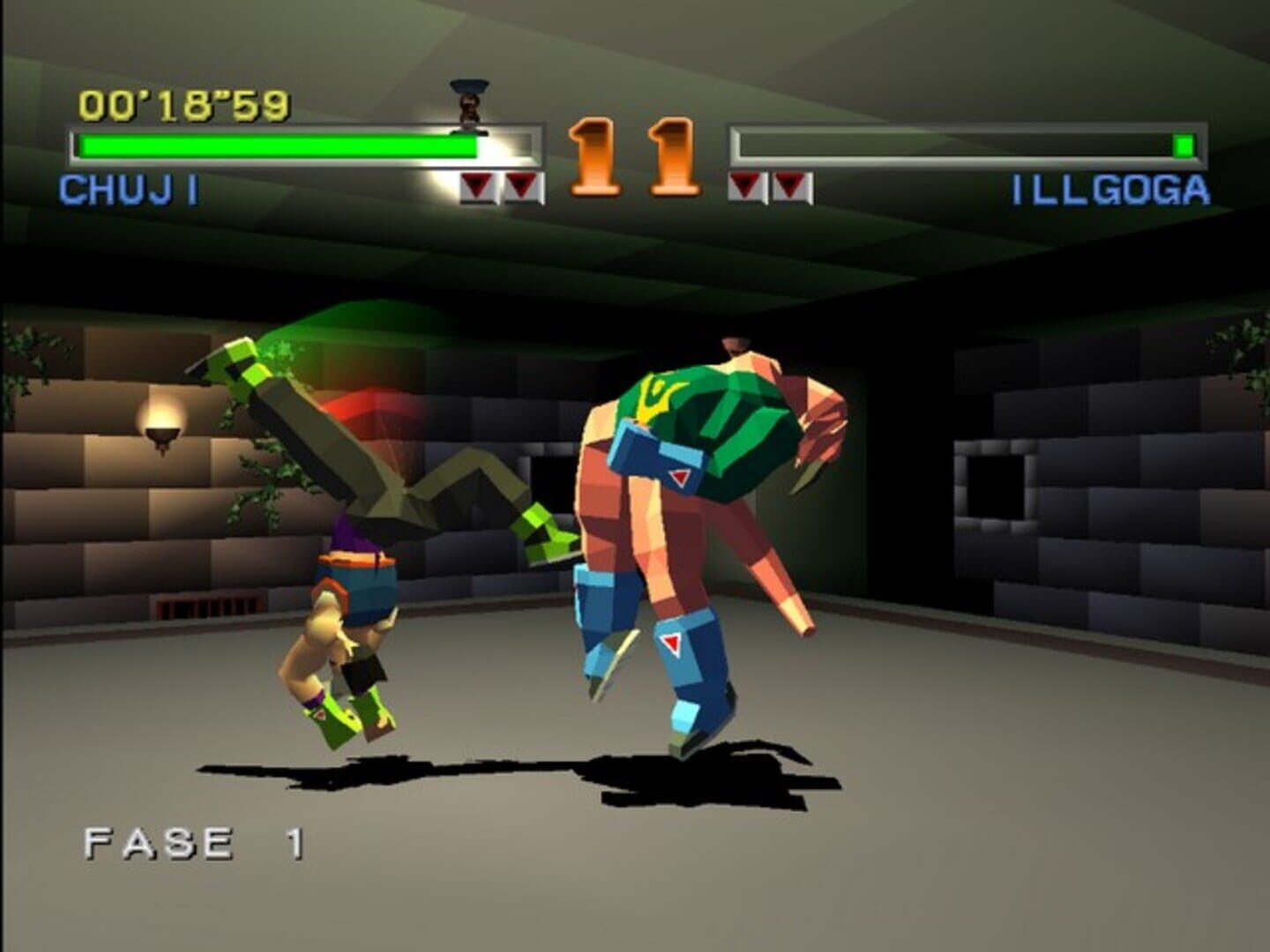
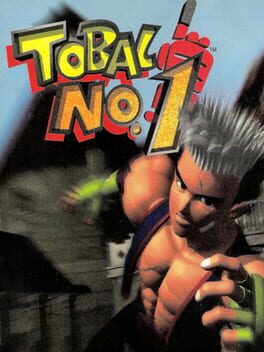
Fighting game with a unique quest mode, from Square. The publisher enlisted the help of Seiichi Ishii, who had previously worked on both Tekken and Virtua Fighter. On these strengths, Square helped Ishii start his own development company, Dream Factory, and Tobal No.1 is the first game from the developer. The game offers some 3D movement for more behind-the-back attacks that fighting games released around the same time. Tobal also introduced an interesting grapple move, which allows you to grab your opponent and, depending on your button execution, throw them in a myriad of ways. The game features Gouraud-shaded players displayed in hi-res mode (640x480) and shipped with an included Final Fantasy VII demo.

Fighting / Adventure / Arcade / Action
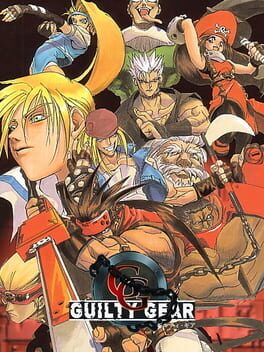
Guilty Gear is a 2D fighting game, in which you can play as one of 10 very different kind of characters. There is a selection of fighters from Holy Order knights, Armed Air Force soldiers, Mafia members and mad scientists. Each character has his/her own storyline that will be fully revealed during the final showdown. In battles, you can charge up for special attacks, as well as perform Deathblow moves, which would kill the opponent instantly. You can either choose to finish the Arcade mode, challenge your friends to a Versus battle, or either train your skills out in the Training mode.

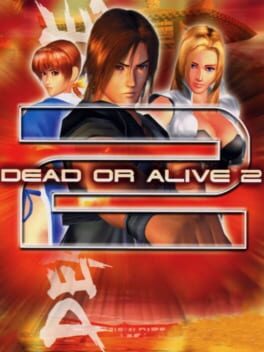
Dead or Alive 2 is a fighting game in the Dead or Alive series. The gameplay of DOA2, and all subsequent Dead or Alive games, borrows heavily from the Virtua Fighter series, but makes some key changes that drastically changes the way Dead or Alive is played in comparison to Virtua Fighter. In DOA2, the basis of the entire fighting system is the circular relationship between three types of moves: blows, throws, and holds.The other defining feature of DOA2, aside from blows/throws/holds, is its stun system. In DOA2 many attacks upon hitting will inflict a stun on the opponent. While stunned, the opponent cannot attack, and cannot guard, but they can hold. If the attacker lands a non-knockdown, non-launching attack while the opponent is stunned, the opponent will be re-stunned in a new way, depending on what attack was landed. A major difference between DOA2 and other fighters was in the safety and non-punishability of attacks, both upon hitting and upon being blocked. Most blows in DOA2 can be punished on hit and block by each character's faster throws, making blow-based offense very risky. In addition to the normal rules of juggling, each character also fits into a specific weight category, which affects how the character responds to being launched and being juggled. In DOA2, fights can occur on either water or ice; when a character is on such a surface, all non-knockdown, non-launching attacks will induce a stun on any successful hit. Walls and falls in the middle of stages are everywhere in the game. Many stages are also multi-tiered: to get to other areas of the stage, one character must be knocked off a ledge and fall into the next area. These falls deal usually fairly high damage, but cannot knock the opponent out. Other notable features included introducing CG cutscenes in line with the plot, replacing the original "Danger Zone" areas in stages with fully interactive ones, allowing players to juggle each other into walls, propelling characters from landmarks for more damage.
Fighting / Hack and slash/Beat 'em up / Adventure / Action
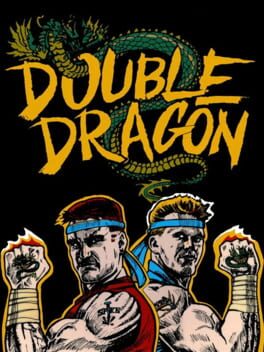
Double Dragon is a 1987 beat 'em up video game developed by Technōs Japan and distributed by Taito for arcades across Asia, North America and Europe. It is the first title in the Double Dragon franchise. The player character has a repertoire of martial arts techniques which they can perform using the joystick and three action buttons (kick, jump, and punch) individually or in combination. Techniques range from basic punches and kicks to more elaborate manoeuvres like hair-grabbing moves and elbow strikes. When playing with another player, one can assist the other by grabbing their partner's opponent from behind. Caution should be taken, though, as some enemies can do the same thing to the players. The player begins the game with a certain number of extra lives and a life gauge which depletes as the player takes hits. If the life gauge runs out or the time limit reaches zero, the player will lose a life. There is a small variety of enemy characters that the player will face through the course of the game. Certain enemies carry melee weapons, which can be knocked out of their hands and picked up to use against them. Available weapons include baseball bats, whips, throwing knives, and dynamite; in addition, rocks, oil drums, and boxes can be found in certain places. The game is divided into four stages or "missions," consisting of a city slum, a factory, the woods, and the gang's hideout. The game normally ends if a single player defeats the final boss alone. However, if two players complete the game together, they are forced to fight each other to determine who will win Marian's affections.

Fighting / Hack and slash/Beat 'em up / Arcade / Action / Fantasy
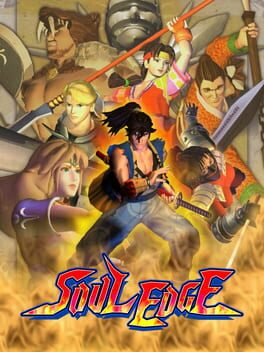
Soul Edge is a 3D arcade fighting game and the first in the Soul series, it is one of the first 3D fighting game in history that place a particular emphasis on the story of the fighters. Each character have their own weapon, allowing for a wide range of play styles. The slower, longer ranged characters try to deliver their heavy blows from a distance whereas the quicker, faster characters try to get in as close as possible and deliver quick-hitting attacks.

Fighting / Hack and slash/Beat 'em up / Adventure / Action
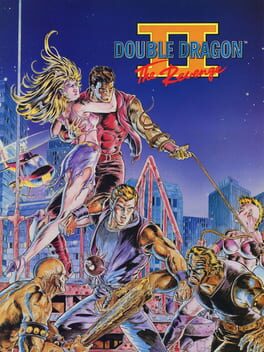
The original arcade version of "Double Dragon II" is essentially an improved version of the first game. The biggest change in the game's controls are in the replacement of the original's punch and kick buttons with two directional-based attack buttons (Left Attack and Right Attack) similar to Renegade. Pressing the attack button of the player's current direction will do a standard series of punches, while pressing the opposite attack button will perform a back kick. A few new moves are added as well, including a Hurricane Kick. Like in the original game, the arcade version of Double Dragon II is divided into four missions: a heliport, a lumber storehouse, a wheat field, and the new hideout of the boss. Each stage has its own boss character with his own theme. After defeating Willy (the final boss from the original game) in the fourth stage, the player will confront a double of their own character for the game's final battle. If two players reach the end together, then both will each to have to face their own clone for the final battle.

Fighting / Adventure / Arcade / Action
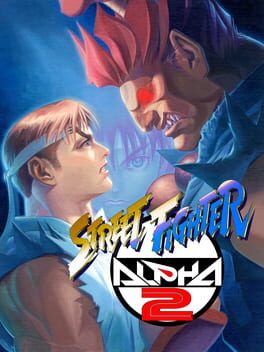
Street Fighter Alpha 2 is both a sequel and a remake to the previous year's Street Fighter Alpha: Warriors' Dreams. The game features a number of improvements over the original, such as new attacks, stages, endings, and gameplay features. New characters in this version include Gen, Rolento and Sakura. Dhalsim and Zangief also return to the fight with some new moves.

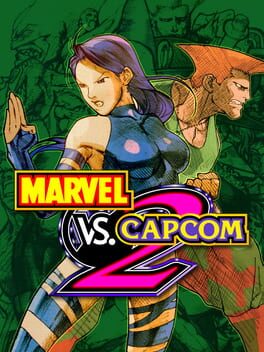
Marvel vs. Capcom 2: New Age of Heroes is the fourth game in the Marvel vs. Capcom series of fighting games. The player's controls were simplified to make the gameplay more accessible to the wider audience of casual players and the button configuration was trimmed down to 4 main buttons and 2 assist buttons. The game also features a different air-combo system and 3 on 3 tag, compared to the 2 on 2 tag from previous games in the series.

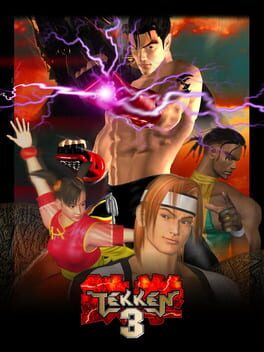
Tekken 3 is the third installment in the Tekken series. It maintains the same core fighting system as its predecessors but brings many improvements, such as significantly more detailed graphics and animations, fifteen new characters added to the game's roster, more modern music and faster gameplay.