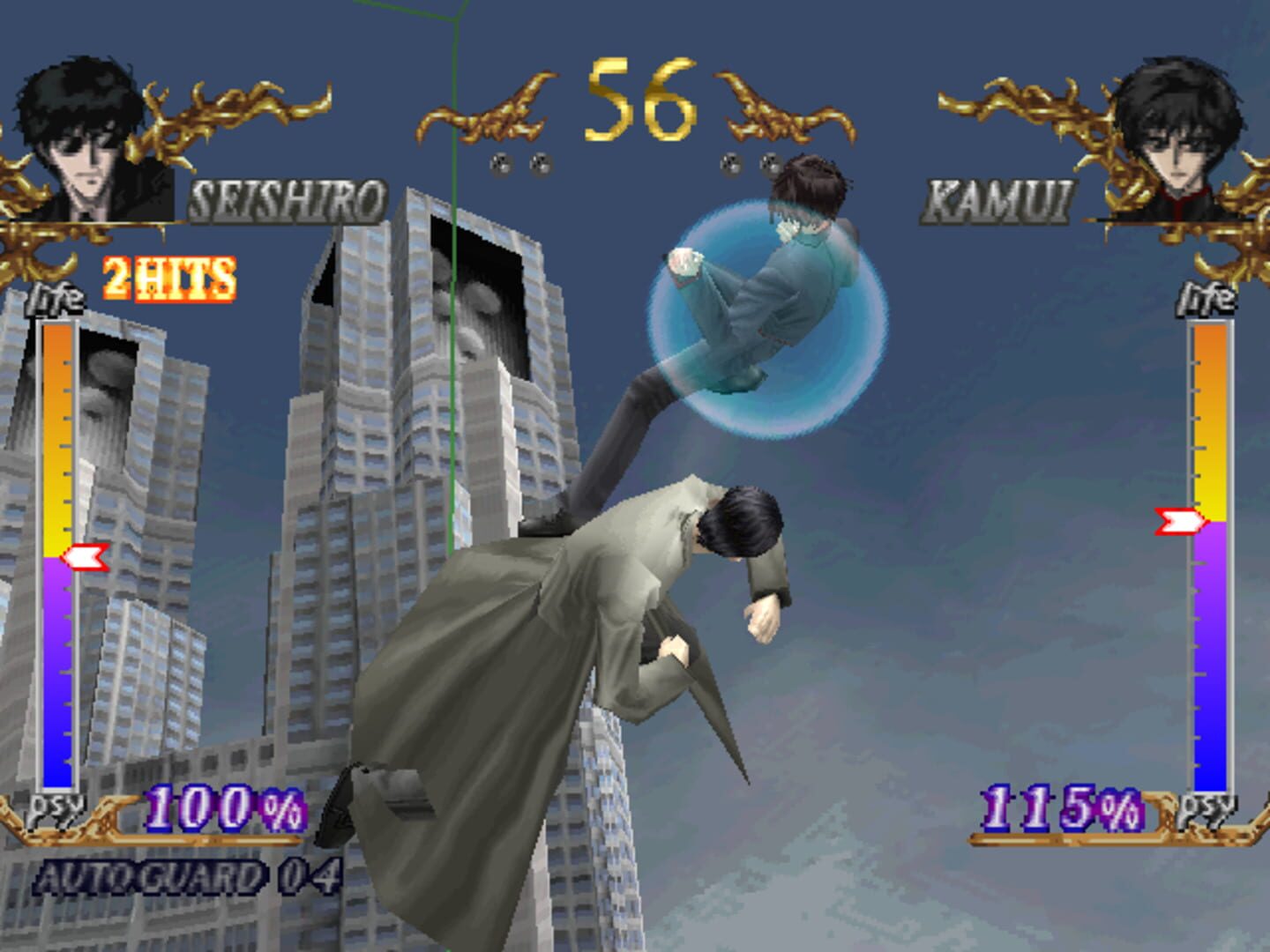
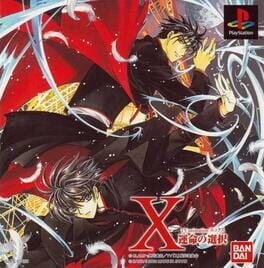

X: Unmei no Tatakai is an 3D fighting game that features a story mode, set in the television series continuity, and a versus mode, which allows players to compete against each other using any of the Dragons of Heaven or Earth. The game was not released outside Japan and it has two different endings.
X is Clamp's foray into apocalyptic fiction. It combines elements from various end of the world scenarios, both secular and religious, with its own mythos. The story takes place at the end of days, in the year 1999. The series follows Kamui Shiro, a young esper who returns home to Tokyo after a six-year absence to face his destiny as the one who will determine humanity's fate. The series is intended for a female audience, so X is drawn in the ornate style characteristic of shojo manga but with the emphasis on moral conflict and gruesome violence expected of seinen works. The story is influenced by the works of Go Nagai and Kyokutei Bakin. The events take place in 1999. The end of the world is fast approaching as superhuman individuals gather and take sides in the city of Tokyo, the battle site of Armageddon. The key player in this day of reckoning is Kamui Shiro, a young man who returns home to Tokyo after a six-year absence to protect those dearest to him, Kotori and Fuma Monou, and fulfill his mother's dying wish. Unbeknownst to the three friends, Kamui and Fuma are destined to fight each other during the end of the world. The first half of the series focuses on the gathering of the soldiers in the final battle and culminates with Kotori's death at the hands of her brother Fuma, sealing Kamui's choice as the protector of mankind and Fuma's place as his foil. The second half follows Kamui as he grows into his role as savior while the world moves along toward its inevitable destruction.
Fighting / Arcade / Action / Science fiction
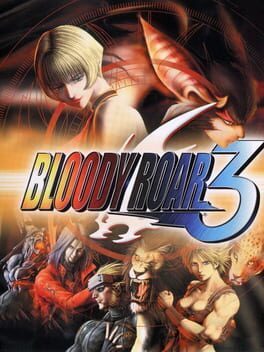
Bloody Roar 3 pits 12 outlandish combatants against each other in one of the most ambitious 3D fighting games to grace the PlayStation 2. Returning from Hudson's widely acclaimed PS1 titles are Stun, Long and Jenny, each of who brings a unique fighting skill to the arena. During each bout, players build an energy bar based on the number of successful kicks and punches they land on their opponent. As the bar fills, players can then morph their combatant into terrifying manimals from beasts such as lions and tigers to moles. The morph, in turn, unlocks a secondary control system specifically designed with each creature's combat moves and appearance in mind. In effect, this offers players two distinct combat types within one game.

Fighting / Strategy / Turn-based strategy (TBS) / Action
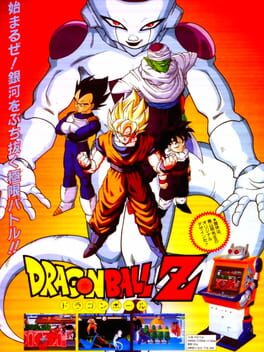
Dragon Ball Z is a fighting game designed and manufactured in Japan by Banpresto in 1993. The game's cabinet is shaped like a robot with markings similar to Goku's gi (suit). The game features large sprites and a color palete that is identical Toriyama's water color scheme in the manga. The environments are semi destructible as chunks of wall or ground could be destroyed. The controls are unique as most of the characters movements are flight related. The playable characters are Goku, Super Saiyan Goku, Gohan, Vegeta, Piccolo, Frieza, Captain Ginyu, Recoome, and Burter.

Fighting / Shooter / Arcade / Action / Science fiction
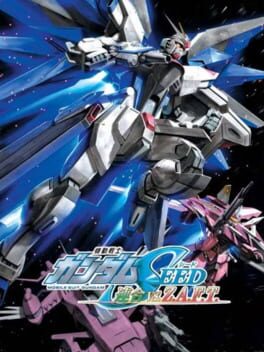
Gundam SEED: Rengou (Alliance) vs Z.A.F.T. is the fourth game of the "Gundam vs" series. It covers the plot of Gundam SEED.

Fighting / Role-playing (RPG) / Adventure / Action / Fantasy
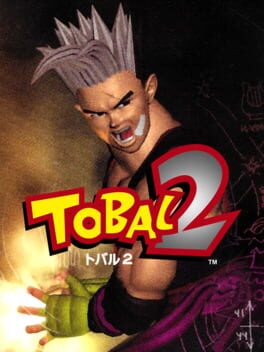
The fighting system in Tobal 2 is the same as in the previous game. The player can freely navigate 3D fighting arenas under the condition that he or she faces the opponent. High, medium, and low attacks can be executed using assigned buttons. As in Tobal No. 1, the grappling and blocking system offers the player a variety of offensive and defensive maneuvers. A new unblockable fireball attack has been added for each character. Tobal 2 was released on the same day as Sony's Dual Analog Controller in Japan, noted as the first game compatible with the peripheral. Graphically, the game features Gouraud shaded and higher-resolution character models compared to Tobal No. 1, but still runs at 60 frames per second.

Fighting / Arcade / Action / Science fiction
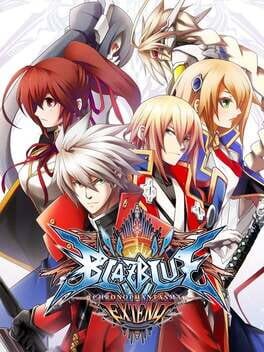
BlazBlue: Chrono Phantasma Extend (formerly dubbed as BlazBlue: Chrono Phantasma 2.0 in Arcade version) is a 2D fighting game and the enhanced version of BlazBlue: Chrono Phantasma. Chrono Phantasma Extend adds two additional characters: Lambda-11 and Celica A. Mercury. The console release introduced extra story modes, such as the beach scenario from the Playstation Vita version of Chrono Phantasma, a new story based on the BlazBlue: Remix Heart manga, and additional scenarios for certain characters such as Kokonoe, Kagura, and Bullet. For the localized version of Extend, Library Mode reintroduced from the Japanese release. The Playstation Vita version of Chrono Phantasma Extend also adds dual audio to the Story Mode, which was not present in the original Vita release.