Developed by Banpresto.
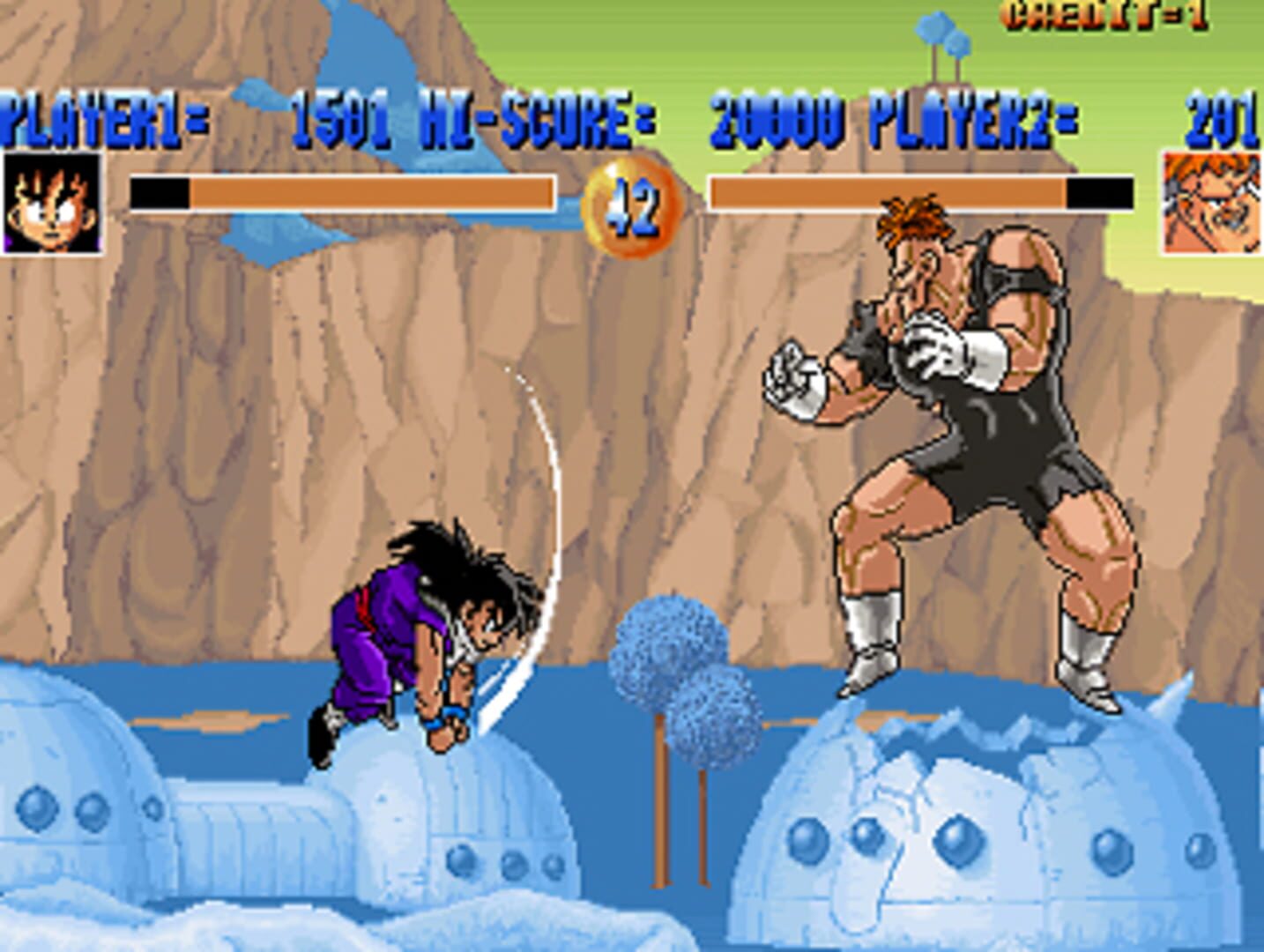
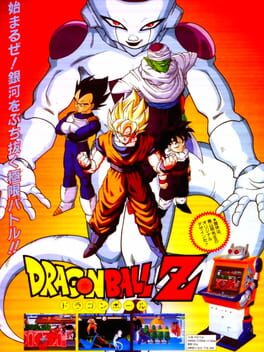
Dragon Ball Z is a fighting game designed and manufactured in Japan by Banpresto in 1993. The game's cabinet is shaped like a robot with markings similar to Goku's gi (suit). The game features large sprites and a color palete that is identical Toriyama's water color scheme in the manga. The environments are semi destructible as chunks of wall or ground could be destroyed. The controls are unique as most of the characters movements are flight related. The playable characters are Goku, Super Saiyan Goku, Gohan, Vegeta, Piccolo, Frieza, Captain Ginyu, Recoome, and Burter.

Fighting / Real Time Strategy (RTS) / Strategy / Action
The plot of "Dragon Ball Z: Shin Budokai - Another Road" is a brand-new story revolving around Majin Buu being released in Future Trunks' Alternate Timeline. Like most of the Dragon Ball movies, Another Road is considered a side story to the Dragon Ball series. Gameplay is very similar to the game's predecessor. The controls remain the same, but there are some additional functions that can be used during gameplay. The story mode gameplay features something similar to what was in the other PS2 games, such as flying around.

Role-playing (RPG) / Strategy / Turn-based strategy (TBS) / Action
You control five various Dragon Ball characters in this game: Son Goku, Son Gohan, Piccolo, Vegeta, and Future Trunks. The game is based on training your characters, and fighting with them. The outcomes of the fights are determined by the player choosing different cards he has at his disposal, and combining them to create various attacks.

Role-playing (RPG) / Strategy / Turn-based strategy (TBS) / Action / Fantasy
Bahamut Lagoon combines RPG mechanics with squad-based combat. Characters have HP, MP (SP for fighter characters), EXP, equipment, stats and class-specific, SP-draining special elemental abilities very much like traditional console RPGs. The player can explore his surroundings, talk to people and visit shops when not in battle, though to a limited degree as there is no world map and no way to leave the current area. The game's core is its turn-based battles fought on a 2d grid. Characters are assembled into parties of four and the player allowed a maximum of six parties, which are usually well outnumbered. The two opposing sides act in alternating turns so that each party can move once and/or attack once a turn. Attacks are divided into distant and close-up combat. In the former, a party uses a special ability (e.g. casting fireballs, throwing lightning, healing allies) of one of its members at a distance. The range and possible area of effect damage vary per ability. If the attacking party has two or more characters with the same ability, they join in the action to multiply its effectiveness. Distant combat results in less money and generally less damage, but the target cannot retaliate. Distant attacks can also affect the field; fire and ice ignite or extinguish forests and melt or freeze ice, etc. Close-up, each unit in two adjacent opposing parties can act once. Very much like Final Fantasy SNES combat, they can attack an enemy, use an item or a special ability (though these can't be combined and most only affect one target instead of all) or defend. Dragons are the player's ace in the hole. They have their own stats and gain experience like normal characters do. In battle, each party has a dragon attached to it and draws a large portion of its strength from that of its dragon: if a party's dragon is slain, the party will lose the ability to use special attacks and class-specific abilities for the remainder of the map. The beast acts as a very powerful autonomous unit that moves after its party does and it cannot be controlled beyond very simple commands, e.g. "Come!" Out of battle, dragons will eat anything and raising them by feeding them items is an important part of the game. Feeding can improve their stats as well as affect their behavior on the field, and the dragons develop into new forms as they grow. The player can change the characters in each of the parties, their formation as well as what dragon represents them at will.
Fighting / Role-playing (RPG) / Strategy
Dragon Ball Z: Legendary Super Warriors is a mixture of a card game and a turn-based fighting game for the Game Boy Color. The game is played with original in-game cards for attacks, techniques and support items and initially has only two modes trade and story. Legendary Super Warriors’ story spans from the Saiyan saga to the end of the Buu Saga. Once beaten, a battle mode is unlocked, allowing players to square off with random enemies. Once the game is beaten, any character is usable in any battle, such as Frieza vs. Cell.

Fighting / Action / Science fiction
Dragon Ball Z: Ultimate Battle 22 gives you 22 playable characters, each with an arsenal of unique moves, kicks, spins, slashes, and specialties, an additional five bonus characters can be unlocked with one command, including Master Roshi, Kid Goku, Super Saiyan 3 Goku, Vegeto, and Mr. Hercule Satan.

Fighting / Strategy / Turn-based strategy (TBS) / Action
An extremely popular Japanese arcade game where the player is awarded with collectible cards that are used in play--holds the record for most official tournaments for a video game.

Dragon Ball Z: Hyper Dimension is a 2D fighting game and the last DBZ game made for the Super Famicom (SNES). It is based around the most memorable battles from DBZ and introduces more traditional and fluid combat mechanics.

Role-playing (RPG) / Adventure / Action / Fantasy
Dragon Ball Z: The Legacy of Goku II was released on June 17, 2003. The plot of the game picks up where The Legacy of Goku left off, and continues until the end of the Cell Games Saga when Gohan defeats the evil android Cell. The game introduced several new concepts to the series. The first was transformations, which allowed characters to become temporarily stronger, at the cost of slowly draining their energy. It also introduced the scouter, which allowed players to look up the stats of other characters in the game, as well as basic information about them. The game also introduced charged melee attacks, which allowed characters to unleash a powerful physical strike after a short charging period. The game also allowed characters to further supplement their stats with capsules that were scattered around the game world. Despite being titled "The Legacy of Goku" this game featured the most limited play as the character Goku. Due to the game's success, a second version was released titled Dragon Ball Z: The Legacy of Goku II International exclusive to Japan on July 23, 2004. In this version all characters were given new profile images and their names were reverted to their original Japanese. However, Mister Satan still retains his English name "Hercule" on the front of his parade float. [Source] - Wikipedia.