
Developed by Square Product Development Division 4 for Square Electronic Arts.
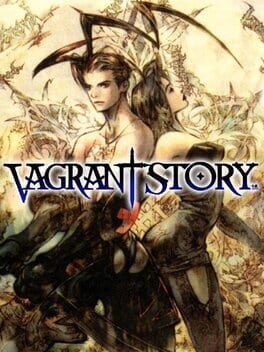
Adventure into a world of unparalleled depth and danger with SquareSoft's Vagrant Story. In this sweeping dungeon-crawling epic you play as Ashley Riot, a young assassin and spy for the organization known as Riskbreakers. Your goal is to unravel a deep and twisted plot and come to terms with the recent death of your wife and child. If this sounds a bit too cerebral never fear. Your path to recapturing your sense of humanity hinges on the destruction of countless vicious monsters and the exploration of dark and dangerous dungeons. Vagrant Story is awash in gorgeous scenery and features designs from Yasumi Matsuno and Akihiko Yoshida, the acclaimed artists and creators behind Final Fantasy Tactics.
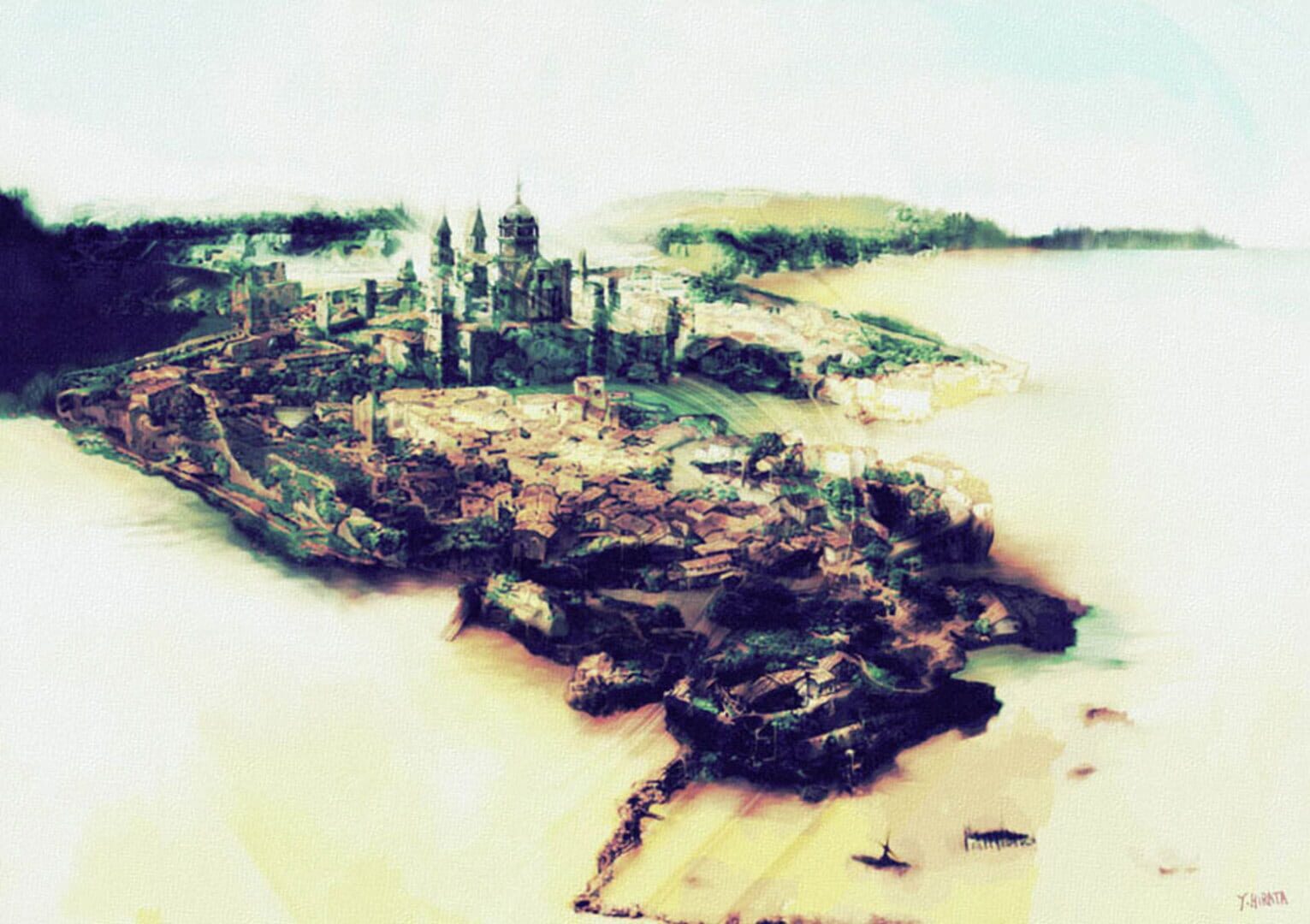
Vagrant Story is set in the fictitious city of Leá Monde, while the kingdom of Valendia is engulfed in civil war. Leá Monde is an old town with a history spanning more than two millennia. Located on an island surrounded by reefs, the walls have been the "witness of many battles" and are "stronger than the mightiest forts of Valendia". In its golden years, Leá Monde was a thriving community until an earthquake struck the town 25 years before the game, destroying the city and leaving the ground unstable. The Grand Cathedral and the Temple of Kiltia are at the center of the city. This area is surrounded by the west and east districts, both in fairly good shape, as well as the massive, fortress-like City Walls. Beneath the ground are an abandoned mineshaft and limestone quarry, the shadowy labyrinths of an "Undercity", and the dark Iron Maiden dungeon. The maze-like Snowfly Forest, named for the so-called snowflies that can be found within, covers part of the city. Other locations include the Graylands, the setting for the prologue event; and Valnain, the city where the Valendia Knights of Peace's Headquarters is located. While Valendia and Leá Monde are fictitious, the game's scenery is inspired by real-life landscapes of the southwest of France, including the city of Saint-Émilion.
Role-playing (RPG) / Turn-based strategy (TBS) / Adventure / Fantasy / Open world
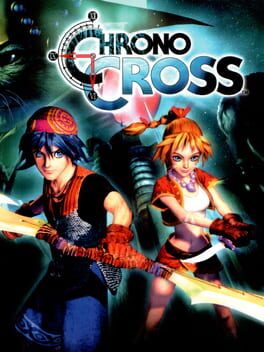
CHRONO CROSS, the sequel to the SNES favorite CHRONO TRIGGER, is one of the most ambitious role-playing games ever made. There are over 40 playable characters, each with their back-story, special moves, abilities, and weapons. The story spans two discs and follows the story of Serge, a young man who is able to cross dimensions. Suddenly he is pulled between worlds, trying to figure out his own past at the same time. The graphics are bright and beautiful, utilizing the PlayStation's capabilities to the fullest. The polygonal character models are huge and detailed, and the pre-rendered backgrounds are immaculately detailed. The music is composed and arranged by Yasunori Mitsuda, and features very realistic-sounding synthesizers. The battle system revolves around Elements, which are used to grant magical powers, as well as to summon huge monsters. For anyone that wanted to see the story of CHRONO TRIGGER continue, this is your chance.

Role-playing (RPG) / Adventure / Card & Board Game / Fantasy / Science fiction
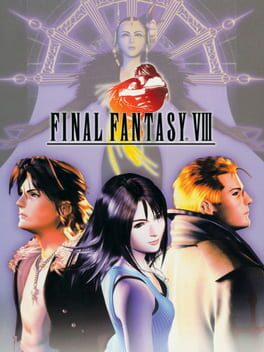
Final Fantasy VIII is the eighth main installment in the Final Fantasy series. The gameplay makes a departure from many series standards. While it still uses the Active Time Battle system, it deviates from the series' traditional means of boosting a character's power via leveling, although levels are not completely abandoned as they were in Final Fantasy II. In addition, it does not have a Magic Point-based system for spell-casting. Instead, magic is collected, drawn, and created from items, and is used to power up the characters via the junction system.

Role-playing (RPG) / Adventure / Action / Fantasy
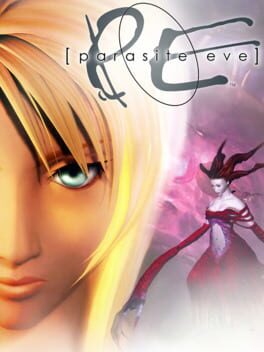
Parasite Eve is a survival horror role-playing video game developed and published by SquareSoft (now Square Enix) for the Sony PlayStation console. The game follows the story of Aya Brea, a rookie NYPD officer who becomes embroiled in a series of bizarre and deadly events related to a genetic mutation known as mitochondria. The game combines elements of horror, science fiction, and RPG gameplay, featuring real-time battles, exploration, puzzle-solving, and character development. The game's plot is inspired by the novel of the same name by Hideaki Sena, and its gameplay mechanics were influenced by the Final Fantasy series. Parasite Eve was critically acclaimed upon its release in 1998, and is widely regarded as a classic of the survival horror genre.

Role-playing (RPG) / Adventure / Fantasy / Drama
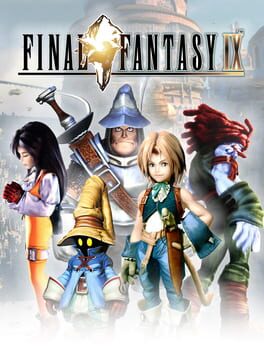
Final Fantasy IX is the ninth main installment in the FF series. The title is a return to the series's roots, with gameplay features and references to the past games featuring throughout, as well as a medieval fantasy setting and cartoonish art style as a break from the sci-fi slant style of Final Fantasy VII and Final Fantasy VIII.

Role-playing (RPG) / Hack and slash/Beat 'em up / Adventure / Action / Fantasy
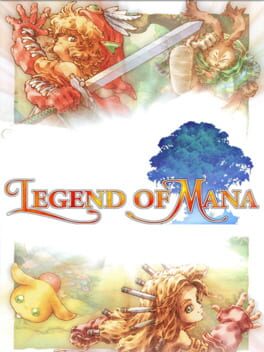
While incorporating action role-playing game elements from the three games which preceded it, Legend of Mana has its own distinct style of gameplay. Most notably, it gives the player the ability to shape the game's world of Fa'Diel according to his or her desires, a system which was incorporated through the use of "artifacts," which are gained as the player progresses through the game. The player uses the artifacts to create different towns, dungeons, etc., called "Lands", to venture to and explore. This creates a non-linear gameplay, since the game is driven by a series of what would be considered side-quests in other games. Legend of Mana features three different plots which can occur simultaneously, and which do not necessarily need to be completed for the player to finish the game. Legend of Mana was a financial success in Japan. While the game garnered considerable praise for its graphics and presentation, many critics and fans were turned off by the game's lack of a main storyline.

Grandia is a role-playing video game developed by Game Arts and published by Entertainment Software Publishing for the Sega Saturn console as the first game in their Grandia series. Initially released in Japan in 1997, the game was later ported to the PlayStation in 1999, with an English version of the game appearing on the platform in North America in the following September by Sony Computer Entertainment America, and later in Europe in March 2000 by Ubisoft. The game was produced by much of the same staff who worked on the company's previous role-playing endeavor, the Lunar series, including producer Yoichi Miyagi and music composer Noriyuki Iwadare. Since its release, Grandia has become notable for its combat mechanics, which have been carried over to future games within the franchise, and has spawned two spin-off titles – Grandia: Digital Museum and Grandia: Parallel Trippers – both released exclusively in Japan. In celebration of the announcement of renewing development on Grandia Online, which acts as a prequel to Grandia, the game was re-released on Sony's PlayStation Network platform in Japan as a downloadable title in April 2009 and in North America on February 25, 2010. It was re-released in Europe on November 10, 2010.

Platform / Role-playing (RPG) / Adventure / Action / Horror
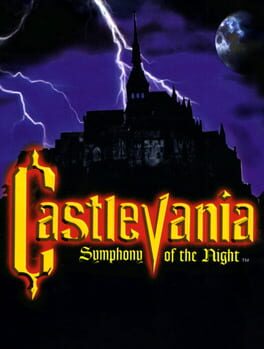
Having been awoken from his eternal slumber by the reappearance of Castlevania, Alucard must once again face the evil minions of darkness. Use your vampiric powers, along with weapons, potions, and other magical relics to change the tide of battle. A mixture of platform and role-playing action with many hidden areas and secrets. Can you discover them all?

Role-playing (RPG) / Adventure / Fantasy / Sandbox
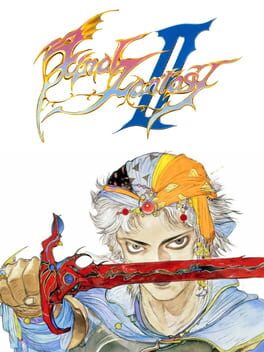
Final Fantasy II is the second installment in the Final Fantasy series, developed and published by Squaresoft. It was directed by Hironobu Sakaguchi, with Yoshitaka Amano designing the characters and Nobuo Uematsu composing the score. It was notable for being one of the first story-intensive RPGs released for console systems, and introducing many series staples, including chocobos and a character named Cid. Its story is unrelated to the original FINAL FANTASY, and its gameplay is a major departure from the previous title for eliminating the traditional experience-based progression system.