Developed by Geffen Records for Jasmine Multimedia Publishing.
Music / Puzzle / Educational
Vid Grid is a tile-matching full motion video puzzle game originally developed by Geffen Records and published by Jasmine Multimedia Publishing for Windows on September 13, 1994. It was later ported to the Atari Jaguar CD by High Voltage Software in 1995, where it was included alongside with Blue Lightning as one of the pack-in games for the peripheral when it launched. It is the first entry in the franchise of the same name. In Vid Grid, the players have to resolve and finish a jigsaw puzzle in time as their main objective, before the music video that is being played on the background ends. Conceived by Geffen executive Norman Beil and produced in conjunction with Jasmine Multimedia as a joint-venture, the game was one of the first titles to use Microsoft's Video for Windows multimedia framework, which allowed to play and encode digital video up to a maximum resolution of 320x240 pixels. The game includes a total of 10 music videos of different rock genres (including grunge rock from Soundgarden and Nirvana, hard rock from Van Halen and Aerosmith, and heavy metal from Ozzy Osbourne and Metallica). During each puzzle, the video itself is chopped up into a grid and each piece is scrambled. As the video plays, players must reassemble the pieces to its original form. As players progress through the game, each puzzle gets progressively tougher to solve (including larger amounts of pieces, different puzzle requirements, and flipped videos). The game received two spin-off titles: Country Vid Grid (for country music videos) and Kid Vid Grid (for cartoons).

Music / Puzzle / Educational
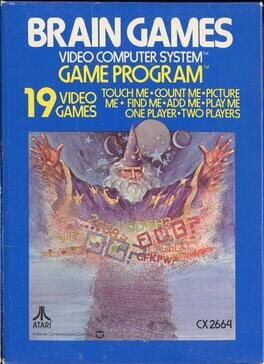
In Brain Games one or two players attempt to earn as many points as possible by solving various puzzles presented by the computer.

Music / Puzzle / Simulator / Educational / Kids
Mario Paint is an educational game that allows anyone to create simple pictures, paint over black and white pictures, or free draw their own using the specially developed SNES Mouse. The player can also create their own piece of music using a selection of notes and themes, create greeting cards and animations, or play a game of "Gnat Attack", where they use the mouse to control a swatter to swat flies.

Music / Puzzle / Strategy / Science fiction / Kids
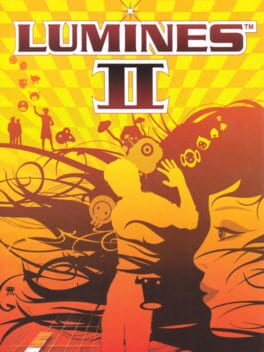
The gameplay in Lumines II is very similar to its predecessor, Lumines. The object is still to move blocks of four different colored squares across the board; while trying to create a single square of the same color. This all must be done before a "timeline" crosses the screen deleting the squares that you make. Deleting four or more squares will add a bonus multiplier to your score. (Refer to the Gameplay section of Lumines for more details). There is no Infrastructure gameplay in Lumines II. The game is visually similar to Lumines Live! and the PC port of Lumines during both gameplay and in the menus.

Music / Puzzle / Adventure / Educational
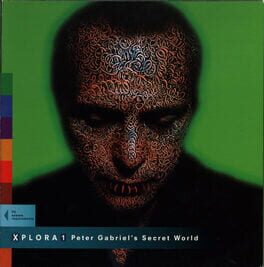
A collection of video, music, and photos with interactive elements from Peter Gabriel. Released in 1993, it was one of the first music CD-ROM releases and became one of the best selling.

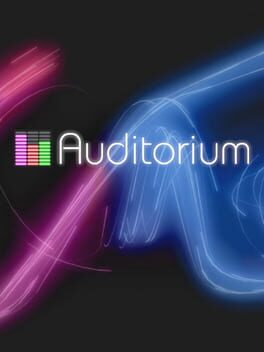
In Auditorium, the player uses various game mechanics to bend streams of light particles to fill audio containers. As each of the audio containers is filled, an audio channel introducing an instrument or sound is added to the game's music. In most levels, the audio containers are a variety of colors which the particle stream must match in order to fill it. The player changes the color of the stream by manipulating it over fixed areas of the level which dye the particles as they pass through them. The goal of each level is to direct and split the stream in such a way that each audio container is filled simultaneously, revealing the level's full soundtrack.

Music / Puzzle / Quiz/Trivia / Educational
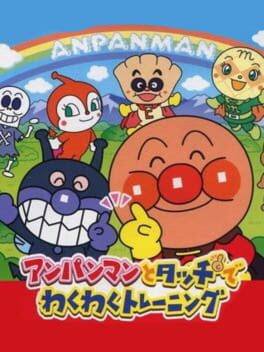
An educational game for DS and 3DS, starring Anpanman.

Music / Puzzle / Strategy / Action / Educational
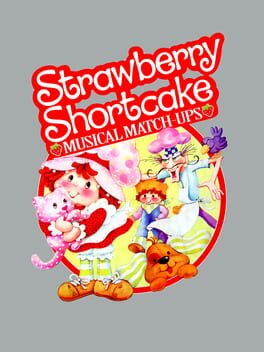
Strawberry Shortcake Musical Match-Ups is a puzzle game where you try to straighten out mixed up Strawberryland characters within a given time limit. When the game begins, a mixed up character will appear on the screen and you need to change the head, body, and legs until they are all from a single character. If a complete character is correctly formed, the character will perform a dance and you will hear their musical theme; if an incomplete character is formed, the musical theme heard will be partially from each of the characters you did create. Several levels of difficulty are included which dictate the time limit and which character needs to be created. In the easier levels, the character you must create will be indicated by text at the bottom of the screen. In the more difficult levels, you must create a character based on the theme song that plays.

Music / Puzzle / Simulator / Science fiction
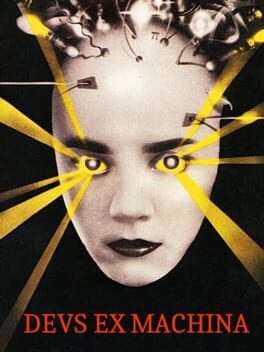
Deus Ex Machina is a 1984 ZX Spectrum and Commodore 64 surrealistic game with a heavy focus on sensory experience above interactive gameplay. You play a defect - a human form that has formed within an all controlling A.I. While the defect police is after you, your humanlike Alter Ego transforms through several stages of a human being. While the game does not offer any audio, the story is progressed through the narrative on the audio cassette which accompanies the game and has a running time of roughly 45 minutes - the amount of time the game is meant to play in one sitting.