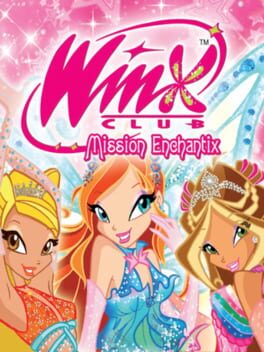
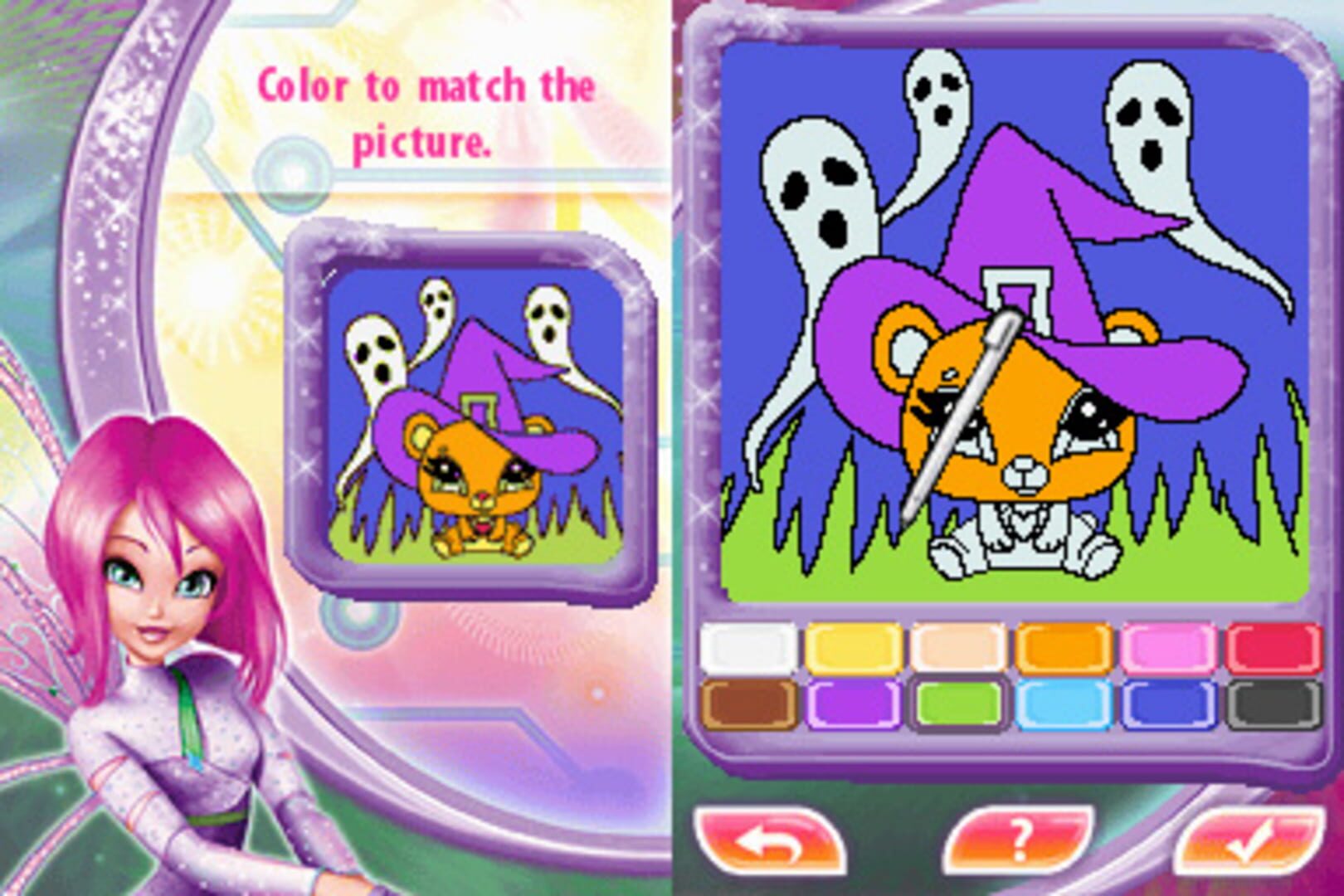
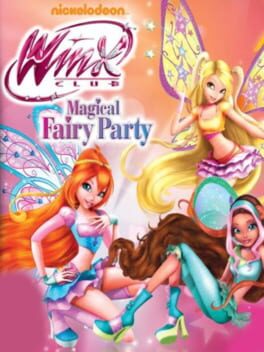
Girls will embrace the magic within and discover their inner fairy in Winx Club: Magical Fairy Party, through the enchanting story and exciting mini-games filled with fairies, fashion, friendship (and pets) that fans love. Fans can star in the game as their own fairy, interact with their favorite show characters and enroll in the enchanting Alfea School. They will form new friendships, perform spells and plan unforgettable events that include a wondrous ball!

Platform / Puzzle / Action / Science fiction
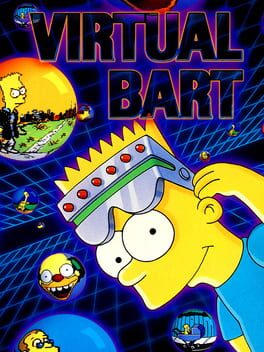
Bart's reality goes virtual when he is strapped into Martin Prince's Virtual Reality experiment at the elementary school science fair. Each virtual reality program represents a stage in the game that Bart must play through in order to escape the machine before the programs crash. The game consists of three side-scrolling platform stages and three stages that take place from a rear view. Bart assumes the roles of a pig, dinosaur, and baby for the platform stages. He tosses tomatoes and eggs, slides down a water slide, and drives a motorcycle in a post-apocalyptic Springfield for the three remaining stages. They are all accessed by chance via a wheel-of-misfortune.

Released in 2008 on Nintendo DS, by Powerhead Games.

Puzzle / Sport / Strategy / Action / Kids
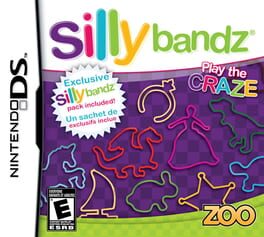
Silly Bandz have been stolen and it’s up to you to get them back! Knock out enemies and destroy the cages holding your Silly Bandz hostage, and they’re yours! Catapult a variety of colorful Silly Bandz to destroy everything in your way in order to collect your Bandz, but beware of enemies trying to sabotage your rescue – with 200 Silly Bandz on the line, they aren’t willing to let them go without a fight!

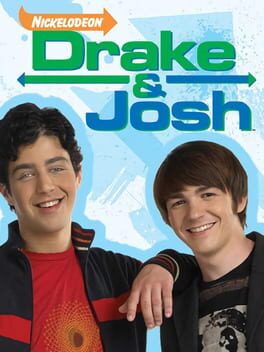
The Drake & Josh videogame follows the lives of two very different step-brothers and their crazy adventures with school, girls and their crafty sister Megan. In the game, players interact with all of their favorite characters from the show, including Drake and Josh, in a variety of modes featuring problem solving, stealth, strategy and action-style gameplay.

Puzzle / Adventure / Action / Fantasy
The Legend of Zelda: Ocarina of Time is the fifth main installment of The Legend of Zelda series and the first to be released for the Nintendo 64. It was one of the most highly anticipated games of its age, and is listed among the greatest video games ever created by numerous websites and magazines. The gameplay of Ocarina of Time was revolutionary for its time, it has arguably made more of an impact on later games in the series than any of its predecessors even though they had the same cores of exploration, dungeons, puzzles and item usage. Among the gameplay mechanics, one of the most noteworthy is the time-traveling system. The game begins with the player controlling the child Link, but later on an adult Link becomes a playable character as well and each of them has certain unique abilities. Ocarina of Time also introduces the use of music to solve puzzles: as new songs are learned, they can be used to solve puzzles, gain access to new areas and warp to different locations. Dungeon exploration is somewhat more puzzle-oriented than in earlier games but they are not too complex.
Puzzle / Role-playing (RPG) / Strategy / Fantasy
Scattered across five different regions, five special heroes must travel their own dangerous paths to grow in strength, unravel a demonic plot & ultimately save the world from chaos.

Puzzle / Quiz/Trivia / Comedy / Party
South Park: Chef's Luv Shack is a 2D game-show style video game based on the television show South Park. It gained its popularity by having mini games and the ability to play against friends in a challenge for the most points. It also involves trivia questions about South Park and other topics. The game intermittently switches between questions and minigames, with a minigame proceeding every three questions. Players score points by answering questions first (correctly) and based on minigame ranking. Players lose points for questions answered incorrectly. The game is exclusively multiplayer, as when played by one player, there is no AI, so that player always wins, even with a negative score

Sokoban ("warehouse keeper") is a is a classic puzzle game created in 1981 by Hiroyuki Imabayashi, and published in 1982 by Thinking Rabbit, a software house based in Takarazuka, Japan. In 1984 the ASCII Corporation published a version produced by Khaled Bentebal. It was the basis of numerous clones in the later years. It is set in a warehouse. On each level, the player must push crates (from square to square) to get them onto designated spots; once each crate is on a marked spot, the level is complete. Crates can only be pushed one at a time (so two crates next to each other cannot be pushed together), and cannot be pulled--so it's possible to get a crate stuck in a corner, where it cannot be retrieved! By the last levels, you must plan 40 steps in advance.