
Akatsuki Blitzkampf Ausf. Achse is the final standalone revision of the first game for arcades.
In the Japanese Imperial calendar year Koki 266X A.D. (200X AD in Gregorian calendar), a submarine suddenly emerged in the Arctic Ocean while transporting a new weapon "Blitz Motor" from Germany to Japan. Former Imperial Army high class technical engineer Akatsuki, who has survived to the present age by hibernating in the frozen submarine, begins to carry out his final orders received during the war, which were to take the Blitz Motor and destroy it should it fall into enemy hands. On the other hand, due to Akatsuki's re-emergence, various organizations who want his Blitz Motor begin to search for him in order to gain the power of the Blitz Motor for themselves.
Fatal Fury is a fighting game developed by SNK and released for arcades in 1991. Players choose from a roster of martial artists and compete in one-on-one battles using punches, kicks, and special moves. The game introduced a two-plane fighting system that allows characters to move between foreground and background lanes. Its story follows Terry Bogard and his allies as they challenge the crime lord Geese Howard.

Fighting / Arcade / Action / Fantasy
Asura Blade: Sword of Dynasty is Fuuki's first of two attempts at making a one-on-one 2D fighting game; its sequel, Asura Buster, is the second. The story revolves around the search for the eponymous Sword of Dynasty in a war-torn world. The game features eight playable characters, as well as two boss characters, only briefly usable in single-player mode using codes. It uses a simple three-button control scheme and sticks to more basic motion inputs for its roster's special moves, for greater accessibility. Its colorful visuals and detailed background art take inspiration from contemporary entries in the Darkstalkers and Street Fighter Alpha series.

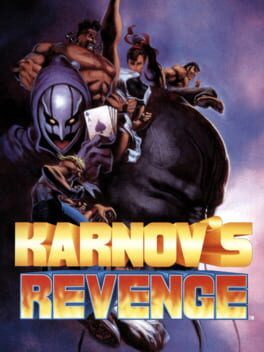
Karnov's Revenge, also known as "Fighter's History Dynamite" in Japan, is a 1994 arcade fighting game, and the followup to Fighter's History. All returning characters have new moves, and Clown and Karnov are now playable characters while newcomers Zazie and Yungmie were introduced. The Super Famicom game "Fighter's History: Mizoguchi Kiki Ippatsu!!" is heavily based on Dynamite, and is believed to have been meant as a port. Dynamite itself would be ported to the Sega Saturn, and Mizoguchi Kiki Ippatsu!! was even thrown in as a bonus.

Fighting / Role-playing (RPG) / Action / Science fiction
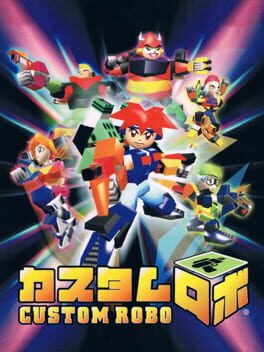
Custom Robo is sort of a sci-fi action take on Nintendo's own collect-and-battle style Pokemon titles. In the game's story mode, you slip into the role of a young boy who has just built his very own toy robot who goes by the name of Ray. Together with your cousin, you head down towards Robo Station to take part in a giant Custom Robo battle championship that takes place in the local Holosseum. The ultimate goal is to improve your skills so that you can defeat the champion Custom Robo builder of them all, Mamoru. Gameplay involves robo customization and frantic action battles in confined 3D arenas. Followed by a sequel.

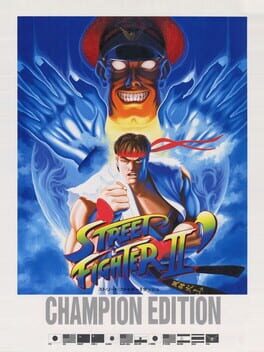
Street Fighter II: Champion Edition is a competitive fighting game released for the arcades by Capcom in 1992. It was the first of several updates to the original Street Fighter II: The World Warrior. The main changes consisted of adding the Grand Masters (the final four computer-controlled opponents in single-player mode) as playable characters and mirror matches (same character vs same character). The fighting techniques of the eight main characters from the original game were also further refined to allow for more balanced competitive play. The Champion Edition was followed by Street Fighter II' Turbo: Hyper Fighting, released several months later.

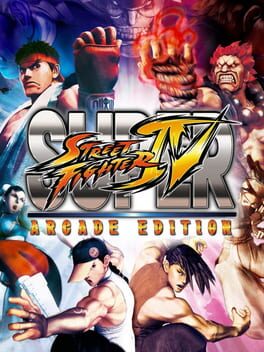
An arcade version of Super Street Fighter IV was released by Capcom in December 2010, titled Super Street Fighter IV: Arcade Edition. Arcade Edition added Yun, Yang, Evil Ryu and Oni to the roster, as well as changes to the existing characters.

Super Street Fighter II Turbo, released in Japan as Super Street Fighter II X: Grand Master Challenge, is a competitive fighting game released for the arcades by Capcom in 1994. It is the fifth installment in the Street Fighter II sub-series of Street Fighter games, following Super Street Fighter II: The New Challengers. Like its predecessor, it ran on the CP System II hardware. Super Turbo introduced several new gameplay mechanics not present in previous versions of Street Fighter II, including the addition of Super Combos and air combos. It also introduced the secret character Akuma, who would go on to become a recurring character in later Street Fighter installments and other Capcom fighting games. Super Turbo was originally ported to the 3DO Interactive Multiplayer, followed by the PlayStation and Sega Saturn (under the title of Super Street Fighter II Turbo: The Ultimate Championship) as part of the Street Fighter Collection, and for the Dreamcast in Japan under the title of Super Street Fighter II X for Matching Service. A remake of the game was released for the PlayStation 3 and Xbox 360 titled Super Street Fighter II Turbo HD Remix.

Street Fighter III: 3rd Strike is the second follow-up to Street Fighter III. The game increased the character roster by adding five new characters and also added further refinements to the previous game's play mechanics and rules. All the returning characters from the previous Street Fighter III games were given new stages, endings, and voice actors for certain characters, continuing the overall storyline from where the first two games left off.