Gameplay is standard FPS action, with limited ammo and plenty of hazards to detour around or find the switch to deactivate. The player switches between the four main characters at each level change, each with a slightly different set of abilities (Call has a motion tracker, Christie has his twin pistols from the film). Levels are based around keeping the Auriga running, and making their way through the ship to escape. This was to be Fox Interactive's last Sega Saturn game, but development was pulled on the Saturn version before it was completed. PC and Dreamcast ports of the game were also planned but were never developed due to the original title's poor sales.
Two hundred years after the events of AlienÂł, Lieutenant Ellen Ripley is cloned by military scientists interested in the Alien Queen she had become a host for. Like the "Company" from the earlier films, the military intends to use the Queen to breed a force of bio-weapons. But then something goes wrong; the Aliens they are studying manage to escape, and swarm throughout the science ship. It's up to four stranded heroes - Ripley, Call, DiStephano and Christie - to wipe out the Aliens, and return the ship safely to Earth.

Shooter / Platform / Adventure / Action / Science fiction
AlienÂł was released after the Alien 3 film. After success on the Super Nintendo and Genesis platforms, the game was built and ported to other systems, including the Commodore 64 and Game Gear. The game is set on the world of the film, Fury 161, but the gameplay has more in common with the film Aliens, throwing wave after wave of enemies at the player.

Shooter / Tactical / Adventure / Action / Science fiction
Metal Gear Solid is a stealth game created by Hideo Kojima which follows the MSX2 video games Metal Gear and Metal Gear 2: Solid Snake. Despite a transition to 3D, Metal Gear Solid's gameplay remains similar to his predecessors. The game utilizes a traditional top-down view and the player must navigate the protagonist Solid Snake through the game's areas without being detected. Detection will set off an alarm which draws armed enemies to his location. Conversations with Snake's allies and cutscenes are used extensively to advance the plot and gain more insight into it. Metal Gear Solid is regarded as one of the greatest and most important video games of all time, and helped popularize the stealth genre and in-engine cinematic cutscenes.

Shooter / Tactical / Adventure / Action / Survival
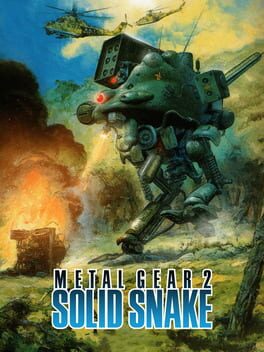
Metal Gear 2: Solid Snake is an action-adventure stealth video game created and published by Konami for the MSX2 computer platform. Acting as a direct continuation of the MSX2 version of the original Metal Gear, it was written and designed by the series' creator, Hideo Kojima. Kojima's inspiration for this game arose as a response to the development of Snake's Revenge, a separate sequel being produced simultaneously for the NES, intended primarily for the North American and European markets.

Shooter / Tactical / Adventure / Action / Science fiction
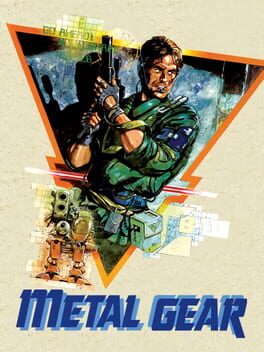
Metal Gear is considered to be the progenitor of the stealth game genre, it was also the first video game designed by Hideo Kojima, who also directed many of the later Metal Gear sequels. The game revolves around a special forces operative codenamed Solid Snake who goes into a solo infiltration mission into the fortified state of Outer Heaven to destroy Metal Gear, a bipedal walking tank capable of launching nuclear missiles from anywhere in the world. The player must navigate the main character, a military operative codenamed Solid Snake, through various locations, while avoiding visual contact and direct confrontation with patrolling guards. If the player is seen, the game enters the "Alert Mode." In this situation, Snake must escape from enemy's sight in order to resume infiltration. The method of escaping varies depending on the circumstances behind discovery: If Snake is seen and only a single exclamation mark appears over an enemy's head, only the enemies in the player's present screen will attack and Snake can escape by simply moving to an adjacent screen. However, if two exclamation marks appear over the enemy (or the player triggers an alarm by being spotted by a camera, infrared sensor or by using an unsuppressed weapon), reinforcements from off-screen will appear as well. Snake can only escape by eliminating all incoming enemies, going outdoors, or by entering an elevator. The player starts the game unarmed, but eventually acquires firearms such as a Beretta 92F and an M79 grenade launcher, as well as explosives such as remote control missiles and landmines. Ammo and supplies for weapons are limited, but are replenished by picking up ammunition caches or additional supplies. Weapons can not only be used to kill enemies, but also to clear obstacles such as hollow walls and electrified floors. Snake can also use his fists to punch and defeat patrolling enemies. Occasionally, if the player defeats a guard with punches without alerting anyone, the defeated guard will yield a single unit of rations or an ammo box that can be picked up. In addition to enemy guards, the player will also be confronted by mercenaries who will challenge the player to combat, serving as the boss characters. The enemy base consists of three different buildings, with multiple floors (including basement levels) within them. The player uses key cards and other items to unlock doors and explore new areas. Each door will only open to its corresponding key cards. Information can be obtained by rescuing hostages being held within the buildings. After rescuing five hostages, the player's rank will increase by one star (with the maximum rank being four stars), allowing for increased carrying capacity and maximum health. However, if a hostage is killed, the player is demoted to the previous rank. A transceiver is available for the player to communicate with their commanding officer, Big Boss, or one of the resistance members operating covertly near Outer Heaven (Schneider, Diane, and Jennifer). Each of Snake's allies specializes in a specific subject. The player must keep track of their allies' frequency numbers in order to contact them. All of the radio messages are dependent on the rooms where the player is located.


Shooter / Adventure / Action / Science fiction
Aliens: The Computer Game is a 1986 video game developed by Software Studios and published by Electric Dreams Software initially for Amstrad CPC, Commodore 64 and ZX Spectrum. It is based on the film of the same title. Ports for the Commodore 16 and MSX were developed by Mr. Micro and published in 1987. Aliens: The Computer Game is played from a first-person perspective and is set inside an atmosphere processing plant, a maze complex consisting of 255 rooms. The player encounters Alien enemies throughout the game. Upon killing an Alien, the body leaves a deadly pool of acid blood that must be avoided. The player also faces the threat of bio-mechanical growth, which, if left uncontained, results in new Alien eggs and facehugger enemies. The player's ultimate goal is to reach the room that houses the Queen Alien and her nests, both of which must be destroyed. The player can directly control a team of Marine soldiers, or can issue orders to the team from the Mobile Tactical Operations Bay (MTOB). When playing from the MTOB, the player has a view of the team's surroundings via video cameras attached to each soldier's helmet.

Shooter / Adventure / Action / Horror
Enemy Zero was the second game to star the digital character Laura Lewis—the first being D. In E0, gameplay sequences alternate between interactive FMV and real time exploration, both from a first person perspective. The interactive FMV component uses gameplay identical to an earlier Warp game, D. The real time component of E0 is unique. Enemies are invisible, and location is only possible through the use of sound, with notes of different pitch helping the player find the distance and direction of enemies. Additionally, every gun in the game must be charged up immediately before each shot, and charging a shot for too long will cause the charge to dissipate, after which the charging must start over. Since all available guns have very limited range, this makes timing crucial; beginning to charge the gun too late or too soon will allow the enemy to reach Laura, resulting in an immediate game over. In Enemy Zero, reloading the gun and moving the character around are mechanics that have been made intentionally slow,[4] which stimulates players to avoid combat and direct contact with the alien enemies as much as possible. In the early segments of the game, avoiding detection is not only recommended; it is required, since the player has no means to defend him or herself without a gun. Enemy Zero is an example of a game containing stealth elements[5] roughly two years before the release of Metal Gear Solid popularized the genre worldwide, though ten years after Metal Gear started the genre in 1987.

Shooter / Puzzle / Adventure / Action / Science fiction
Resident Evil 2 is a sequel to the first Resident Evil title. Like the previous game in the series, Resident Evil 2 is a 3D action-adventure using three-dimensional polygon characters over two-dimensional pre-rendered backgrounds, with the action viewed through a variety of cinematic fixed camera angles in each room. Players can choose to play as one of two possible characters; each goes through the same initial scenario but with differences in the type of weaponry they find and the people they meet along the way.

Shooter / Puzzle / Adventure / Action / Horror
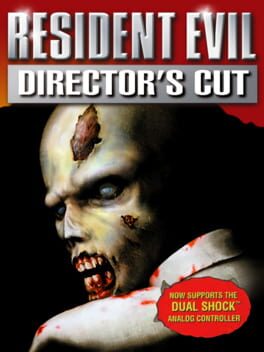
This game is a special re-release of Resident Evil: Director's Cut with added Dual Shock analogue stick support. It also includes work-in-progress videos of the sequel Resident Evil 2 (also known as Resident Evil 1.5), which shows a very different version of the game than was actually released. In North America, Resident Evil: Director's Cut Dual Shock Ver. was released as a downloadable game available from the PlayStation Network soon after it launched in November 2006, although the game is advertised with the original Director's Cut box art. In Japan and Europe, the original Director's Cut was instead made available from the PlayStation Network.