Armored Core is a mecha video game released in 1997, the first in the Armored Core series. It is an action game played from third-person perspective.
In the presumably distant future, the vast majority of Earth's population is wiped out by a cataclysmic war known as the Great Destruction. The harsh conditions that result force the few remaining survivors to live underground for fifty years, during which time corporations come to power. The two largest corporations, Chrome and Murakumo Millennium, constantly battle each other for supremacy, causing significant strife among the populace. However, the competition provides endless opportunities for the Ravens, mercenaries who exist independently of the corporations. You, the protagonist, pilot an armored core (AC), which is a giant mecha robot.
Shooter / Action / Science fiction
Armored Core: Master of Arena is a standalone sequel released for the PlayStation in 1999. It centres on a large, structured Arena mode where players progress by defeating ranked pilots. The game expands mech customisation, offering more parts and finer performance tuning. Story content is minimal and delivered mainly through short mission briefings and arena context. Its emphasis on competitive progression solidified the Arena as a core feature of the Armored Core series.

Shooter / Adventure / Action / Science fiction
Armored Core: Project Phantasma is a standalone expansion to the original Armored Core, released for the PlayStation in 1997. It focuses on arena-based combat, introducing ranked one-on-one battles against rival pilots Players customise a humanoid mech using interchangeable parts that affect mobility, firepower, and energy use. The game places less emphasis on mission variety and more on mechanical optimisation and combat skill. Its structure and mechanics helped define competitive elements that became central to later entries in the series.

Shooter / Role-playing (RPG) / Simulator / Action / Science fiction
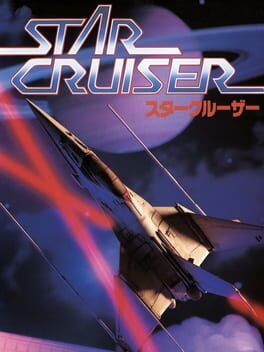
An early first-person role-playing shooter released by Arysis Software for the PC-88 and PC-98 in 1988, and later ported to the Sharp X68000 and Mega Drive/Genesis. Ahead of its time, it had 3D polygon graphics, FPS gameplay, strafing controls, open-world space exploration, and an epic sci-fi space opera plot.

Shooter / Tactical / Adventure / Action / Science fiction
Metal Gear Solid is a stealth game created by Hideo Kojima which follows the MSX2 video games Metal Gear and Metal Gear 2: Solid Snake. Despite a transition to 3D, Metal Gear Solid's gameplay remains similar to his predecessors. The game utilizes a traditional top-down view and the player must navigate the protagonist Solid Snake through the game's areas without being detected. Detection will set off an alarm which draws armed enemies to his location. Conversations with Snake's allies and cutscenes are used extensively to advance the plot and gain more insight into it. Metal Gear Solid is regarded as one of the greatest and most important video games of all time, and helped popularize the stealth genre and in-engine cinematic cutscenes.

Shooter / Action / Science fiction
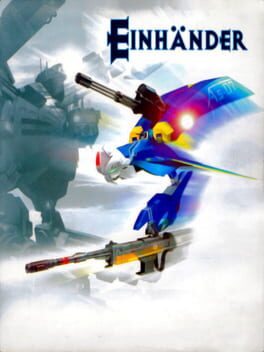
Einhänder is a futuristic side-scrolling shooter featuring explosive visuals, pounding techno music, and simulated 3D gameplay.

Shooter / Simulator / Strategy / Action / Warfare
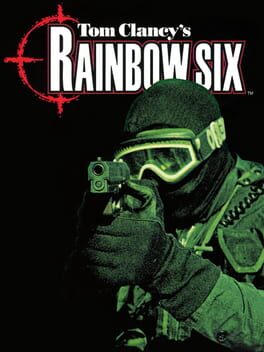
A combination of explosive action and real-life strategy! The most revolutionary action/strategy game of its kind. Nothing comes closer to offering an exciting combination of strategy, team-building, realistic three-dimensional graphics and true-to-life special forces action. The ultimate goal is to save yourself and the world from deadly terrorists. You must successfully complete 17 unique missions. If you die, the game isn't over. The World is.

Shooter / Racing / Role-playing (RPG) / Action / Fantasy
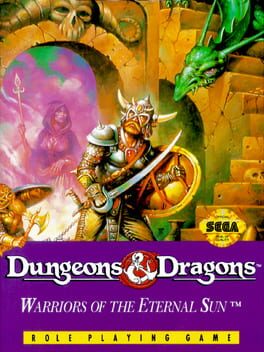
Dungeon & Dragons: Warriors of the Eternal Sun is set in the world of Mystara, a setting of the Dungeons & Dragons game. The characters find themselves in a strange, red-hued world in which the horizon slopes upward in all directions, eventually vanishing into a crimson haze at the limits of sight. Their mission is to find and make allies in this new world or else the kingdom and its culture will perish. The player leads a party of four characters (either the default party or one that the player has created). Characters and races can be chosen from the normal D&D options. The gameworld is viewed from an isometric perspective and the characters can roam around in realtime. Battles are turn based. Like most role-playing games, the gaming experience focuses on exploration, inventory management and character development.

Shooter / Simulator / Action / Science fiction
Ace Combat 3: Electrosphere is a combat flight simulation video game developed by Namco for the PlayStation. The third game in the Ace Combat franchise, it was released in Europe and North America in 2000 and was localized for specific regions. Players control an aircraft and must complete various mission objectives, such as destroying squadrons of enemies or protecting a base from enemy fire. Electrosphere carries a more futuristic science fiction-inspired landscape and world compared to the modern-day theme of its predecessors. The international version of Ace Combat 3 differs significantly from the japanese release: its campaign has 36 out of the original 52 missions with no different paths. The story, as well as all related voice acting and cutscenes, was removed and replaced with a more basic story with no voice acting.