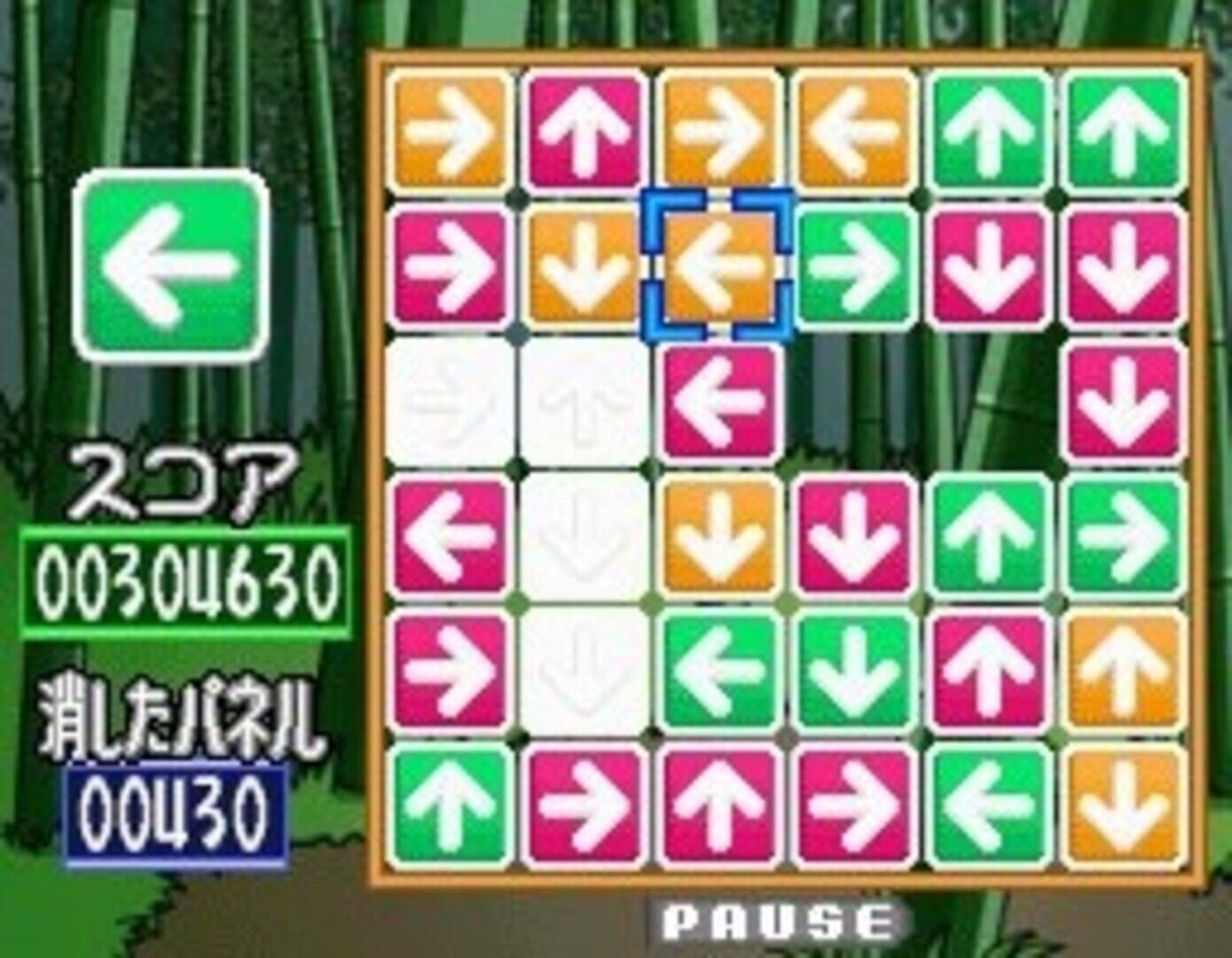
Atama wo Kitaete Asobu Taisen Yajirushi Puzzle: Puppy Inu Vector One2006
Screenshots
Featured in
Platform / Puzzle / Arcade / Action / Fantasy
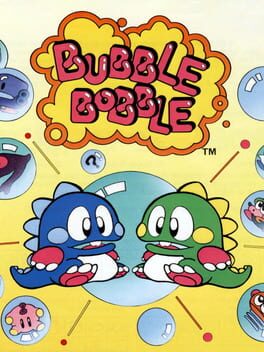
In the game, each player controls one of the two Bubble Dragons, Bub and Bob. The player can move along platforms, as well as jump to those above and to the side, similar to most platform games. The player can also blow bubbles. These can trap enemies, who are defeated if the bubble is then burst by the player's spiny back. Bubbles that contain enemies can be popped at the same time resulting in different foods being projected around the level. Each enemy trapped in a bubble equates to a different food. Food is consumed and transferred to points (an increasing scale of 1000 points is awarded for each enemy burst in tandem with another meaning: one enemy burst equals one food item worth 1000 points, two enemies burst equals two food items worth 1000 and 2000 points, three enemies burst equals three food items worth 1000, 2000 and 4000 points, and so on), which results in earning lives. These same bubbles also float for a time before bursting, and can be jumped on, allowing access to otherwise inaccessible areas. Players progress to the next level once all enemies on the current level are defeated. Enemies turn "angry" — becoming pink-colored and moving faster — if they are the last enemy remaining, escape from a bubble after being left too long or a certain amount of time has been spent on the current level. A monster will also become angry if either player collects a skull (the only negative item in the game), and the monster is hit by the resulting comet crossing the screen (however, this is a rare occurrence). After a further time limit expires, an additional invincible enemy appears for each player, actively chasing them using only vertical and horizontal movements. These do not need to be defeated to complete the level, and disappear once a player's life is lost. Contact with enemies and their projectiles (rocks, lasers, fireballs, etc.) results in death.
Platform / Puzzle / Action / Comedy
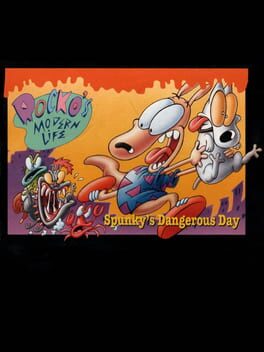
Rocko's Modern Life is a side-scrolling action game where the player takes control of the Nickelodeon character, Rocko, as they travel through three different stages (Rock-O-Whey Beach, Hill-O-Stench garbage dump, and Laundryland) trying to protect his beloved dog Spunky from the various dangers throughout the stages. As Rocko travels through the stage, he has to perform various tasks to keep Spunky out of danger such as tossing him above onto safer platforms, moving objects to break his fall or fight off various enemies that want to harm him.
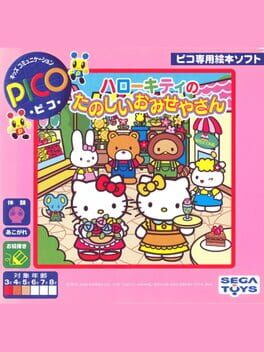
A Sega Pico game based on Sanrio's Hello Kitty franchise.
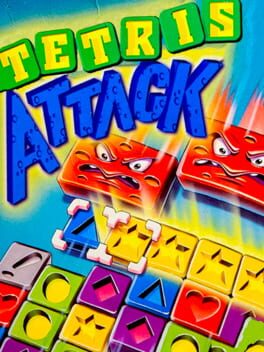
A puzzle game for the Super Nintendo Entertainment System and Game Boy. It is the first game in the Puzzle League series. The Super Famicom release featured different art assets and characters than the English localization where they were replaced with characters from Super Mario World 2: Yoshi's Island. The Game Boy release of the Yoshi version was also later released in Japan. Later a version for the Super Famicom's Satellaview satellite modem service was released.
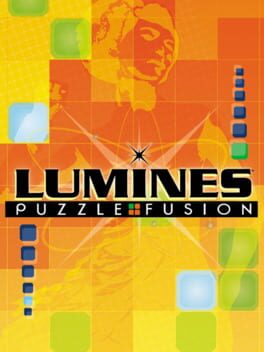
Lumines is a block-dropping game, that may seem at first to be similar to Columns and Tetris. A 2 x 2 square (an O tetromino) made of four smaller block pieces is dropped into the playing field, which may appear different as the player advances through levels or skins. The small blocks that comprise the larger blocks will be one of two different colors. The objective is to rotate and align the blocks in such a way as to create 2x2 squares of the same color, which may span multiple blocks and, indeed, share blocks. For example, if one should get a 2x3 area of matching blocks, the middle portion will "share" itself with both the left and right halves and create two 2x2 squares. After the "timeline", which is synchronized to the music, sweeps over the matching blocks, they disappear. When too many unmatched blocks pile up to the point where no more blocks may be dropped in the playing field, the game ends. When part of a falling block hits an obstruction, the unobstructed portion of the block will split off and continue to fall. More points are scored by creating the largest number of squares during one "timeline" sweep. Increasing score multipliers are earned by repeatedly clearing squares on consecutive timeline sweeps. Bonuses are also awarded by reducing all remaining tiles to one single color or for removing all non-active tiles from the screen altogether. Occasionally, a block falls with a special square of one of the two colors with a "jewel" in the center. This square, when cleared as part of a matched 2x2 square, will cause all individual blocks of the same color that are horizontally or vertically adjacent to the matched 2x2 square, or to an adjacent square, to be cleared without score. These can be used for both generating large bonuses, since generally several blocks of the other color will be formed once these are removed, as well as to help the player recover if the field becomes too cluttered.
Platform / Puzzle / Action / Fantasy
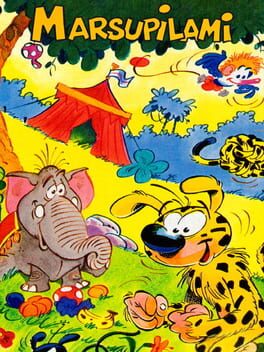
Marsupilami is a character created by Belgian cartoonist "Franquin". Marsupilami is a long tailed made-up character who was stolen from the jungle and performs in a circus. After helping the other animals escape, Marsupilami must make his way back to the country he came from - Palombia. The aim is to guide his Elephant companion, Bonelli, through the levels, passed obstacles and traps. As he progresses, he gains more abilities by collecting power ups. Each level is timed so each action must be thought about carefully.
Puzzle / Arcade / Fantasy / Comedy
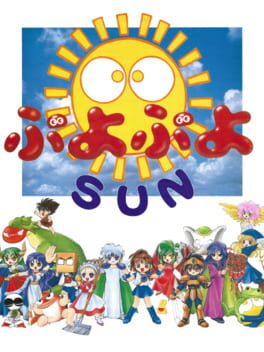
Satan has enlarged the sun in a devious attempt to get a perfect tan. Arle Nadja embarks on a quest to defeat him in this competitive puzzle game. This is the 3rd installment of the Puyo Puyo games series, and the sequel to Puyo Puyo Tsu. After the highly acclaimed success of its predecessor, Compile took a slightly more retro approach, so players had a more original feel to the game over that of Tsu. The name of Puyo Puyo SUN comes from a Japanese pun on san, and also indicates a new Puyo brought into the game. As Sun Puyo were used in this game, and the game itself is not only set on a tropical beach, but is the third in the series (san (三)) is the Japanese word for the number three), the name served multiple purposes. This game was released only in Japan. Following the arcade release, Puyo Puyo Sun was ported to the then-current home consoles. The Saturn version was released merely three months after the arcade release, while the other ports were released in late 1997 and throughout 1998. The Saturn, PlayStation, and Windows 95 versions feature fully voiced cutscenes unlike the original ST-V version.