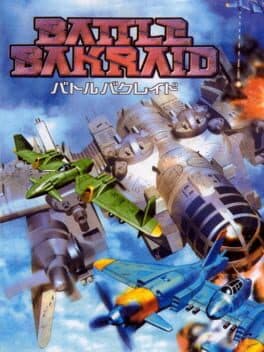

Developed by Raizing for Able Corporation.
Shooter / Arcade / Action / Science fiction
The capitalist nation of Randa has long had a history of excellence in the creation of aircraft, attracting the best of engineers in aerodynamics, artillery, and structuring from the world over. Once, even this interest had waned, until the creation of the air show Bakraid, in which the capabilities of the fighters could be demonstrated outside of simulations for all to see. Around the time of the seventh Bakraid, a nearby nation, Deneb, had attained an expansionist attitude, forcibly subjugating and annexing several of its neighbors with the assistance of the Shtarterra Security Council. Recently, Deneb has asked to participate in Bakraid. Randa's defense council, perfectly aware that this is just a pretext for Deneb to get its and the SSC's engines of war into Randan borders and more easily prosecute their war from there, give their blessing. However, the council secretly contacts the other Bakraid participants, offering even more prize money than normal if they will perform in a special version of Bakraid--genuine war conditions. In other words, use their own top-of-the-line planes to shatter Deneb's schemes. In all, nine pilots accept this plan, and begin Bakraid two weeks early to catch Deneb unaware...
Shooter / Arcade / Action / Fantasy
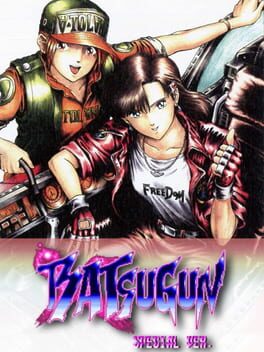
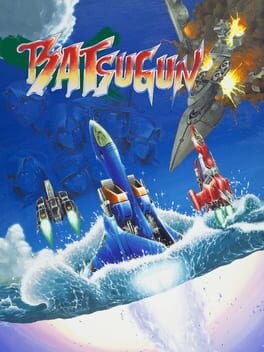
Batsugun is a vertically scrolling shoot 'em up video game created by the now-defunct Japanese game developer Toaplan. The title translates to "exceptional" or "extraordinary". It was the final game created before Toaplan's dissolution, and has been regarded as a key title in the development of the modern manic shooter, with elements of the game such as the size of the player's hitbox, the scale of their firepower, and the complexity of enemy bullet patterns all having an influence on future titles in the sub-genre. Members of the development team also went on to work on other successful manic shooters, most notably lead artist Junya Inoue.

Shooter / Arcade / Action / Fantasy
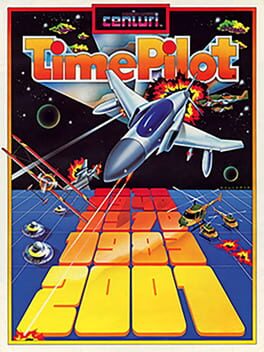
Time Pilot is a multi-directional scrolling shooter and free-roaming aerial combat arcade game designed by Yoshiki Okamoto, released by Konami in 1982, and distributed in the United States by Centuri. Debuting in the golden age of video arcade games, it is a time travel themed game that allowed the player's plane to freely move across open air space that can scroll indefinitely in all directions. The Killer List of Videogames included Time Pilot in its list of top 100 arcade games of all time. The player assumes the role of a pilot of a futuristic fighter jet, trying to rescue fellow pilots trapped in different time eras. The player must fight off hordes of enemy craft and defeat the mother ship (or "boss") present in every level. The background moves in the opposite direction to the player's plane, rather than the other way around; the player's plane always remains in the center.

Shooter / Arcade / Action / Fantasy
A second edition, titled Batsugun Special Version, was showcased to attendees at the 1994 AOU Show in Japan but it was never officially released in arcades, as Toaplan slid into bankruptcy and this special version appeared on the secondary video game collecting market after the company vanished. The special version featured a number of changes compared to the original version including a much smaller hitbox, a shield protecting the player from one hit, more powerful bombs, new scoring items, and the addition of multiple loops of increasing difficulty after completing the initial loop, among other changes.

Shooter / Arcade / Action / Science fiction
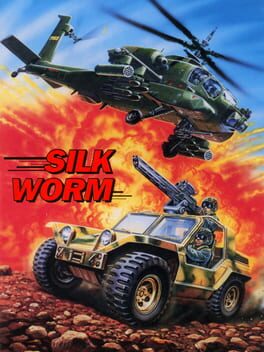
Silkworm is a classic horizontally-scrolling shoot-em-up. The main difference between this game and many other side-scrolling shoot-em-ups is that you will be on land as well as in the air. The first player would play as a helicopter, but if a second player joins the game, they would play as a jeep. Both players would have to protect each other as well as themselves. After a certain number of kills, a "goose" helicopter would form on the screen. If the players managed to destroy it they would get a weapon's powerup. This would go on throughout the entire game, and a "goose" could appear even during the fight with the end-of-level baddie.

Shooter / Arcade / Action / Warfare
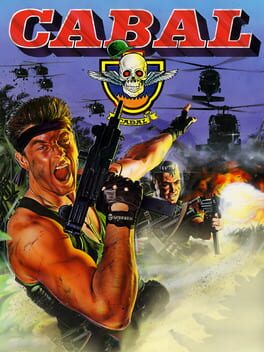
Originating in the arcades, Cabal is a shooter where the protagonist runs back and forth along the bottom of the screen, ducking and dodging bullets and grenades from the enemy. The roll maneuver from the arcade was not implemented in the PC version. The player returns fire by moving a target around the screen which also moves the player character and may expose him to enemy fire.

Shooter / Arcade / Action / Science fiction
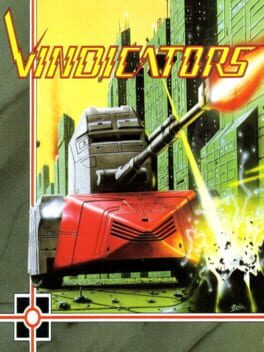
The game begins by asking the player(s) to choose a difficulty level, not only making the enemies more difficult and the players weaker, but higher difficulties start the players in a later set of levels (called "galaxies") and with some powerups. The easiest difficulty level starts the player(s) in the first level with no bonuses. The player controls a tank with constantly draining fuel, and must navigate through multiple levels (14 stations in the arcade version) from bottom to top, encountering obstacles and enemies. Along the way, a player may find powerups including tank fuel, stars (currency), shields, and two types of sub-weapons: smart shots (homing missiles) and bombs (powerful rockets). Each level has a key that will open a door at the top of the level, which will either take the player to the next level or to a special hub with multiple powerups that must be escaped in 10 seconds or less. If the player is unable to escape, the tank will lose half its fuel. After escaping the hub, the player(s) then proceeds to the next station. Occasionally, the player(s) will face a boss that must be defeated to advance. Normal shots are ineffective however, and the player must decide/guess the appropriate time to buy sub-weapons to greatly raise the chance of victory. After destroying a boss, the player(s) can continue to the end of the level. Between levels, the player is taken to a shop where items and upgrades to tank speed, power, etc. may be purchased with stars. Any damage caused to the player's tank will decrease the shield level. Purchasing a shield drastically reduces damage down to a mere pixel worth of the fuel gauge per hit. When the fuel depletes, the speed of the tank is reduced to a crawl and a countdown begins from 10. If no fuel is gained before the timer reaches zero, or if the player is shot during the countdown, the tank explodes and a life is lost. The arcade version, in addition to having special two-joystick controls for each player, contained three special contest levels, with one contest star in each. With three contest stars and nine normal stars, the player(s) could compete in a special time-limited contest level in which the player could win a T-shirt. A later version of the game was released which eliminated the contest levels and stars.

Shooter / Platform / Arcade / Action / Science fiction
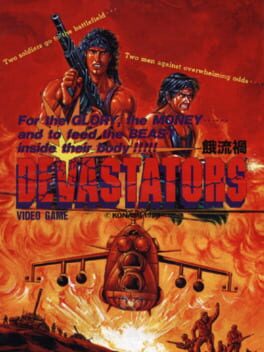
Devastators (餓流禍 Garuka?) is a 1988 third-person shoot 'em up arcade game by Konami.[1] Devastators was made available on Microsoft's Game Room service for its Xbox 360 console and for Windows-based PCs on December 22, 2010.