B. Rap Boys was produced by Kaneko in 1992. Kaneko released 33 different machines in our database under this trade name, starting in 1982. Other machines made by Kaneko during the time period B. Rap Boys was produced include Bakuretsu Breaker, Nexzr, Fujiyama Buster, Shogun Warriors, Gals Panic II, Berlin Wall, Magical Crystals, Air Buster, Gals Panic, and DJ Boy. Add by Lennux

Platform / Adventure / Action / Fantasy
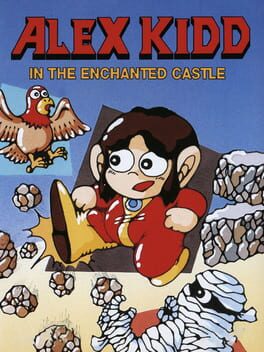
The whole Kidd family is upset! Alex’s father, King Thor, is missing, and they suspect he has been kidnapped by Ashra, the mean ruler of the planet Paperock. Alex speeds to Paperock to investigate, but the creatures of Paperock decide to hinder his efforts and try to keep him away from Sky Castle, Ashra’s hideaway. Luckily Alex knows how to jump, punch and kick his way through the most stubborn of enemies.

Puzzle / Adventure / Action / Fantasy
Venture back to Hyrule and an age of magic and heroes. The predecessors of Link and Zelda face monsters on the march when a menacing magician takes over the kingdom. Only you can prevent his evil plot from shattering the land of Hyrule. In your quest, you'll venture into twisting mazes, dungeons, palaces and shadowy forests. Test your mettle with mighty swords and magical weapons. Or heft a boulder and hurl it at your enemies. If the going gets tough, dive into a river - you can swim to escape! Learn powerful spells, locate magical artifacts and solve the mysteries of the evil magician and the hidden realm of Hyrule.

Puzzle / Adventure / Action / Fantasy
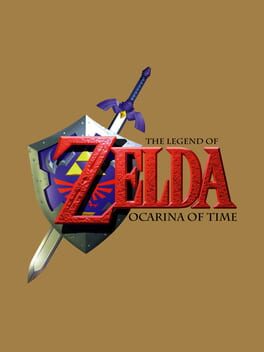
The Legend of Zelda: Ocarina of Time is the fifth main installment of The Legend of Zelda series and the first to be released for the Nintendo 64. It was one of the most highly anticipated games of its age, and is listed among the greatest video games ever created by numerous websites and magazines. The gameplay of Ocarina of Time was revolutionary for its time, it has arguably made more of an impact on later games in the series than any of its predecessors even though they had the same cores of exploration, dungeons, puzzles and item usage. Among the gameplay mechanics, one of the most noteworthy is the time-traveling system. The game begins with the player controlling the child Link, but later on an adult Link becomes a playable character as well and each of them has certain unique abilities. Ocarina of Time also introduces the use of music to solve puzzles: as new songs are learned, they can be used to solve puzzles, gain access to new areas and warp to different locations. Dungeon exploration is somewhat more puzzle-oriented than in earlier games but they are not too complex.

Role-playing (RPG) / Turn-based strategy (TBS) / Adventure / Action / Fantasy
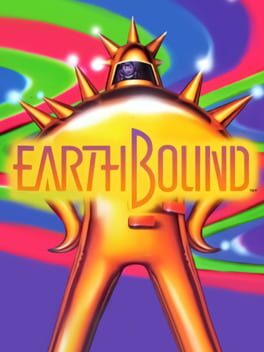
A turn-based JRPG and sequel to the then-Japan-only Earthbound Beginnings (1989) in which Ness, a young boy living in a land based on the USA, leaves home to go on an adventure through strange locations, get to know quirky characters, and defeat an unknowable alien threat called Giygas while facing up to the realities of growing up and becoming familiar with the real world.

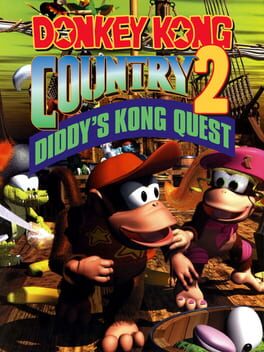
Donkey Kong Country 2: Diddy's Kong Quest is the sequel to Donkey Kong Country. It was developed by Rare and is one of the best selling Super Nintendo games.

Role-playing (RPG) / Strategy / Turn-based strategy (TBS) / Action / Fantasy
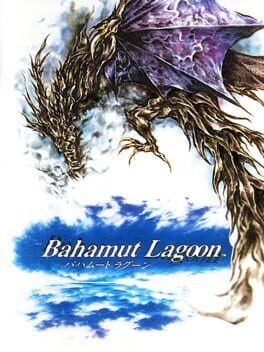
Bahamut Lagoon combines RPG mechanics with squad-based combat. Characters have HP, MP (SP for fighter characters), EXP, equipment, stats and class-specific, SP-draining special elemental abilities very much like traditional console RPGs. The player can explore his surroundings, talk to people and visit shops when not in battle, though to a limited degree as there is no world map and no way to leave the current area. The game's core is its turn-based battles fought on a 2d grid. Characters are assembled into parties of four and the player allowed a maximum of six parties, which are usually well outnumbered. The two opposing sides act in alternating turns so that each party can move once and/or attack once a turn. Attacks are divided into distant and close-up combat. In the former, a party uses a special ability (e.g. casting fireballs, throwing lightning, healing allies) of one of its members at a distance. The range and possible area of effect damage vary per ability. If the attacking party has two or more characters with the same ability, they join in the action to multiply its effectiveness. Distant combat results in less money and generally less damage, but the target cannot retaliate. Distant attacks can also affect the field; fire and ice ignite or extinguish forests and melt or freeze ice, etc. Close-up, each unit in two adjacent opposing parties can act once. Very much like Final Fantasy SNES combat, they can attack an enemy, use an item or a special ability (though these can't be combined and most only affect one target instead of all) or defend. Dragons are the player's ace in the hole. They have their own stats and gain experience like normal characters do. In battle, each party has a dragon attached to it and draws a large portion of its strength from that of its dragon: if a party's dragon is slain, the party will lose the ability to use special attacks and class-specific abilities for the remainder of the map. The beast acts as a very powerful autonomous unit that moves after its party does and it cannot be controlled beyond very simple commands, e.g. "Come!" Out of battle, dragons will eat anything and raising them by feeding them items is an important part of the game. Feeding can improve their stats as well as affect their behavior on the field, and the dragons develop into new forms as they grow. The player can change the characters in each of the parties, their formation as well as what dragon represents them at will.


Role-playing (RPG) / Turn-based strategy (TBS) / Adventure / Action / Fantasy
Pokémon HeartGold Version and Pokémon SoulSilver Version are paired Generation IV remakes of the Generation II games Pokémon Gold and Silver. Much like how Pokémon FireRed and LeafGreen revisited the Generation I story of Kanto, HeartGold and SoulSilver retell the story of Johto, with the player's starting town being New Bark Town. While the games feature several expansions in key areas, the overall plot follows the same direction as the original Gold and Silver. Some aspects exclusive to Crystal are also included. Like how FireRed and LeafGreen could link up with Ruby, Sapphire, and Emerald to complete the Pokédex by trading regionally exclusive Pokémon, HeartGold and SoulSilver can link up with Diamond, Pearl, and Platinum to obtain Pokémon unavailable in Johto and Kanto (such as the Sinnoh starters) and vice versa. Kris, despite being the female counterpart of Crystal's player character, is not included as the female player character, with a new character instead taking her place. Whether she is chosen to be the player character or not, this new character will still appear in the game. The unselected protagonist will take a pseudo-rival role similar to the unselected characters of Ruby, Sapphire, Emerald, Diamond, Pearl, and Platinum. The games were released on September 12, 2009 in Japan, February 4, 2010 in Korea, March 14, 2010 in North America, March 25, 2010 in Australia and March 26, 2010 in Europe (this excludes the Netherlands, Luxembourg and parts of Belgium due to an in-game save error, with the patched copies later released on April 2, 2010).