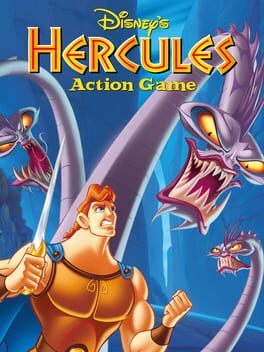
Disney's Hercules Action Game is a platform game mainly two-dimensional, although in many missions the player can walk to other planes via pathways or stairs. There are ten levels and three difficulty modes: Beginner, Medium, and Herculean. Hercules can jump, grab ledges, swing on poles, and jump while running. He has a variety of attack moves at his disposal.
The game follows the same storyline from the animated film. Hercules, son of Zeus, is stripped of his godhood and must prove that he is a true hero in order to regain his immortality, and join Zeus and the other gods on Mount Olympus. To do that, Hercules must pass several tasks and defeat many villains, and at the end, face Hades, ruler of the dead, who is also responsible for Hercules' losing of his immortality.

Shooter / Platform / Arcade / Action / Comedy
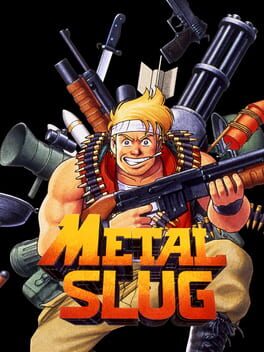
Metal Slug is a 1996 run-and-gun arcade video game originally developed by Nazca Corporation and released by SNK for the Neo Geo MVS. It is the first installment in the eponymous series. Set in 2028, players assume the role of Peregrine Falcon Strike Force soldiers Marco Rossi and Tarma Roving in a fight against the Rebel Army led by Donald Morden and overthrow his coup d'état to prevent a New World Order.


Platform / Arcade / Action / Science fiction
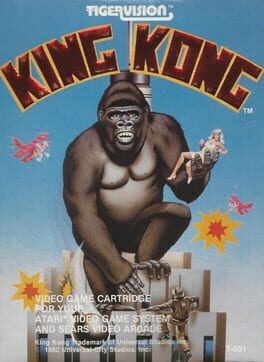
Rescue the lady from King Kong's clutches atop the Empire State Building. You must climb to the top of the building while avoiding (jumping) the bombs King Kong is throwing at you. The quicker you save her, the greater the bonus.

Shooter / Platform / Arcade / Action / Historical
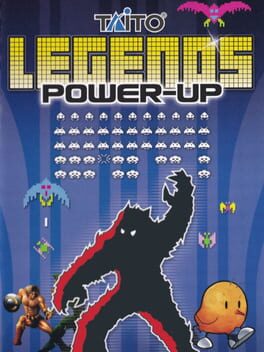
Empire Interactive's Taito Legends series of compilations moved onto handheld in Europe and the US with Taito Legends Power-Up. It is slightly different from Taito's own Taito Memories Pocket, which was only released in Japan. Most notable is the inclusion of Space Invaders and Space Invaders Part 2 and the absence of Rainbow Islands Extra.

Platform / Arcade / Action / Science fiction
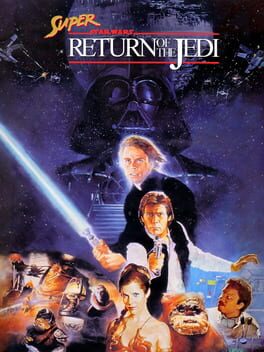
All the Adventure and Excitement of the 16-bit Game -- are you ready to challenge the dark side? Choose your Rebel warrior: Luke Skywalker, Leia Organa, Han Solo, Chewbacca or Wicket the Ewok. Relive the action of the movie as you rescue Han from Jabba the Hutt, destroy the power generator on the forest moon of Endor, challenge Darth Vader and the evil Emperor and lead the Rebel assault fleet in the final battle to destroy the new Death Star! The Force will be with you as you struggle to defeat the Empire once and for all!

Shooter / Platform / Arcade / Action / Open world
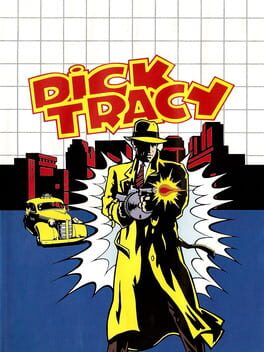
Dick Tracy is a tie in to the 1990 movie adaptation of the classic comic strip, staring Warren Beatty and Madonna. While an action/adventure hybrid using this license was released by Disney for the PC and Amiga, Titus also held a license to the movie. This is a side scrolling action game, where you control Dick Tracy as he moves through five stages, shooting gangsters with an assortment of weapons. Each stage leads to one of the mob bosses, until you ultimately capture the big man himself.

Shooter / Platform / Arcade / Action / Survival
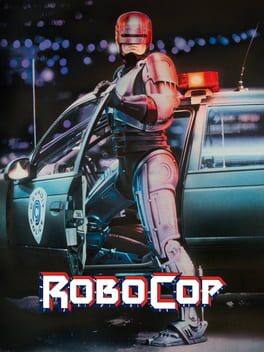
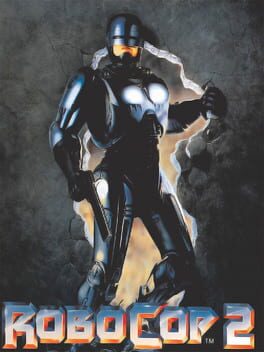
RoboCop 2 is a series of video games published in the 1990s by Ocean and Data East for various home computers and video game consoles. They are based on the movie of the same name. Three different games were produced, each produced on two systems. The version for the Commodore 64 and NES was a simple left-to-right scrolling platformer, in which RoboCop was required to collect/destroy at least two-thirds of the drug "nuke" in each level and arrest two-thirds of the suspects by running into them (in contrast to shooting them). If RoboCop does not manage to attain the required amounts of nuke or number of arrests then he has two chances in the game to prove his efficiency at a shooting range. If he succeeds, he may continue onto the next level. If he fails, or if both chances at the shooting range are already used up, he must repeat the level. The version for the ZX Spectrum and Amstrad CPC was also a platform game, but one that offered movement in both directions (vertically and horizontally) as well as into various areas providing an element of exploration. There were also a number of puzzle sub-games that had to be completed to progress in the game. The version for the 16-bit Commodore Amiga and Atari ST was similar in nature to the 8-bit Spectrum and Amstrad CPC versions, but contained completely different levels to take advantage of the extra power offered by these computers. There was also an arcade-only version of RoboCop 2, developed and published in 1991 by Data East (who still held the rights to create arcade games based on the franchise), which allowed up to two players at once (one controlling the original RoboCop, the other controlling a slightly purple-hued clone). The game followed the basic premise of the movie, but had some major sequential differences.