
Listen! An endangered dolphin is calling you! Only by learning the dolphin's sonic language can you guide her through schools of seahorses, battling a monstrous squid, to gain magic powers from and elusive seagull. Hurry! Lend an ear... You will guide your dolphin through openings in the seahorse schools by listening to sonic tones and catching waves. Pay attention to the following: THE SEAGULL: Periodically, a seagull will fly overhead. You'll know he's coming when the squid changes color. Have your dolphin leap up, touch the seagull and then quickly turn and chase the squid. This is the best way to gain points. Also, the game resets at the next difficulty level putting distance between your dolphin and the squid. THE SLIP: Another great way to outsmart the squid is by giving him "the slip". If the squid is right on your tail, wait until he catches a good wave. Then, reverse your dolphin's direction and swim under him immediately. As long as the squid's good wave remains on the screen, he won't be able to reverse and catch you. SCORING: Points are earned in a variety of ways. Every time your dolphin touches a seagull, or a squid, you score points. The number of points depends on the color of the squid. Scoring peaks at 800 per seagull and 8000 per squid. Also, you'll score 100 points each time your dolphin catches a good wave or each time you run the squid into a bad wave. And, when your dolphin swims through the seahorses, you'll score 0 to 50 points, depending on your degree of accuracy in getting her through the opening.
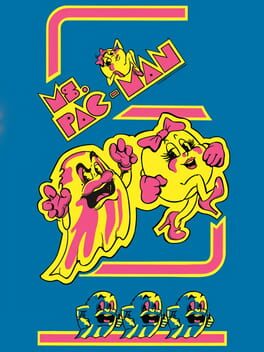
In 1982, a sequel to the incredibly popular Pac-Man was introduced in the form of his girlfriend, Ms. Pac-Man. This sequel continued on the "eat the dots/avoid the ghosts" gameplay of the original game, but added new features to keep the title fresh. Like her boyfriend, Ms. Pac-Man attempts to clear four various and challenging mazes filled with dots and ever-moving bouncing fruit while avoiding Inky, Blinky, Pinky and Sue, each with their own personalities and tactics. One touch from any of these ghosts means a loss of life for Ms. Pac-Man. Ms. Pac-Man can turn the tables on her pursuers by eating one of the four Energizers located within the maze. During this time, the ghosts turn blue, and Ms. Pac-Man can eat them for bonus points. The Energizer power only lasts for a limited amount of time, as the ghost's eyes float back to their center box, and regenerate to chase after Ms. Pac-Man again. Survive a few rounds of gameplay, and the player will be treated to humorous intermissions showing the growing romantic relationship between Pac-Man and Ms. Pac-Man, leading all the way up to the arrival of "Junior".

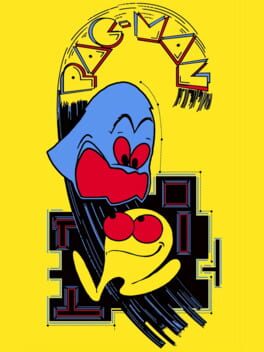
Pac-Man is a 1980 maze action video game developed and released by Namco for arcades. It is considered one of the classics of the medium, virtually synonymous with video games, and an icon of 1980s popular culture. Players control Pac-Man, who must eat all the dots inside an enclosed maze while avoiding four colored ghosts. Eating large flashing dots called Power Pellets causes the ghosts to temporarily turn blue, allowing Pac-Man to eat them for bonus points.

Puzzle / Arcade / Action / Educational
Pac & Pal is an arcade game that was released by Namco on July 30, 1983 exclusively in Japan. It runs on Namco Super Pac-Man hardware, and the object of the game is for Pac-Man to eat all the items before he is caught by the ghosts. Most of the items are fruits from the original Pac-Man game, with a few new additions. Their value varies, starting with cherries at 50 points, and ending with keys from 700 to 5000 points. The items had to first be unlocked by turning over cards distributed around the maze (instead of eating keys like in Super Pac-Man). Very few cabinets still exist today, and this is possibly one of the rarest Pac-Man titles to find in playable format outside Japan.

Adventure / Action / Science fiction
Life was an adventure for Ecco, the young dolphin. The ocean seemed endless with rolling breakers to race through! At high speed Ecco could burst through the waves leaping through the air – almost flying! Until one day, all of that changed. A freak whirlpool of air and water tore the life from Ecco’s home leaving Ecco all alone. Now he must fight to stay alive, while traversing the vast ocean in search of clues that will help him save his family and return them to the bay.

Fighting / Platform / Arcade / Action
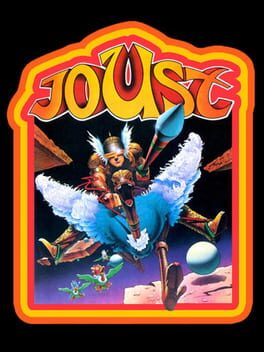
Joust is an arcade game developed by Williams Electronics and released in 1982. It is a platform game that features two-dimensional (2D) graphics. The player uses a button and joystick to control a knight riding a flying ostrich. The object is to progress through levels by defeating groups of enemy knights riding buzzards.

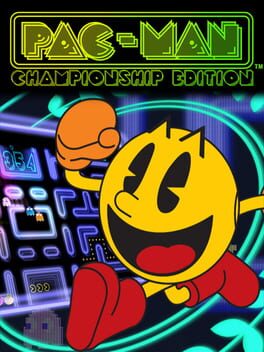
Pac-Man Championship Edition is similar in basic gameplay to the original 1980 Pac-Man: players have to eat dots, while avoiding the four ghosts that roam around the maze. Championship Edition, however, also brings many gameplay differences. The game was designed by Tōru Iwatani, the creator of the classic original 1980 arcade game Pac-Man, and it was Iwatani's final game before his retirement.

Platform / Adventure / Arcade / Action
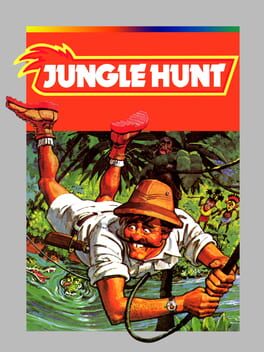
Jungle Hunt is side-scrolling arcade game produced and released by Taito in 1982. It was initially released as Jungle King. Jungle Hunt is one of the first video games to use parallax scrolling. The player controls an unnamed jungle explorer sporting a pith helmet and a safari suit. The player attempts to rescue his girl from a tribe of hungry cannibals by swinging from vine to vine, swimming a crocodile-infested river, jumping over or ducking beneath rolling rocks, then releasing the girl before she is lowered into a boiling cauldron. Home versions were released for the Apple II, Atari 2600, Atari 5200, Atari 8-bit family, Commodore 64, ColecoVision, VIC-20, and IBM PC. The PC version was developed by Sierra On-Line and is incompatible with everything except an original IBM PC/XT with a CGA video card. In the Atari-ported versions the hero is named Sir Dudley, and the girl, married to Sir Dudley, is Lady Penelope.

Platform / Puzzle / Arcade / Action / Comedy
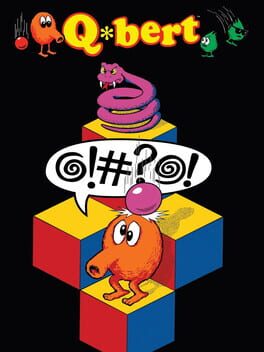
Q*bert was a popular arcade game that was released on a large number of consoles in the early 1980s. It was developed and published by Gottlieb, and became their most successful game. The concept serves as a precursor to the isometric platformer genre, where the title character must work to turn all cubes to a certain colour in a psuedo-3D world, made 3D through isometric graphics in the same way that the Penrose Stairs was made. The game was widely successful and has become a highly recognizable brand of the 1980s gaming era.