Donkey Kong Plus was an updated version of the Game Boy Donkey Kong. The only known difference between the original and Plus, aside from the graphics, was the addition of a level designer to be used through the Nintendo GameCube for players to create their own levels with. However, the game vanished the following year, and was replaced by Mario vs. Donkey Kong, with the level editor gone and the graphics replaced with pre-rendered graphics. However, the game's sequel, Mario vs. Donkey Kong 2: March of the Minis had this feature and took advantage of Wi-Fi Connection.

Platform / Puzzle / Arcade / Action
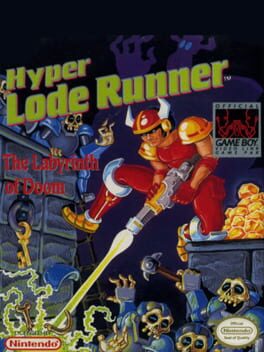
Your objective is to gather gold that is scattered on the brick platforms, which are connected by ladders. You are chased by robots (cyborgs) that end your character's life if they catch him, though you can stand on their heads. Your main weapon is the ability to dig both to the left and right of your character. The holes you dig are only temporary and fill themselves in. A robot that falls into one of your holes will be destroyed if the hole fills in before it can escape. Your character can also suffer this same fate, ending his life. Destroyed robots are replaced with new ones that appear from the top of the screen. The robots can also carry gold which they drop if they fall into a hole. The robot's movements are dependent on yours, and a significant facet of the game play is figuring out how to use the robot's movements to your advantage in clearing a stage. Besides bricks and ladders, levels also consist of blocks (which can't be dug into), rope (to traverse platform chasms) and crumbling bricks (which you fall through). Once all gold has been retrieved a missing segment of ladder will appear allowing your character to escape to the next level. Some levels contain keys and doors which provide an alternate way to leave a level.

Platform / Puzzle / Arcade / Action / Comedy
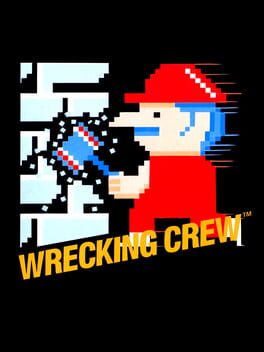
Wrecking Crew is a platform action game for one or two players. The player controls Mario (Player 2 as Luigi) working on a demolition site. The goal is to break down all of the stone walls on each stage. The game features a custom level maker, where players can make their own Wrecking Crew levels. The game had the ability to save those custom levels. However, the required peripherals (the keyboard and Data Recorder accessories) were released only in Japan.

Platform / Puzzle / Arcade / Action
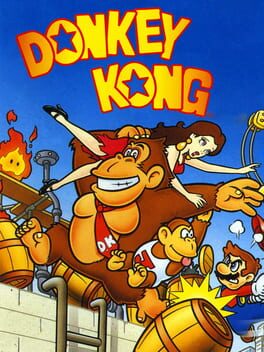
Donkey Kong is a Game Boy game which starts out with the premise of being a straight remake of the original Donkey Kong arcade game. Although at first it appears to be just a port, the familiar levels from the arcade game are just a prelude to the real platform jumping adventure. There are 97 levels spread out over 9 worlds. These levels are much more complex than the originals, featuring scrolling backgrounds, numerous objects to collect, and enemies to avoid. Along the way, you will encounter several boss style battles with Donkey Kong, as well. When played on a Super Game Boy, the game is colorized, digitized speech is added and the ending music takes advantage of the SNES sound chip.

Platform / Puzzle / Arcade / Action / Fantasy
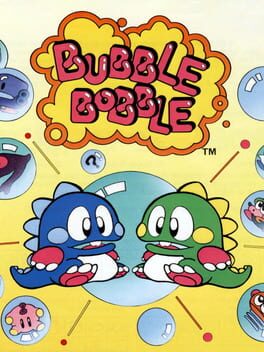
In the game, each player controls one of the two Bubble Dragons, Bub and Bob. The player can move along platforms, as well as jump to those above and to the side, similar to most platform games. The player can also blow bubbles. These can trap enemies, who are defeated if the bubble is then burst by the player's spiny back. Bubbles that contain enemies can be popped at the same time resulting in different foods being projected around the level. Each enemy trapped in a bubble equates to a different food. Food is consumed and transferred to points (an increasing scale of 1000 points is awarded for each enemy burst in tandem with another meaning: one enemy burst equals one food item worth 1000 points, two enemies burst equals two food items worth 1000 and 2000 points, three enemies burst equals three food items worth 1000, 2000 and 4000 points, and so on), which results in earning lives. These same bubbles also float for a time before bursting, and can be jumped on, allowing access to otherwise inaccessible areas. Players progress to the next level once all enemies on the current level are defeated. Enemies turn "angry" — becoming pink-colored and moving faster — if they are the last enemy remaining, escape from a bubble after being left too long or a certain amount of time has been spent on the current level. A monster will also become angry if either player collects a skull (the only negative item in the game), and the monster is hit by the resulting comet crossing the screen (however, this is a rare occurrence). After a further time limit expires, an additional invincible enemy appears for each player, actively chasing them using only vertical and horizontal movements. These do not need to be defeated to complete the level, and disappear once a player's life is lost. Contact with enemies and their projectiles (rocks, lasers, fireballs, etc.) results in death.
Platform / Puzzle / Arcade / Action / Fantasy
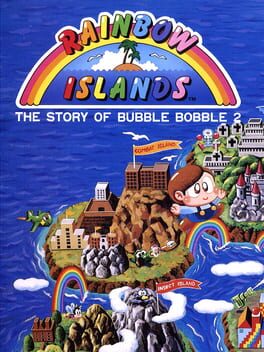
Rainbow Islands is a 1987 arcade game developed and published by Taito. The arcade version was licensed to Romstar for North American manufacturing and distribution. The game is subtitled "The Story of Bubble Bobble 2" and is the sequel to Taito's hit game Bubble Bobble from the previous year. It is the second of four arcade games in the Bubble Bobble series. The game was ported for numerous home computers and game consoles.