In Every Extend, players control a ship with the only ability to detonate itself. Stages begin with a set time limit and enemies appearing on screen in randomized patterns. When the player detonates their ship and an enemy is caught in its blast radius, the enemy will explode and have its own blast radius that other enemies can get caught in, causing a chain reaction. Every Extend Extra is a redevelopment of the popular freeware game Every Extend, which was a personal project by Kanta Matsuhisa under her "Omega" pseudonym.

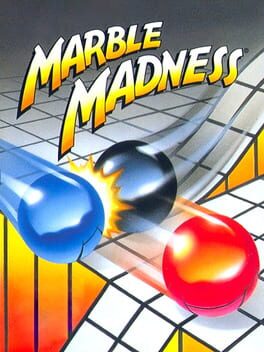
Marble Madness is an isometric platform game in which the player manipulates an onscreen marble from a third-person perspective. The player controls the marble's movements with a trackball, though most home versions use game controllers with directional pads. The aim of the game is for the player to complete six maze-like, isometric race courses before a set amount of time expires. When a player completes a race, the remaining time is added to the next race's allotted time. The game also allows two players to compete against each other. Courses are populated with various objects and enemies designed to obstruct the player. As the game progresses, the courses become increasingly difficult and introduce more enemies and obstacles. Each course has a distinct visual theme. For example, the first race, titled "Practice", is a simple course that is much shorter than the others, while the fifth race, named "Silly", features polka-dot patterns and is oriented in a direction opposite from the other courses

Shooter / Puzzle / Indie / Action / Science fiction
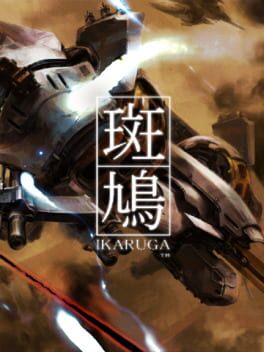
In this vertical scrolling spaceship shooter, you control a ship that can change its polarity at will. As blue/white, the ship can easily destroy red/black enemies, and vice versa. Bullets of your polarity can be collected to fuel your energy gauge, but those opposite will kill you. Destroying an enemy ship causes them to fire revenge bullets which can be absorbed and fired back by the player. Different difficulties exist to change exactly how you interact with polarized points, or how they appear. It is the spiritual successor to Radiant Silvergun, featuring similar level and boss design, as well as it's buddhism inspired themes and aesthetics. Both are directed by Hiroshi Iuchi, who also composed Ikaruga's soundtrack.

Platform / Puzzle / Arcade / Action / Fantasy
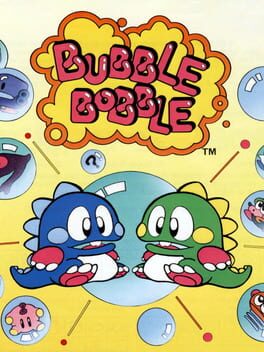
In the game, each player controls one of the two Bubble Dragons, Bub and Bob. The player can move along platforms, as well as jump to those above and to the side, similar to most platform games. The player can also blow bubbles. These can trap enemies, who are defeated if the bubble is then burst by the player's spiny back. Bubbles that contain enemies can be popped at the same time resulting in different foods being projected around the level. Each enemy trapped in a bubble equates to a different food. Food is consumed and transferred to points (an increasing scale of 1000 points is awarded for each enemy burst in tandem with another meaning: one enemy burst equals one food item worth 1000 points, two enemies burst equals two food items worth 1000 and 2000 points, three enemies burst equals three food items worth 1000, 2000 and 4000 points, and so on), which results in earning lives. These same bubbles also float for a time before bursting, and can be jumped on, allowing access to otherwise inaccessible areas. Players progress to the next level once all enemies on the current level are defeated. Enemies turn "angry" — becoming pink-colored and moving faster — if they are the last enemy remaining, escape from a bubble after being left too long or a certain amount of time has been spent on the current level. A monster will also become angry if either player collects a skull (the only negative item in the game), and the monster is hit by the resulting comet crossing the screen (however, this is a rare occurrence). After a further time limit expires, an additional invincible enemy appears for each player, actively chasing them using only vertical and horizontal movements. These do not need to be defeated to complete the level, and disappear once a player's life is lost. Contact with enemies and their projectiles (rocks, lasers, fireballs, etc.) results in death.

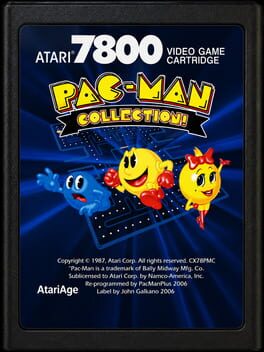
Pac-Man Collection (Atari 7800) is a 2006 homebrew compilation by Bob “PacManPlus” DeCrescenzo, published through AtariAge. It includes multiple Pac-Man and Ms. Pac-Man arcade variants—such as Puck Man, Hangly Man, Ultra Pac-Man, and Random Mazes—each can also be played in Plus mode, with selectable Fast, Slow, or Button-activated speed settings. It includes these games: Pac-Man Puck Man Hangly Man Ultra Pac-Man Random Mazes (Pac-Man style) Ms. Pac-Man Ms. Pac-Attack Ms. Random Mazes

Platform / Puzzle / Arcade / Action / Fantasy
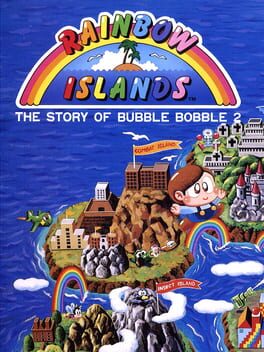
Rainbow Islands is a 1987 arcade game developed and published by Taito. The arcade version was licensed to Romstar for North American manufacturing and distribution. The game is subtitled "The Story of Bubble Bobble 2" and is the sequel to Taito's hit game Bubble Bobble from the previous year. It is the second of four arcade games in the Bubble Bobble series. The game was ported for numerous home computers and game consoles.

Puzzle / Arcade / Action / Kids
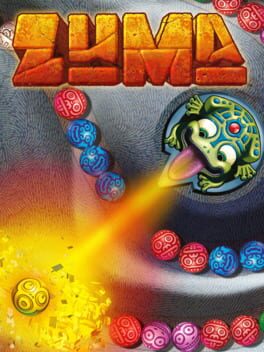
Survive the ancient temples of Zuma, the critically acclaimed action-puzzler from PopCap! Deep in the jungle lie hidden temples bursting with traps and trickery, and it's up to you to uncover their treasures. Fire magical balls from your stone frog idol to make matches of three or more and clear the deadly chain before it reaches the golden skull.