Famicom Wars is a Japanese-only video game for the Famicom (the Japanese name for the NES). It was designed by Nintendo R&D1 and programmed by Intelligent Systems and published by Nintendo. It spawned many sequels, five of which were released in America. It is the first game in the Nintendo Wars series. The gameplay can be compared to games in the Fire Emblem series, as both are in the turn based strategy genre, and both have been developed and published by the same companies (the Famicom Wars series was released first, however).

Role-playing (RPG) / Strategy / Turn-based strategy (TBS) / Fantasy / Warfare
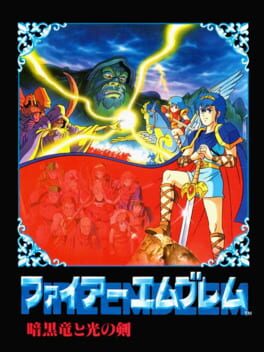
Fire Emblem: The Dark Dragon and Sword of Light is the first game in the Fire Emblem series, developed by Intelligent Systems and published by Nintendo. It was first released on the Famicom (known internationally as the Nintendo Entertainment System) on April 20, 1990. It takes place on the continent of Archanea. It stars Marth, a character who later appeared in Super Smash Bros. Melee. The first time the game was released outside of Japan was in the form of a limited edition port for Nintendo Switch, under the same name, that runs a localization script in the background, but the original version of the game was never released outside of Japan.

Role-playing (RPG) / Simulator / Turn-based strategy (TBS) / Fantasy / Science fiction
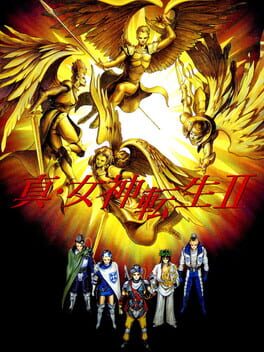
Fifty years have passed since the hero of Shin Megami Tensei followed the neutral path, defeated the leaders of Law and Chaos, and founded a state where followers of both ideologies could live freely. But his reign of freedom doesn't last long. The Messian faith gains power, expanding the Cathedral into a new enclosed environment named Tokyo Millennium. The Gaians rise up, but their rebellion is repressed by the Messians' elite warrior class, the Temple Knights. People flock into the encapsulated city, submitting themselves to the strict hierarchy imposed by the Messian Center, where only the privileged living in the Center district are safe from demonic assaults. A few years later, a retired arena fighter Okamoto rescues a man named Hawk, who was fighting for his life against a demon. He trains him to fight in the arena of the Valhalla district, hoping that he would win the tournament, which will grant them both citizenship in the Center district. When Hawk succeeds, he is brought before a Messian bishop, and learns the shocking truth about his own origins and the role he is supposed to play in the grand scheme of events. A new battle for a better future begins. Shin Megami Tensei II retains all the gameplay features of the previous game. The player is able to summon demons, fuse them to create more powerful ones, make them participate in battles, talk to random enemies and receive information from them, etc. The combat is turn-based, and the player explores the complex, maze-like dungeons from a first-person perspective view. Like in the first game, the Law, Chaos, and Neutral alignments play an important role: during the course of the game, the player will have to make choices that influence the alignment of the protagonist, steering the storyline into different directions. New features include a "magic succession" system, which allows demons to carry over their original magic spells when they are fused into new ones, a few additional spells and abilities, and the possibility to play at the casino and win unique items.

Role-playing (RPG) / Strategy / Turn-based strategy (TBS) / Fantasy / Warfare
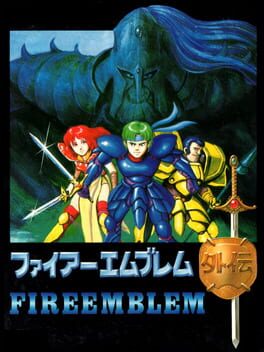
The Continent of Valencia is split into two territories. To the north is the Kingdom of Rigel, home to followers of the Dark God Doma. To the south is the Kingdom of Sofia, where the Earth Goddess Mila is worshipped. When Rigel invades Sofia, two heroes, Arum and Cellica, raise an army to topple Rigel and the Dark God that is backing the conflict.

Role-playing (RPG) / Strategy / Turn-based strategy (TBS) / Fantasy / Historical
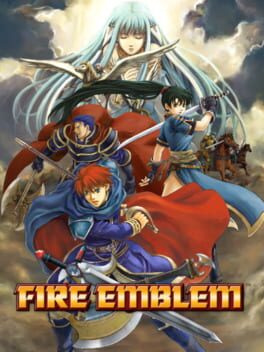
It is the seventh game of the Fire Emblem series, the second game in the series to be released for the Game Boy Advance, and the first to be released in both North America and Europe. It features a prologue storyline designed to introduce newcomers to Fire Emblem gameplay and tactical basics. The overall narrative is a prequel to the events of the previous game, Fire Emblem: The Binding Blade, which is set twenty years later. The game was first released under the localized title "Fire Emblem" in the West, but it was later rebranded as "Fire Emblem: The Blazing Blade" when Fire Emblem Heroes was released.

Simulator / Strategy / Turn-based strategy (TBS) / Action / Science fiction
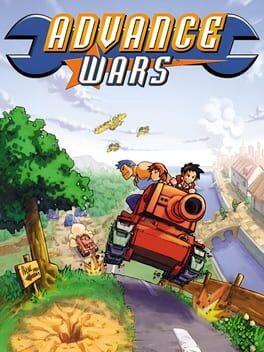
Just because this battle fits in the palm of your hand doesn't mean the stakes are small. On the contrary, this all-or-nothing fight will have you accessing guns, grenades, launchers, and weaponry of all sorts. Players assume command of an army that's out to reclaim a world that's been broken up by warring factions. The battle map is essentially a grid, and moving units is like moving chess pieces on a board -- each of the units can move a specific amount of spaces within this grid, and can only attack at a certain distance from specific enemies. Advance Wars features more than 115 maps, a map editor, head-to-head play via link cable, and an easy-to-understand tutorial mode for beginners.

Role-playing (RPG) / Strategy / Turn-based strategy (TBS) / Fantasy / Historical
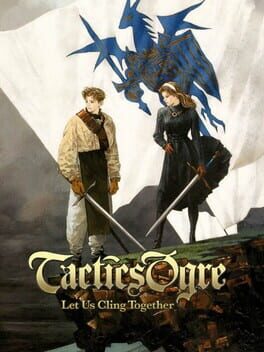
Tactics Ogre is a 3D isometric tactical role-playing game. The player starts out with a band of troops, builds a small army and fights many battles with choices to make in between, that will determine which one of the eight possible endings will be reached in a non-linear storyline. The player has the option to recruit characters, control individual equipment of each character, with over six male character classes, six female character classes, three demi-human classes, and more. It is also possible to train at safe locations to prepare the army before the next battle or storyline advancement.

Role-playing (RPG) / Strategy / Turn-based strategy (TBS) / Fantasy
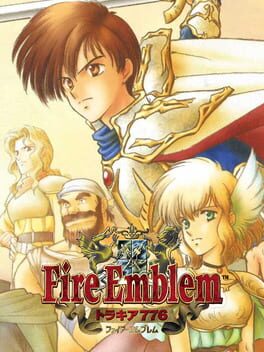
Fire Emblem: Thracia 776 is a Japanese tactical role-playing game developed by Intelligent Systems and published by Nintendo, and the fifth installment in the Fire Emblem series. It is also the third and final Fire Emblem series title to be released on the Super Famicom. Fire Emblem: Thracia 776 takes place between Chapters 5 and 6 of the previous game, Fire Emblem: Seisen no Keifu. Several characters from Fire Emblem: Seisen no Keifu appear, such as Leaf, Fin, and Nanna. It takes place in the Thracian peninsula in southeastern Jugdral.

Role-playing (RPG) / Strategy / Turn-based strategy (TBS) / Fantasy / Warfare
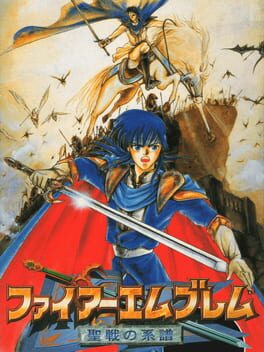
Fire Emblem: Genealogy of the Holy War is a Japanese Super Famicom tactical role-playing game developed by Intelligent Systems and published by Nintendo. It was released on May 14, 1996 in Japan. It is the fourth title in the Fire Emblem series, the second Fire Emblem title for the Super Famicom, and the last game produced by the late Gunpei Yokoi. It was released on the Japanese Virtual Console service on January 30, 2007. The game was originally to be titled as Fire Emblem: Light Inheritors.