Developed by Hudson Soft.
Platform / Role-playing (RPG) / Adventure / Action / Fantasy
Faxandu is for the Famicom and NES. The name was licensed by Falcom and was developed and released in Japan in 1987. Nintendo also released the game to the world market in 1990. It can be considered a side-story of Xanadu, which is the second installment of Falcom's long-running RPG series, Dragon Slayer. The title is a combination of "Famicom" and "Xanadu"
The player-controlled protagonist of is an unidentified wanderer. He has no name, though the Japanese version allows the player to choose one. The game begins when he approaches Eolis, his hometown, after an absence to find it in disrepair and virtually abandoned. Worse still, the town is under attack by Dwarves.The Elven king explains that the Elf fountain water, their life source, has stopped and provides the protagonist with 1500 golds, the games currency, to prepare for his journey to uncover the cause.As the story unfolds, it is revealed that Elves and Dwarfs lived in harmony among the World Tree until The Evil One emerged from a fallen meteorite. The Evil One then transformed the Dwarves into monsters against their will and set them against the Elves. The Dwarf King, Grieve, swallowed his magical sword before he was transformed, hiding it in his own body to prevent The Evil One from acquiring it. It is only with this sword that The Evil One can be destroyed.His journey takes him to four overworld areas: The tree's buttress, the inside of the trunk, the tree's branches and finally the Dwarves' mountain stronghold.
Platform / Puzzle / Role-playing (RPG) / Action / Fantasy
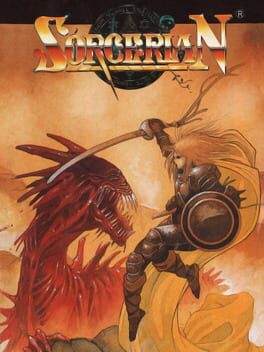
Sorcerian is a side-scrolling action-RPG. The player can create up to ten characters, from whom up to four members can be present in a party at the same time. Each character is highly customizable, with four different classes/races (fighter, wizard, elf, and dwarf) and over 60 possible jobs/occupations (ranging from clown to exorcist) available for them to perform; each has its own strengths and weaknesses, affecting the seven primary attributes (strength, intelligence, protection, magic resistance, vitality, dexterity, and karma) in different ways, as well as different equipment limitations. The player can choose from fifteen different scenarios, or quests, to play through in the order of their choice. The party must battle enemies and perform tasks within the given levels to clear each scenario, before moving onto another scenario of their choice. The player controls the entire party at the same time, with all four members running in a line, jumping in sequence, and attacking in unison. The party members follow behind in a manner similar to the Options in the arcade shooter Gradius (1985). Sorcerian also employs class-based puzzles, such as using a high-strength character to force open doors. All the characters have a default starting age of 16. Each time a player begins a new scenario, a year passes by, while additional time passes by in towns as a character goes through training or enchants items. The characters age at different rates depending on their race, with humans reaching old age at 60, dwarves at 100, and elves at 200. Upon reaching old age, for every year that passes, a character can die permanently at a random time. There is also an “Advance Time” to speed up the flow of time. Another new feature of Sorcerian was its episodic format that extended across various expansion packs. Besides the default fifteen scenarios that come with the game, there were a number of additional scenario packs released. The aging system was created with the additional scenario packs in mind.

Platform / Role-playing (RPG) / Adventure / Action / Fantasy
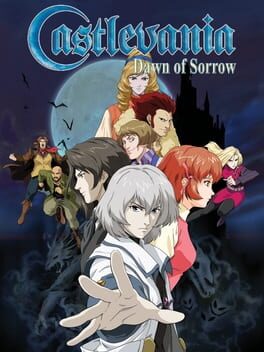
Draw the correct magic seal quickly, or your enemies will never die! Fight and explore through one of the largest castles ever seen in the series! Race another player through custom-made castle rooms in versus mode! A year has passed since Soma Cruz discovered the evil of Dracula hidden inside his body. Now, a mysterious cult wants to release the power of the Lord of Darkness. As Soma, you must do everything in your power to stop them before it's too late.

Platform / Puzzle / Role-playing (RPG) / Action / Fantasy
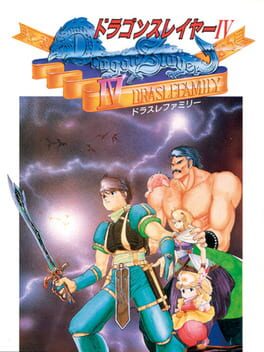
Play as five members of a family that set out to kill a dragon hidden within a giant maze.

Platform / Role-playing (RPG) / Adventure / Action / Fantasy
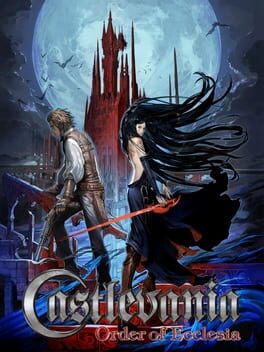
In the absence of the Holy Whip, those who live in fear of Dracula seek a replacement, which takes the form of the Order of Ecclesia, an organization that holds the secret to manipulating Glyphs. Shanoa, a young woman possessed with a unique ability to channel Glyphs, is chosen as our protector. This is her destiny and the story of the sacred Order of Ecclesia. Use the brand new Glyph system with over 100 different attack combinations to battle Dracula and his minions throughout 20 explorable areas! Take part in side quests and collect items to power up! Experience a gripping storyline featuring new characters!

Platform / Role-playing (RPG) / Hack and slash/Beat 'em up / Action / Fantasy
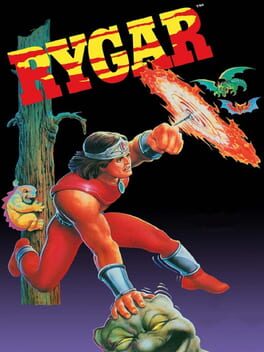
An open-world action-adventure game for the Nintendo Entertainment System that features a barbarian warrior with a distinctive "diskarmor" weapon. It is distinct from the original 1986 Arcade game Rygar, which saw numerous home console ports.

Platform / Puzzle / Role-playing (RPG) / Action / Fantasy
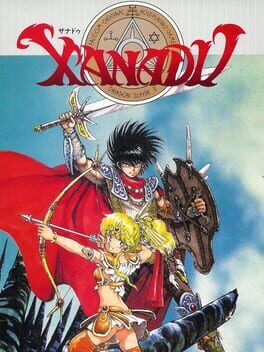
In Legend of Xanadu, the player controls a young adventurer named Areios. Monsters attack his homeland, and he is forced to flee. After traveling by ship and arriving at the town Bolda, Areios finds out that strange things have been happening in the North Cave near the town. His first mission will be to venture to the North Cave and investigate the matter. Of course, soon Areios finds himself involved in a battle against sinister forces, and commences the longest and most dangerous adventure of his life! The game is an action RPG set in the Dragon Slayer universe, with a gameplay style similar to Falcom's other popular series, Ys. Controlling Areios, the player explores the top-down world, visiting towns and fighting monsters in vast outdoor areas and dungeons. Like in Ys series, it is sufficient to "bump" into a monster in order to inflict damage. Areios gains hit points and becomes stronger by sustaining damage from enemies and resting. His weapons and armor can gain experience and level up. In many areas, companions will join Areios and help him in combat, controlled by the computer AI. The game is divided into chapters; the final stage of each chapter is a side-scrolling/platform level, which Areios has to navigate in order to reach the boss enemy, defeat him, and end the chapter. In such stages, the combat turns into a more familiar action-oriented style, with the player being required to press buttons in time in order to execute attacks and jump. There is a day/night cycle in the game, manifested not only in graphical changes, but also in the schedules of townspeople: when it's dark, people will return to their homes and go to sleep, etc.

Platform / Role-playing (RPG) / Adventure / Action / Fantasy
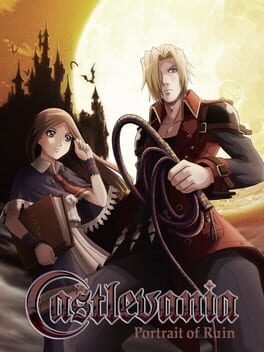
Castlevania: Portrait of Ruin is a side-scrolling action RPG where you switch between two hunters, Jonathan Morris and Charlotte Aulin, to explore Dracula's castle and defeat the vampire Brauner. Set in 1944, Jonathan wields the Vampire Killer whip while Charlotte casts magic. You'll navigate eight painted worlds hidden within the castle, solve puzzles using each character's unique abilities, and acquire new skills and weapons. Your decisions determine which of multiple endings you receive.

Role-playing (RPG) / Adventure / Fantasy / Sandbox
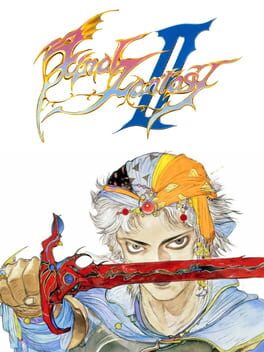
Final Fantasy II is the second installment in the Final Fantasy series, developed and published by Squaresoft. It was directed by Hironobu Sakaguchi, with Yoshitaka Amano designing the characters and Nobuo Uematsu composing the score. It was notable for being one of the first story-intensive RPGs released for console systems, and introducing many series staples, including chocobos and a character named Cid. Its story is unrelated to the original FINAL FANTASY, and its gameplay is a major departure from the previous title for eliminating the traditional experience-based progression system.