A Spike and Chunsoft produced continuation to the long running Shiren the Wanderer series, which was launched exclusively on the PlayStation Portable in Japan
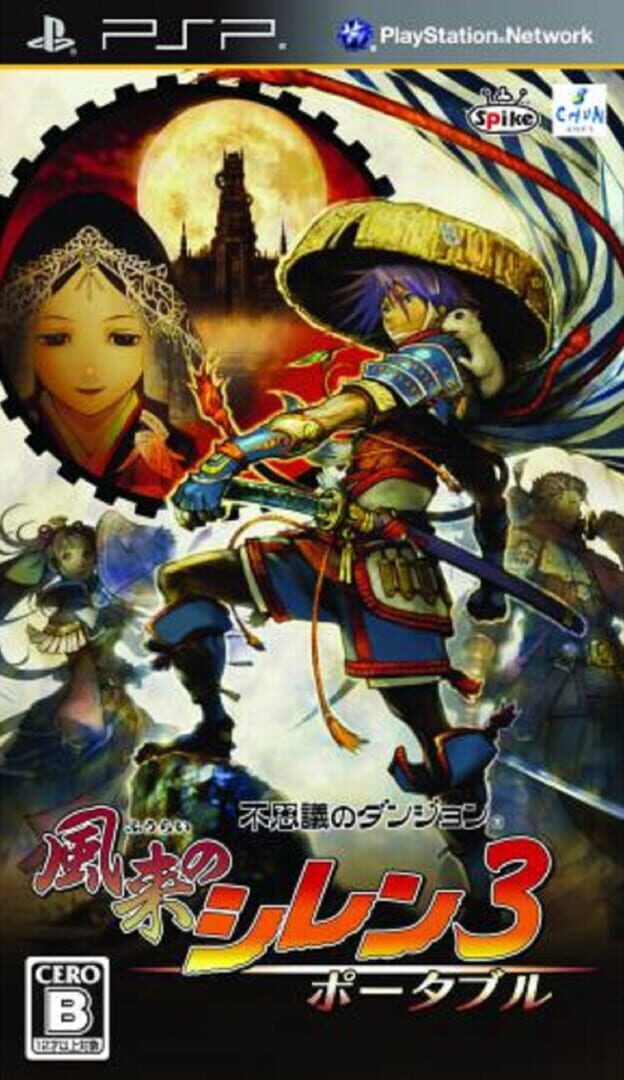
The game's plot happens one year after Shiren the Wanderer GB2: Magic Castle of the Desert. Shiren and his partner Koppa reunites with his swordsman, Sensei, then led by him to embark on a journey to solve the mystery of the legendary Karakuri Mansion.

Role-playing (RPG) / Strategy / Turn-based strategy (TBS) / Fantasy / Historical
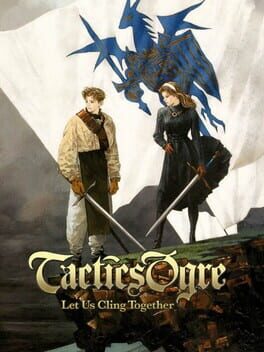
Tactics Ogre is a 3D isometric tactical role-playing game. The player starts out with a band of troops, builds a small army and fights many battles with choices to make in between, that will determine which one of the eight possible endings will be reached in a non-linear storyline. The player has the option to recruit characters, control individual equipment of each character, with over six male character classes, six female character classes, three demi-human classes, and more. It is also possible to train at safe locations to prepare the army before the next battle or storyline advancement.

Role-playing (RPG) / Strategy / Action / Fantasy
Diablo is an isometric strategy RPG and one of the most well-known examples of the action-RPG subgenre. Although some of the game mechanics resemble a typical RPG, all actions are done in real-time just like in an action game. The player have to kill hordes of monsters through randomized dungeon levels in order to gain experience points, gold and a variety of equipment to bolster the hero's monster-killing potency.

Role-playing (RPG) / Fantasy / Science fiction
Live A Live's story is split across seven seemingly unrelated chapters that can be played in any order, based on popular genres such as Western, science fiction, and mecha. Each chapter has its own plot, setting, and characters. Although the basic gameplay is the same throughout the game, each chapter adds a new factor to the basic formula, such as the stealth elements in the ninja chapter. After the first seven chapters are completed, two final chapters take place to establish the connection between the seven previous and resolve the story.

Role-playing (RPG) / Turn-based strategy (TBS) / Adventure / Fantasy / Historical
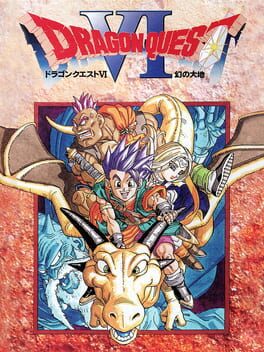
Dragon Quest VI is the sixth installment in the Dragon Quest series. It is the penultimate title for the Nintendo Super Famicom as well as the last game in the Zenithia trilogy, and the first game in the series to be developed by Heartbeat, rather than Chunsoft. Like every other Dragon Quest game, the setting in Dragon Quest VI is very medieval, complete with castles, knights, and magic. The main world is divided into the Lower World and the Upper World, each with a separate but similar map. To get from one world to the other, the party uses special warps (such as in wells) or by ascending/descending colossal stairs on the world map.

Role-playing (RPG) / Sport / Fantasy / Historical
Dragon Quest VI did not receive an enhanced remake on a console until the Nintendo DS. The Dragon Quest VI enhanced remake for the Nintendo DS was announced in late 2007 by Square Enix and was developed by ArtePiazza. A handful of changes were made to the game, some remaining controversial among fans.

Platform / Role-playing (RPG) / Hack and slash/Beat 'em up / Action / Fantasy
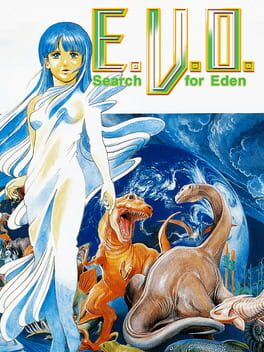
The storyline of E.V.O.: Search for Eden follows the same patterns as modern Evolution theories. The players first controls a prehistoric sea organism, and fights to gain evolution points with which he can improve his fish's body parts and upgrade his attack/defense abilities. The gameplay is not completely linear, which means that certain choices of paths and stages will affect the player's success. The game is composed of a series of stages, in which the sea organism slowly evolves into an amphibian, and later a land-only creature. The physical changes are fairly scientifically accurate which gives the game a semi-educational purpose as well.

Puzzle / Role-playing (RPG) / Adventure / Fantasy / Science fiction
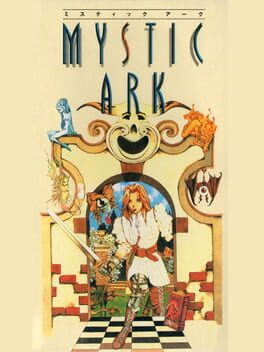
Seven heroes from seven different Worlds. Seven heroes who were brought to a mysterious temple on a remote island and transformed into statues. Seven heroes who are chosen to bring harmony back to the universe: Miriene the witch (wizard), Lux the tetsujin (a race of iron people), Reeshina the grappler (monk), Tokio the ninja, Kamio the ogre, and Mesia the priestess. The seventh hero is you, the protagonist of the game - the knight Remeer or the female warrior Ferris. Your first task will be to release your companions from the statues they are locked in. You must travel to the Cat World and to retrieve an important artifact. But your main objective is to visit all the seven Worlds and to find seven mystic arks - the items that will re-unite those Worlds and bring peace to them. "Mystic Ark" is a RPG closely connected to 7th Saga. You travel on overworld map, visit towns, buy equipment, and descend into dungeons. The combat is turn-based and viewed from a third-person "over-the-shoulder" perspective. The battles are not random: the enemies can be seen as white dots on your radar, and if you don't want to fight, you can sometimes outrun or avoid them. The game also contains elements of pure adventure: often you must investigate objects closely and use items from your inventory on them.
Role-playing (RPG) / Adventure / Visual Novel / Action / Fantasy
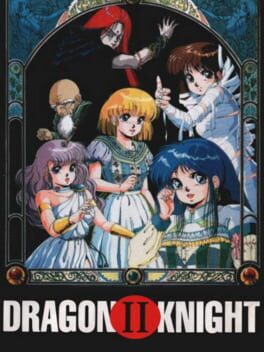
Dragon Knight II is the predecessor to Knights of Xentar, the only Dragon Knight game that was ever translated into English. This is a first-person game that is mainly dedicated to dungeon exploring. Takeru has to explore the three dungeons, fighting enemies and sometimes talking to dungeon inhabitants. The enemies are the girls who were turned into monsters by Mesaana. In town, Takeru can also buy weapons, armor, and items, and talk to various people.