Mystery box
?
Sealed
Mystery Box
Every game in your current results, in one box. Add it to a quest and each run draws a fresh game from it, revealed on release day.
SFC
1992
This side out
Real Time Strategy (RTS) / Role-playing (RPG) / Strategy / Action / Fantasy
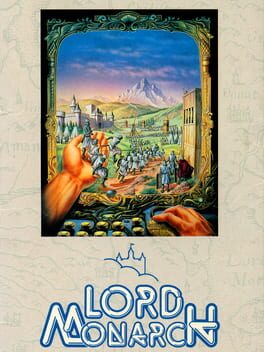
The Super Famicom version of Lord Monarch additional themes in addition to the medieval Europe theme. There is a futuristic theme with robots, a fast food theme with French fries and soft drinks attacking health food, a Three Kingdoms era theme, and a fairy-tale theme. The game is automatically paused until someone presses the Start button, so there is unlimited time for making alliances in the Super Famicom version—until the start button is pressed. The Super Famicom version of Lord Monarch was one of the few games to support the Super Famicom mouse. A later version of the game was broadcast exclusively for Japanese markets via the Super Famicom's Satellaview subunit under the name BS Lord Monarch and was view-limited.
SFC
1995
This side out
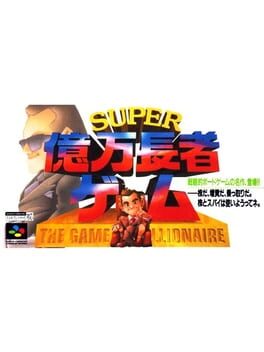
Super Okuman Chouja Game ("Super Billionaire Game") is a multiplayer virtual board game that concerns commerce and property development, not unlike Monopoly. On three separate maps - one based on the countries of the world, one based on a futuristic Tokyo and one on a historical Edo - the player moves across the board and buys and develops the various properties they land on. The goal is to make the most money and/or bankrupt the opponents. The game is the third in the Okuman Chouja series, though the only one to be released on the Super Famicom.
Satellaview
This side out
Released on Satellaview, by Nintendo Entertainment Analysis & Development.
Satellaview
1997
This side out
DoReMi-ya Original Sound Witch is a SoundLink compatible game for the Satellaview from the Milon series.
PS1
1995
This side out
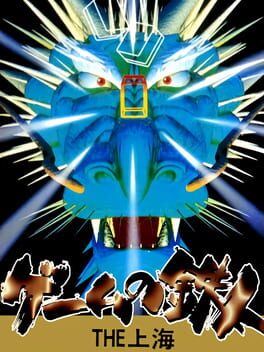
Game no Tetsujin: The Shanghai is a Puzzle game, published by SunSoft, which was released in Japan in 1995.
Satellaview
This side out
Fighting / Sport / Non-fiction
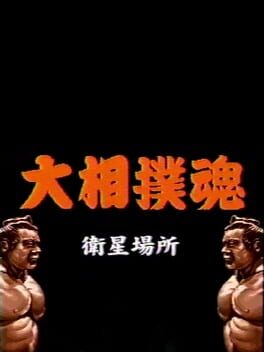
Takara-hai Oozumou Eisei Basho is a port of Oozumou Tamashii for the Satellaview which had SoundLink support. It is a sumo fighting game, which was accompanied by a live broadcast. The gameplay is divided into two parts; the player does the training in the first half, while real matches begin in the second half. Scores are counted according to the kinds of used techniques. A voice guide is provided by Kiyoko Taniguchi.
SNES
1993
This side out
Role-playing (RPG) / Quiz/Trivia / Comedy
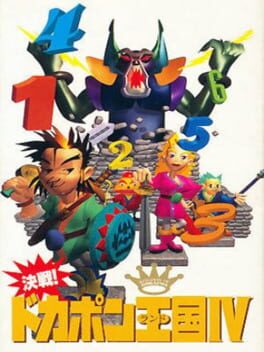
Kessen! Dokapon Okukoku IV: Densetsu no Yuusha-tachi is a Role-Playing game, published by Asmik Ace Entertainment, Inc, which was released in Japan in 1993.
PS1
1995
This side out
Puzzle / Simulator / Strategy / Fantasy
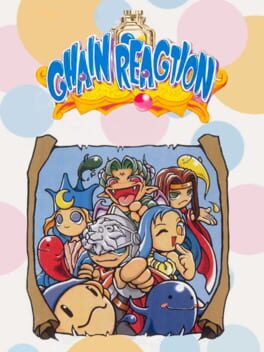
The arcade game "Magical Drop" received an updated version named "Magical Drop Plus 1!" that features aesthetic improvements and also introduces a "Solo Play" mode. Magical Drop Plus 1! was released in North America and Europe as "Chain Reaction"; in this version, the puzzle pieces are changed from spherical Drops to various items (such as food or celestial bodies) and the character-unique voice acting is replaced by a single male narrator. All versions of the original arcade game were developed for Data East's "MLC" arcade hardware. The game includes two game modes: the one-player score-based Solo Play (where additional lines of tiles regularly drop from the top of the screen) and two-player competitive Battle Mode (where the second player can be human or CPU opponents). Similar to Tetris Attack, players can make "chain reactions" by quickly creating near-simultaneous matches to either boost their score (in Solo Play) or fill up more of their opponent's playfield (in Battle Mode). Magical Drop was ported to the Super Famicom, which includes a puzzle mode that challenges players to solve preset puzzles given a limited number of possible moves. The game was re-imagined for the Sony PlayStation and Sega Saturn with different, pre-rendered characters. The Sega Saturn port was going to be released in America by Koei, and appeared at E3 1997, however the American release was cancelled. Finally, a port of the game is part of Magical Drop III + Wonderful; this includes the PAL version of III + Wonderful, which retains the Magical Drop Plus 1! name as opposed to using Chain Reaction.
Satellaview
1998
This side out
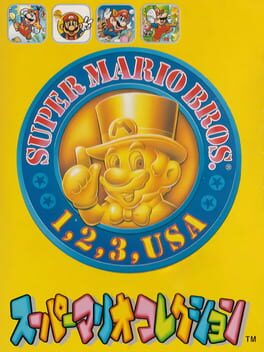
The fourth and final part (week) of BS Super Mario Collection. BS Super Mario Collection is an altered version of Super Mario All-Stars. It was only released via broadcast on the Satellaview add-on for Super Famicom. It consists of levels from the Super Mario All-Stars versions of Super Mario Bros. and Super Mario Bros. 3. Using the Soundlink feature, radio-quality music was streamed during the broadcast, including music from Mario-related CDs of the time as well as licensed music. There was also some narration, as well as added cutscenes. Some minor changes were also made to gameplay.
SFC
1995
This side out
Sport / Card & Board Game / Non-fiction
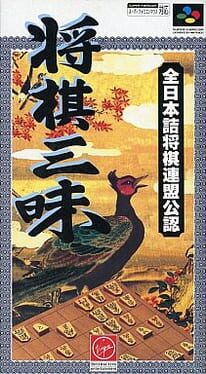
Shogi Zanmai is a Miscellaneous game, published by Virgin Interactive, which was released in Japan in 1995.
Satellaview
1996
This side out
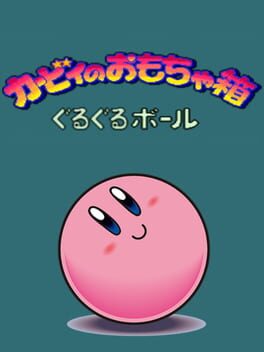
In this game, the player fires spherical Kirbys through a spiral tube, which is designed to look like Efreeti. This tube has holes in it, which a speedy Kirby will pass right over. The point is to fire the Kirbys with just the right amount of power to pass over certain holes but slow down and fall into another hole. Different holes give different numbers of points, so the goal of the player is to shoot his/her Kirbys into the highest-scoring hole as much as possible. When the player runs out of Kirbys, the game ends. Like every other sub-game in Kirby's Toy Box, this game could only be downloaded by the Satellaview during the brief period it was broadcast.
Satellaview
1996
This side out
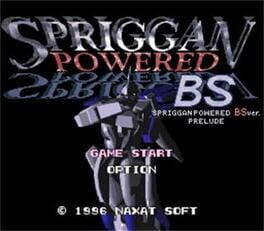
Released in 1996 on Satellaview, by Micronics.
Satellaview
1996
This side out
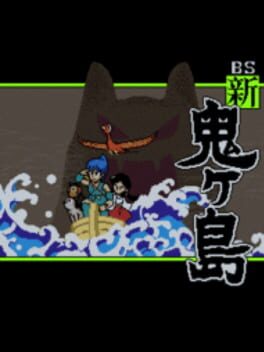
BS Shin Onigashima is a Downloadable 4-part Soundlink game for the Satellaview that was broadcast in at least 2 distinct runs between September 29, 1996 and January 31, 1996. The game was popular and won its December 1997 rebroadcast through the votes of players in the Third Player's Choice competition. The game came in second (in terms of votes) to BS SimCity: Machi Tsukuri Taikai and so it was broadcast second as a 4-day broadcast. BS Shin Onigashima was a remake sequel to the earlier Shin Onigashima, a game that was released for the Famicom Disk System in September of 1987. The major difference between the two games relate to the SoundLink elements that were introduced for the Satellaview broadcasts. BS Shin Onigashima was later re-made in December 1997 as the commercial release, Heisei Shin Onigashima, for the Nintendo Power system. This was later followed-up by the May 1998 Super Famicom cartridge release of the same name.
SFC
1995
This side out
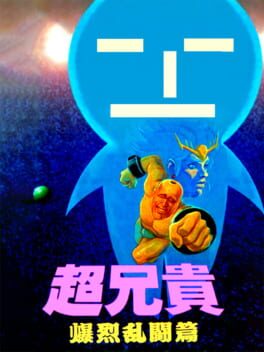
Botei has returned for the 11th Galaxy Bodybuilding Competition after his defeat to Idaten, Samson and Adon, and is aiming for victory to become the greatest bodybuilder in the Galaxy. Idaten must train his body and mind, to get chiseled, oiled and muscular to prove he is the true king of protein and the Galaxy's greatest body.
Satellaview
1996
This side out
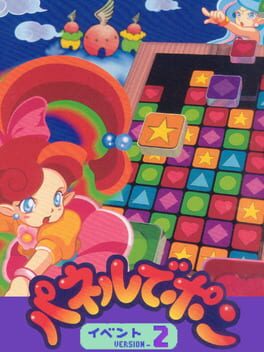
Panel de Pon: Event Version 2 was an event released on the Super Famicom's Satellaview service. This allows you to play the Endless mode, the Stage Clear mode and an Event 2 mode in which you compete against Sherbet, Seren and Cordelia within a 5 minute time limit.
SFC
1994
This side out
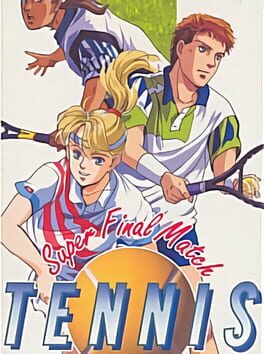
Super Final Match Tennis is a multiplayer tennis game for the Super Famicom. It features 28 different tennis professionals (fourteen male, fourteen female) and can support up to four players with the multi-tap peripheral. Various modes, such as exhibition and tournament, are available to play through. Super Final Match Tennis is a sequel to the highly regarded Final Match Tennis, released on the PC Engine in 1991. Another follow-up for the PlayStation, Hyper Final Match Tennis, would be released in 1996.
Satellaview
1997
This side out
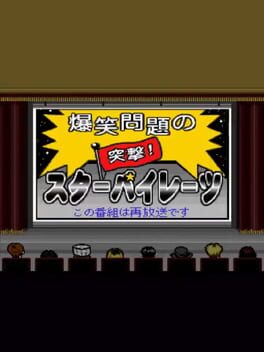
The third episode of Bakushou Mondai no Totsugeki Star Pirates. Bakushou Mondai's Assault of the StarPirates is a game released exclusively for the Satellaview (Super Famicom add-on) in Japan. It featured a duo of famous japanese comedians called Bakusho Mondai. It had Soundlink support and was released in four chapters.
Still plenty of games...