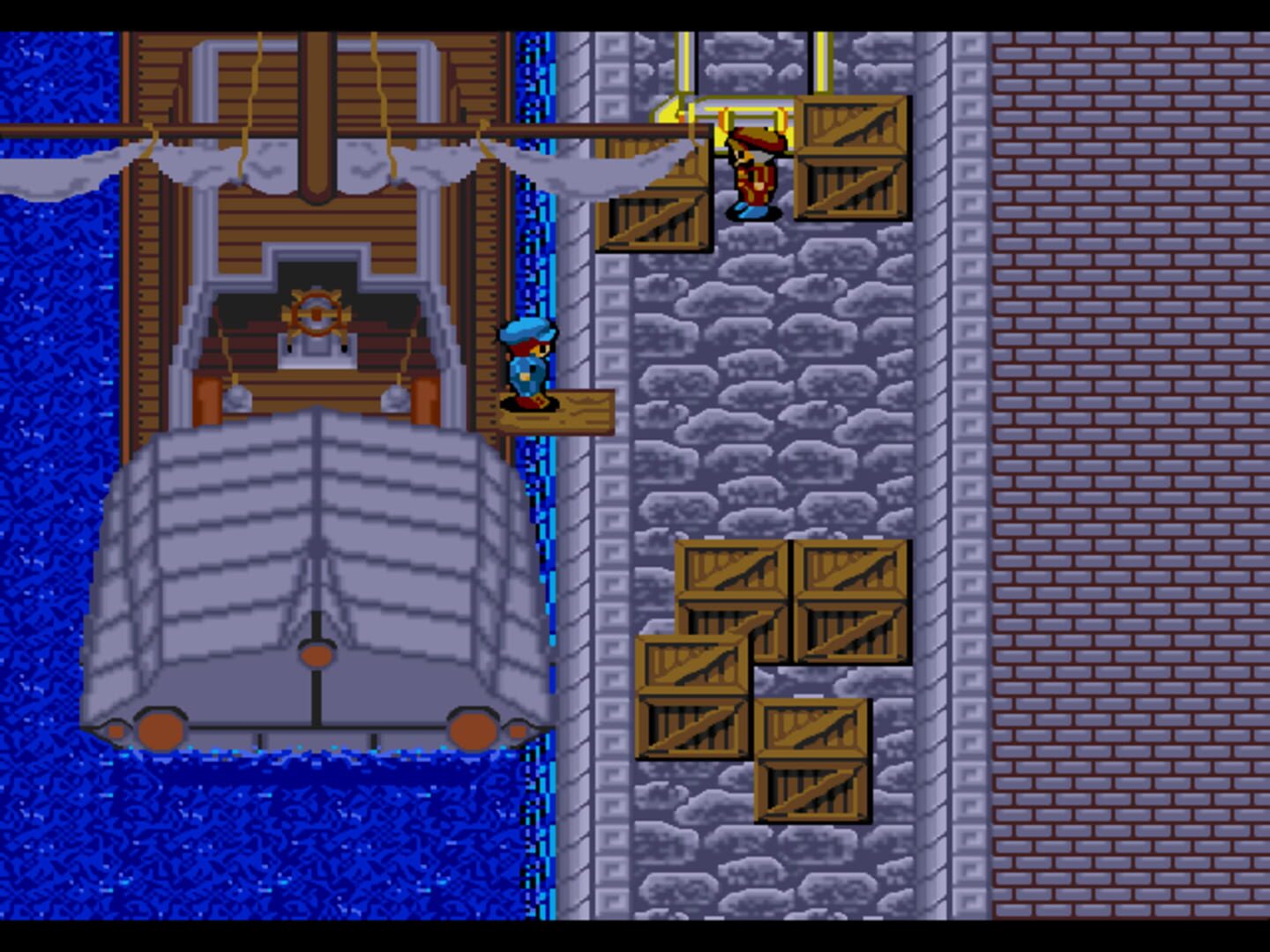
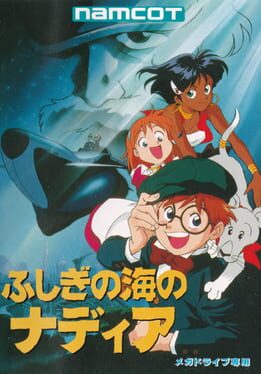
Fushigi no Umi no Nadia is a 1991 adventure game for the Sega Mega Drive by Namco released exclusively in Japan to tie into the Fushigi no Umi no Nadia anime series. An English-language fan translation was released in July 2011.

Role-playing (RPG) / Adventure / Action / Fantasy
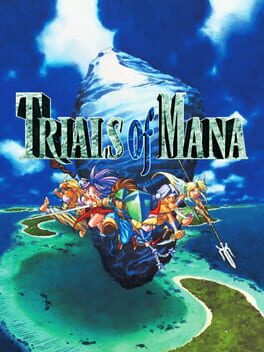
Trials of Mana is the third installment of the Mana series, developed by Square under the direction of series creator Koichi Ishii. The game takes place in a new world where, once again, the Mana Tree is under threat from an ancient evil thought sealed away. Players choose three from among six heroes as the chosen wielder of the Mana Sword and their two companions on the journey to claim the holy blade and preserve what remains of the Mana power.

Role-playing (RPG) / Adventure / Action / Fantasy
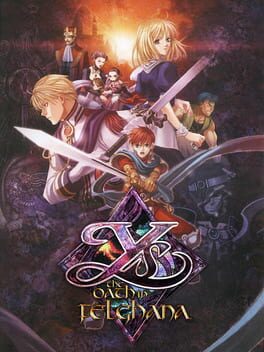
Ys: The Oath in Felghana is a 3D reimagining of Ys III: Wanderers from Ys. It is an action role-playing game featuring real-time combat, interconnected areas, platforming elements, and large boss encounters. This version is based on the original 2005 PC release and includes an English localization, achievements, and cloud saving.

Role-playing (RPG) / Adventure / Action / Fantasy
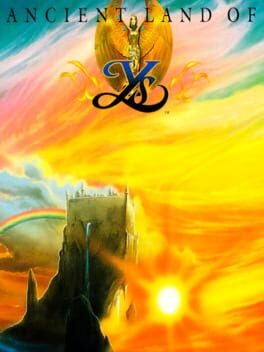
The hero of Ys is an adventurous young swordsman named Adol Christin. As the story begins, he has just arrived at the Town of Minea, in the land of Esteria. He is called upon by Sara, a fortuneteller, who tells him of a great evil that is sweeping the land. Adol is informed that he must seek out the six Books of Ys. These books contain the history of the ancient land of Ys, and will give him the knowledge he needs to defeat the evil forces. Sara gives Adol a crystal for identification and instructs him to find her aunt in Zepik Village, who holds the key to retrieving one of the Books. With that, his quest begins.

Role-playing (RPG) / Adventure / Action / Fantasy
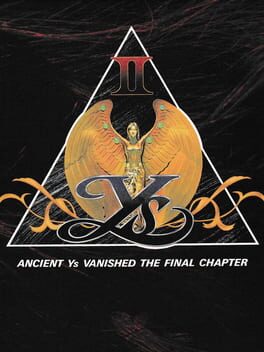
Ys II: Ancient Ys Vanished - The Final Chapter is a direct sequel to Ys I: Ancient Ys Vanished - Omen. The game continues to use the action role-playing combat style of the first installment, which requires the player to have the protagonist run into the enemy to deal damage, without needing to press an attack button. The player should carefully choose the angles and the degree of contact with the enemy; otherwise, the hero will be killed. The player character can (and should) level up, perform quests for village people, gather money, and upgrade weapons and inventory, like in most other RPGs. The sequel offers a longer quest than the first installment and adds a magic arsenal to Adol's abilities. Among the magic spells are a fire attack, a time-stopping spell, and a transformation ability that allows Adol to pass for a monster and converse with enemies. Magic spells deplete Adol's magic points bar.

Platform / Puzzle / Role-playing (RPG) / Action / Fantasy
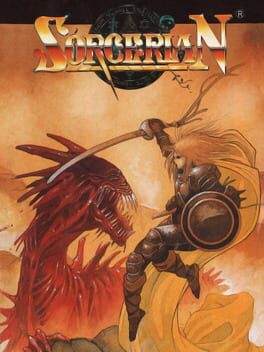
Sorcerian is a side-scrolling action-RPG. The player can create up to ten characters, from whom up to four members can be present in a party at the same time. Each character is highly customizable, with four different classes/races (fighter, wizard, elf, and dwarf) and over 60 possible jobs/occupations (ranging from clown to exorcist) available for them to perform; each has its own strengths and weaknesses, affecting the seven primary attributes (strength, intelligence, protection, magic resistance, vitality, dexterity, and karma) in different ways, as well as different equipment limitations. The player can choose from fifteen different scenarios, or quests, to play through in the order of their choice. The party must battle enemies and perform tasks within the given levels to clear each scenario, before moving onto another scenario of their choice. The player controls the entire party at the same time, with all four members running in a line, jumping in sequence, and attacking in unison. The party members follow behind in a manner similar to the Options in the arcade shooter Gradius (1985). Sorcerian also employs class-based puzzles, such as using a high-strength character to force open doors. All the characters have a default starting age of 16. Each time a player begins a new scenario, a year passes by, while additional time passes by in towns as a character goes through training or enchants items. The characters age at different rates depending on their race, with humans reaching old age at 60, dwarves at 100, and elves at 200. Upon reaching old age, for every year that passes, a character can die permanently at a random time. There is also an “Advance Time” to speed up the flow of time. Another new feature of Sorcerian was its episodic format that extended across various expansion packs. Besides the default fifteen scenarios that come with the game, there were a number of additional scenario packs released. The aging system was created with the additional scenario packs in mind.
Platform / Role-playing (RPG) / Adventure / Action / Fantasy
A female-targeted Metroidvania-style side-scrolling action RPG with dating sim elements.

Role-playing (RPG) / Adventure / Fantasy
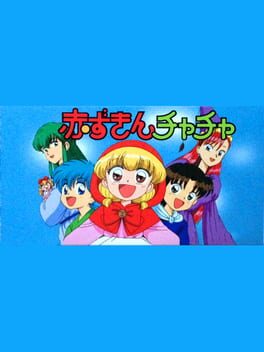
Akazukin Cha-cha is the story of a young magical girl named Chacha. She lives in a cottage on Mochi-mochi Mountain with Seravy, her guardian and teacher, who is the fictional world's greatest magician. Chacha is clumsy in casting her spells, frequently mistaking homonyms, she summons spiders (kumo (蜘蛛?) in Japanese) instead of a cloud (also kumo (雲?)). When she and her friends are in trouble, however, her spells do work. Living on the same mountain is a boy named Riiya, gifted with enormous strength, who comes from a family of werewolves. Far away from Mochi-mochi Mountain is Urizuri Mountain where Dorothy, a well known magician, lives in a castle with her student Shiine. Shiine is a young wizard, who is adept at casting spells and barriers, as well as transformations.

Role-playing (RPG) / Adventure / Fantasy / Comedy
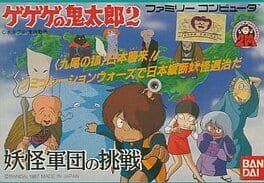
GeGeGe no Kitaro 2: Youkai Gundan no Chousen is a RPG game based on a manga and anime from Japan about a boy who is a youkai, a class of spirit-monster to which all of the main characters belong. The main character, Kitarou, is the last living member of a Ghost tribe. He is missing his left eye, but his hair usually covers the empty socket. He fights for peace between humans and yōkai, which generally involves protecting the former from the wiles of the latter. While the game follows the release of GeGeGe no Kitaro: Youkai Daimakyou (released in the U.S as Ninja Kid), it is not a direct sequel to the original game, which is an action side-scroller. GeGeGe no Kitaro 2 plays very much like a simplified traditional RPG. Fights are turn-based, where the player must input his command, and then watch the sequence of event play out until the round is over and the next round begins. However, even though it is simplified, it is actually a rather difficult and challenging game. In the very beginning of the game, Kitarou struggles to survive more than two fights against monsters before needing to return home and rest until he reaches level 2. A majority of the enemies only provide experience points in the single digits until much later in the game, although to compensate, the amount of experience needed to reach each level is low by comparison as well. Kitarou maxes out at Level 10 when he reaches 999 experience points. The map of the game's overworld is a fairly faithful representation of Japan, along with part of Korea and a small unidentified island. Kitarou must explore the island nation to rescue his girlfriend and the rest of the world from the onslaught of evil Youkai that threaten to take over the world of the living. He must locate several homes, castles, and cave entrances to make his way through Japan, which suffers from spirit storms that prevent him from exploring new regions on the island until some task has been completed first.