
Developed by Microcomputer Games, Inc. for The Avalon Hill Game Company.
Simulator / Strategy / Turn-based strategy (TBS) / Science fiction
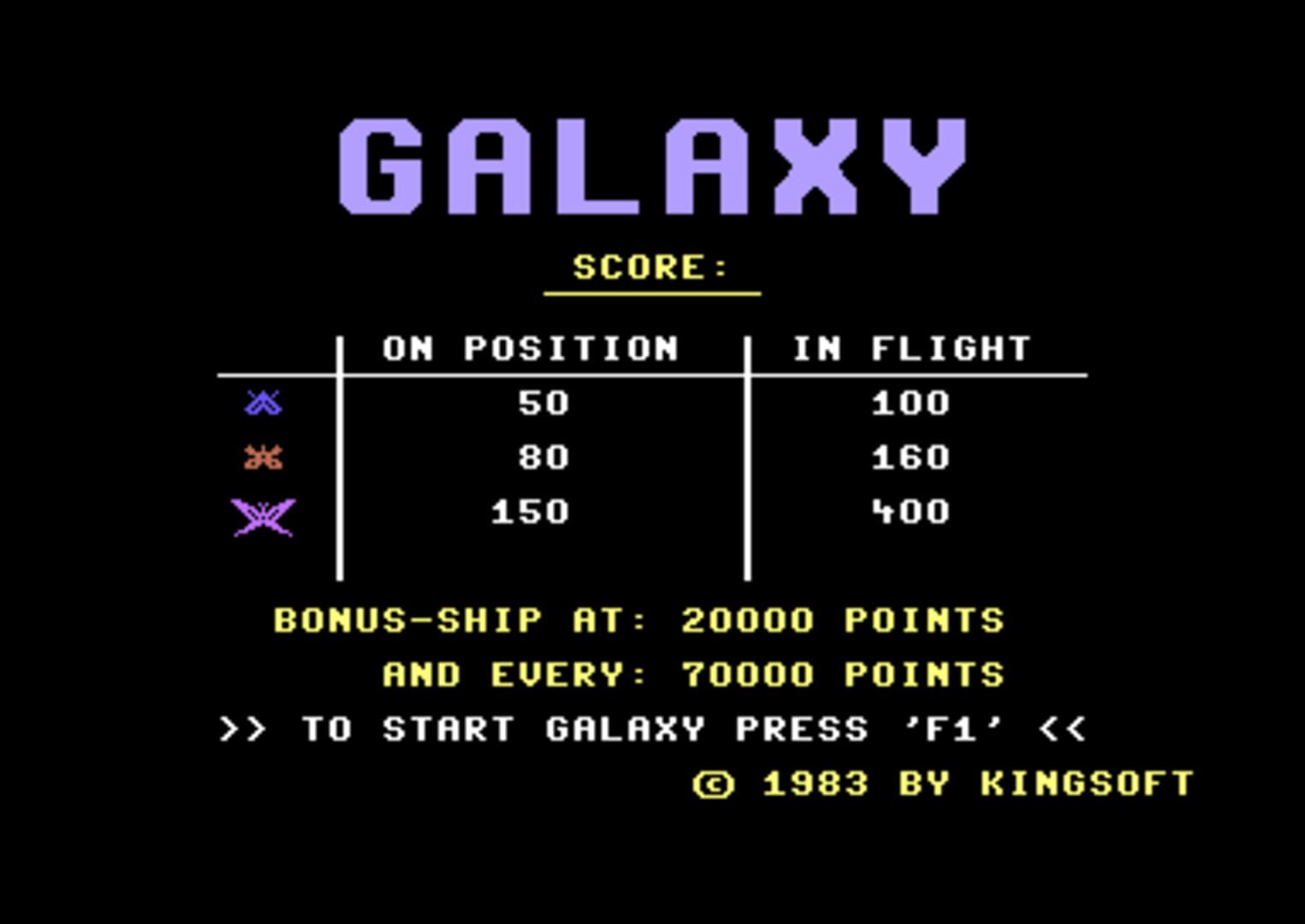
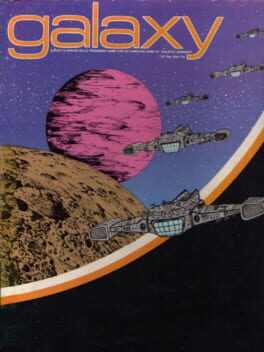
Galaxy is a Galaga variant that builds on the ideas explored in the Commodore PET game Galaga, an earlier unlicensed take on the coin-up game by Henrik Wening. Players move a space ship left and right to fire at a group of alien ships near the top of the screen. They fire bullets and come swooping down like a kamikaze. Based on the colour they have different behaviour and some of them require multiple hits. To finish the stage all aliens have to be defeated. The wave is repeated in every stage, but enemies gradually become faster. Just like in the regular Galaga, the largest enemies can move down and fire a fixed beam that makes the area smaller to move. After a number of stages a Challenge Stage can be accessed with a new pattern. The player receives a bonus there based on the number of kills. You start with three lives. A bonus ship is awarded at 20,000 points and then at every 70,000 points.
Your scientists have finally overcome the problem of traversing the enormous distances between stars. A fusion engine using interstellar hydrogen for fuel has been combined with the Kragar gravity wave technique for faster-than-light travel. Now you, as Fleet Admiral of our newly commissoned starship armada, can fulfill the destiny of our race by spaceheading our expansion to the stars.
Simulator / Strategy / Turn-based strategy (TBS) / Science fiction / Warfare
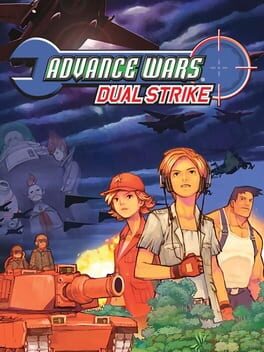
Advance Wars: Dual Strike is the third installment in the Advance Wars series (first on DS media). Advance Wars is the international title of the Wars video game series, which dates back to the Family Computer game Famicom Wars in 1988. The storyline is a continuation of the previous series and is set in the new location of Omega Land. Black Hole has returned under the leadership of a new commander who seeks to give himself eternal life by draining the energy of Omega Land. The Allied Nations struggle to overcome this threat and are eventually joined by several former Black Hole commanding officers in an effort to save the land.

Simulator / Strategy / Turn-based strategy (TBS) / Action / Science fiction
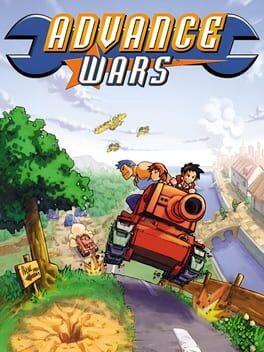
Just because this battle fits in the palm of your hand doesn't mean the stakes are small. On the contrary, this all-or-nothing fight will have you accessing guns, grenades, launchers, and weaponry of all sorts. Players assume command of an army that's out to reclaim a world that's been broken up by warring factions. The battle map is essentially a grid, and moving units is like moving chess pieces on a board -- each of the units can move a specific amount of spaces within this grid, and can only attack at a certain distance from specific enemies. Advance Wars features more than 115 maps, a map editor, head-to-head play via link cable, and an easy-to-understand tutorial mode for beginners.

Simulator / Strategy / Turn-based strategy (TBS) / Action / Science fiction
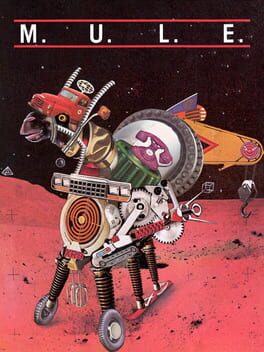
M.U.L.E. is about four hopeful explorers trying to make a fortune on a virgin planet. This is done by producing various goods (Food, Energy, Smithore, Crystite). Each of these goods have their uses: if you don't have enough food, you will have less time during your turn. If you don't have enough energy, your output will be lower. If enough smithore isn't produced, there will be a shortage of M.U.L.E.s. Crystite is the big earner that can make or break your game. You start the game by selecting your race. Some are easier to play, some harder. There are three levels of difficulty, in the easiest the game only lasts 6 turns, but the real game is 12 turns. Crystite is not available at the easiest level. Each turn starts with land claim. Each player gets to choose a spot of land for themselves from the map. If two players choose the same spot, the player with less money wins. The map consists of different landscape. River is best for producing food, plains for energy, mountains for smithore. Crystite is hidden and must be first found by taking a land sample to the town. After the land claim each player takes turns in cultivating their land and do other tasks. They can buy M.U.L.E.s to start production on their land, sabotage other players by buying M.U.L.E.s and letting them loose, try to catch the Wumpus for cash and try to find crystite veins. The time to do these things depends on if the player has enough food. Finally the player goes to the casino and wins a small amount of money, depending on how much time was left.

Simulator / Strategy / Turn-based strategy (TBS) / Action / Science fiction
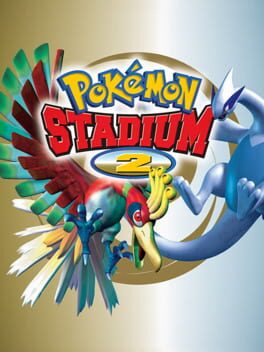
While Pokémon Stadium 2 does have a storyline, progress in the game can be made by winning Cups in the Stadium and completing the Gym Leader Castle. When all Cups have been won and the Gym Leader Castle completed, the player's Rival will appear. Defeating the Rival will unlock Round 2, in which the player must re-challenge the Stadium, Gym Leader Castle, and the Rival in order to complete the game. But, they have different Pokémon and the difficulty is much higher. Stadium: The player begins by choosing 6 different Pokémon. There are 250 different Pokémon to choose from; including some legendary Pokémon. Pokémon tournaments take place in the Stadium. There are four Cups to participate in. Each round consists of eight battles, and every Cup except the Little and Prime Cup consists of four rounds, named after Poké Balls, that must be cleared to win that Cup.

Simulator / Strategy / Turn-based strategy (TBS) / Science fiction / Warfare
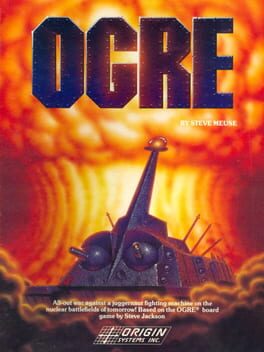
Ogre is a 2D turn-based strategy game, and a direct computer conversion of Steve Jackson's board game of supertanks going against conventional infantry with howitzers. It plays exactly like the board game - on a hex-based board one player controls ordinary military units (soldiers, tanks etc.), and defends against the second player, who controls a supertank named "Ogre" - Ogre is very powerful, and can easily destroy normal weaponry and ground forces.

Shooter / Simulator / Strategy / Science fiction
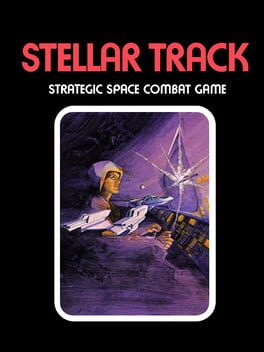
Stellar Track is a text- and turn-based strategy game where the player controls a Terran Super Warship that must clear out alien ships from all quadrants of a galaxy. It was a conversion of a college mainframe Star Trek game released by Sears in 1981. It is a suitably primitive game where you have to run scans to locate enemies and starbases on a 6 x 6 galactic map. You run scans to find the enemies then must warp to their quadrant to confront them with either phasers or photon torpedoes. You use the joystick to determine the numerals of where you intend you to travel to.

Simulator / Strategy / Turn-based strategy (TBS) / Fantasy / Science fiction
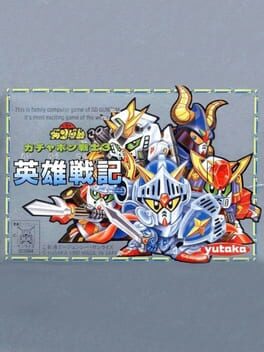
SD Gundam World Gachapon Senshi 3: Eiyuu Senki is a Strategy game, developed by Yutaka, which was released in Japan in 1990.

Simulator / Strategy / Turn-based strategy (TBS) / Action / Science fiction
Volfoss is a tactical role-playing game developed by Namco for the original PlayStation. It was released in Japan in 2001