
Developed by Microcabin.
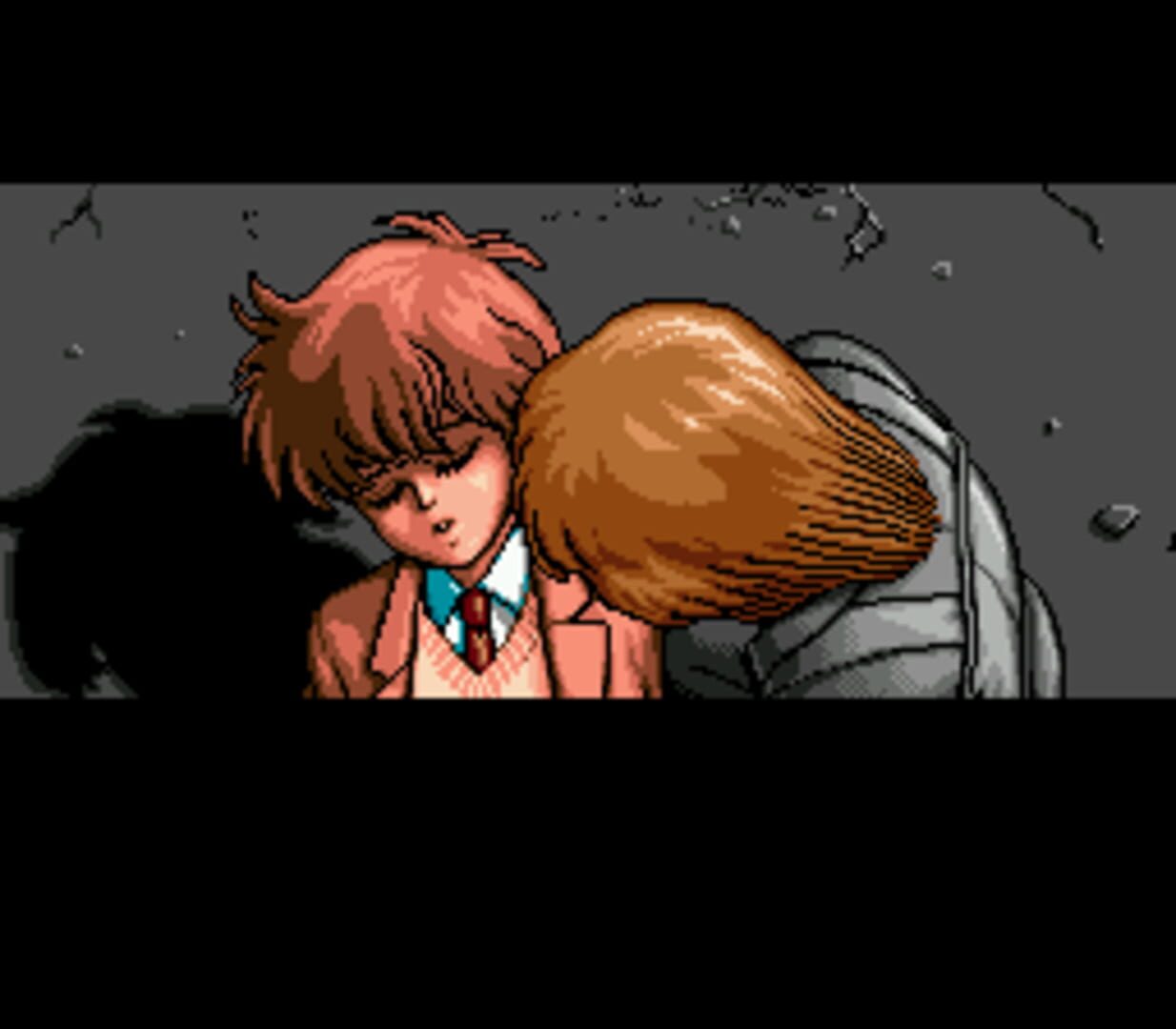
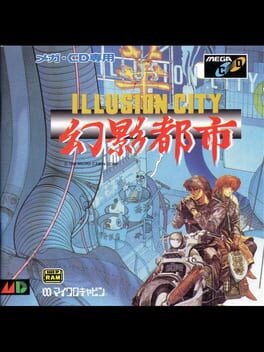
Genei Toshi is an RPG for Japanese computers, later ported to the Sega Mega-CD. It was only released in Japan. Illusion City is a Japanese-style role-playing game with several distinguishing characteristics. Unlike most games of the genre, it has no overworld, and takes place entirely in a vast city divided into several districts. The player advances the story by exploring the city, talking to non-playable characters, gathering information, receiving missions, and eventually heading into large, complex hostile areas. There are no random battles in the game; all enemies are visibly moving on the field, and many of them can be avoided. Combat is turn-based, utilizing an "over-the-shoulder" perspective similar to that of Phantasy Star II. Characters join the party as dictated by the plot; an active party includes three combatants. A wide variety of weapon and armor types can be purchased or found in dungeons. Each character has his or her own weapon proficiencies, which can be increased by repeatedly using the same weapon type. Firearms require specific ammunition (e.g. bullets, shotgun cartridges, etc.), which is expended in combat and must be re-stocked. In addition, certain characters can use offensive, supportive, and healing techniques. The game's visual style aims for realistic presentation of locations and characters, and shares more common traits with contemporary Western visual aesthetics than the traditional Japanese anime art.
In the beginning of 21th century a terrible disaster, called "demon-coming crisis", devastated the Asian continent. Hong Kong was most affected by the mysterious demonic attack. Terrible diseases turned the once prosperous city into a pale shadow of itself. But once people came back to see what happened to the isolated city, they saw it was ruled by a new order - a corporation called SIVA. The new order proclaimed New Hong Kong to be an independent state. People's Republic of China and United Kingdom signed an agreement in which they both renounced their claims over the city. The player takes on the role of Tianren, a "diver" (demon-hunter) who lives in Hong Kong. His place of birth and the identity of his parents are unknown. Together with a girl named Meihong, he was brought up in the house of a wise Master. Traveling through the huge city, gathering information and fighting demonic forces, Tianren will have to unravel the mystery surrounding the corporation SIVA and the supernatural beings from Chinese myths.
Role-playing (RPG) / Adventure / Fantasy / Science fiction
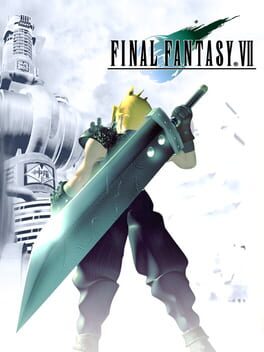
The Western release of Final Fantasy VII (released as Final Fantasy VII International in Japan) included additional elements and alterations, such as streamlining of the menu and Materia system, reducing the health of enemies, new visual cues to help with navigation across the world map, and additional cutscenes relating to Cloud's past.

Role-playing (RPG) / Adventure / Fantasy / Science fiction
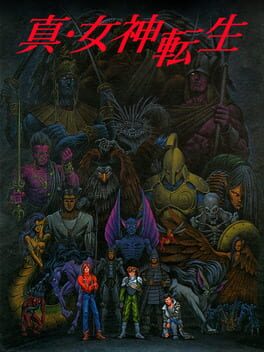
The story follows a nameless protagonist who lives in near-future Tokyo. When a portal to the realm of demons is opened, United States officials order a nuclear attack on Tokyo. Transported with two other supporting characters thirty years into the future, the protagonist finds the Earth ruined by a demon invasion, which is now the stage for an escalating conflict between the Order of Messiah and the Ring of Gaea, conflicting cults who wish to bring about kingdoms for their respective patron deities (YHVH and Lucifer). The story is influenced by moral decisions the protagonist makes, aligning him either with the Order, the Ring of Gaea, or setting him up as an independent agent. The gameplay uses first-person navigation of dungeons and turn-based battles against demons. The player can recruit demons as allies by talking to them rather than fighting them, and two to three demons can be fused to create new demons.

Role-playing (RPG) / Turn-based strategy (TBS) / Fantasy / Science fiction
A turn-based JRPG and sequel to EarthBound (1994) in which a tragedy surrounding a family in the primitive yet joyful village of Tazmily incites the coming-of-age story of Lucas, the family's younger son, who goes on perilous adventures along with his friends in order to find his missing brother and stop a group of masked men from bringing about the end of the world.

Role-playing (RPG) / Simulator / Turn-based strategy (TBS) / Fantasy / Science fiction
Fifty years have passed since the hero of Shin Megami Tensei followed the neutral path, defeated the leaders of Law and Chaos, and founded a state where followers of both ideologies could live freely. But his reign of freedom doesn't last long. The Messian faith gains power, expanding the Cathedral into a new enclosed environment named Tokyo Millennium. The Gaians rise up, but their rebellion is repressed by the Messians' elite warrior class, the Temple Knights. People flock into the encapsulated city, submitting themselves to the strict hierarchy imposed by the Messian Center, where only the privileged living in the Center district are safe from demonic assaults. A few years later, a retired arena fighter Okamoto rescues a man named Hawk, who was fighting for his life against a demon. He trains him to fight in the arena of the Valhalla district, hoping that he would win the tournament, which will grant them both citizenship in the Center district. When Hawk succeeds, he is brought before a Messian bishop, and learns the shocking truth about his own origins and the role he is supposed to play in the grand scheme of events. A new battle for a better future begins. Shin Megami Tensei II retains all the gameplay features of the previous game. The player is able to summon demons, fuse them to create more powerful ones, make them participate in battles, talk to random enemies and receive information from them, etc. The combat is turn-based, and the player explores the complex, maze-like dungeons from a first-person perspective view. Like in the first game, the Law, Chaos, and Neutral alignments play an important role: during the course of the game, the player will have to make choices that influence the alignment of the protagonist, steering the storyline into different directions. New features include a "magic succession" system, which allows demons to carry over their original magic spells when they are fused into new ones, a few additional spells and abilities, and the possibility to play at the casino and win unique items.

Role-playing (RPG) / Adventure / Fantasy / Science fiction
Kyuuyaku Megami Tensei is a Super Famicom remake made by Atlus of Namco’s original Megami Tensei and Megami Tensei 2 games on the Famicom. It was released in 1995 and was the last game in the Megaten series to be released on the Super Famicom.

Role-playing (RPG) / Fantasy / Science fiction
Alnam no Tsubasa is a sequel to Alnam no Kiba. Like its predecessor, it is a Japanese-style role-playing game with a character-driven story, linear advancement, and simple leveling-up. Combat is turn based, with up to four player-controlled characters forming a party. Characters can attack physically, cast spells, or execute special attacks that take up a part of a corresponding gauge. Magic is learned by receiving magic points for winning battles and using them to create various spells. The game features 3D background graphics with 2D sprites representing characters.

Fighting / Role-playing (RPG) / Adventure / Action / Fantasy
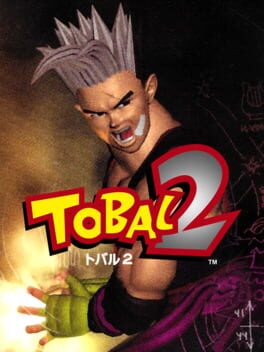
The fighting system in Tobal 2 is the same as in the previous game. The player can freely navigate 3D fighting arenas under the condition that he or she faces the opponent. High, medium, and low attacks can be executed using assigned buttons. As in Tobal No. 1, the grappling and blocking system offers the player a variety of offensive and defensive maneuvers. A new unblockable fireball attack has been added for each character. Tobal 2 was released on the same day as Sony's Dual Analog Controller in Japan, noted as the first game compatible with the peripheral. Graphically, the game features Gouraud shaded and higher-resolution character models compared to Tobal No. 1, but still runs at 60 frames per second.

Role-playing (RPG) / Adventure / Indie / Action / Fantasy
Pokémon Unbound is a fan-made ROM hack of Pokémon FireRed that offers an enriched and modernized Pokémon experience. Set in the Borrius region—a land with a tumultuous history marked by a past war with the Kalos region—the game follows your journey to prevent the resurgence of a sealed dark force that once threatened the land.