The story follows a nameless protagonist who lives in near-future Tokyo. When a portal to the realm of demons is opened, United States officials order a nuclear attack on Tokyo. Transported with two other supporting characters thirty years into the future, the protagonist finds the Earth ruined by a demon invasion, which is now the stage for an escalating conflict between the Order of Messiah and the Ring of Gaea, conflicting cults who wish to bring about kingdoms for their respective patron deities (YHVH and Lucifer). The story is influenced by moral decisions the protagonist makes, aligning him either with the Order, the Ring of Gaea, or setting him up as an independent agent. The gameplay uses first-person navigation of dungeons and turn-based battles against demons. The player can recruit demons as allies by talking to them rather than fighting them, and two to three demons can be fused to create new demons.
Shin Megami Tensei takes place in a near future Tokyo, first in the year "199X", and then 30 years later in a post-apocalyptic version of the city. A rift has been opened to another world, allowing demons to invade Tokyo; by using a computer program, humans are able to communicate with and summon the demons. Across the story, moral alignments are portrayed in various ways: alongside the middle "neutral" pathway, the "law" faction believes in establishing a logical order at the expense of feeling and freedom, while the "chaos" faction espouses unlimited freedom for the individual while discarding the weak.
Role-playing (RPG) / Simulator / Turn-based strategy (TBS) / Fantasy / Science fiction
Fifty years have passed since the hero of Shin Megami Tensei followed the neutral path, defeated the leaders of Law and Chaos, and founded a state where followers of both ideologies could live freely. But his reign of freedom doesn't last long. The Messian faith gains power, expanding the Cathedral into a new enclosed environment named Tokyo Millennium. The Gaians rise up, but their rebellion is repressed by the Messians' elite warrior class, the Temple Knights. People flock into the encapsulated city, submitting themselves to the strict hierarchy imposed by the Messian Center, where only the privileged living in the Center district are safe from demonic assaults. A few years later, a retired arena fighter Okamoto rescues a man named Hawk, who was fighting for his life against a demon. He trains him to fight in the arena of the Valhalla district, hoping that he would win the tournament, which will grant them both citizenship in the Center district. When Hawk succeeds, he is brought before a Messian bishop, and learns the shocking truth about his own origins and the role he is supposed to play in the grand scheme of events. A new battle for a better future begins. Shin Megami Tensei II retains all the gameplay features of the previous game. The player is able to summon demons, fuse them to create more powerful ones, make them participate in battles, talk to random enemies and receive information from them, etc. The combat is turn-based, and the player explores the complex, maze-like dungeons from a first-person perspective view. Like in the first game, the Law, Chaos, and Neutral alignments play an important role: during the course of the game, the player will have to make choices that influence the alignment of the protagonist, steering the storyline into different directions. New features include a "magic succession" system, which allows demons to carry over their original magic spells when they are fused into new ones, a few additional spells and abilities, and the possibility to play at the casino and win unique items.

Role-playing (RPG) / Adventure / Fantasy / Science fiction
The Western release of Final Fantasy VII (released as Final Fantasy VII International in Japan) included additional elements and alterations, such as streamlining of the menu and Materia system, reducing the health of enemies, new visual cues to help with navigation across the world map, and additional cutscenes relating to Cloud's past.

Role-playing (RPG) / Adventure / Horror
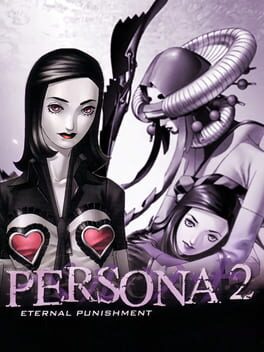
Persona 2: Eternal Punishment is a role-playing video game developed by Atlus, and chronologically the third installment in the Persona series. Eternal Punishment takes place in the fictional Japanese city of Sumaru, and is a direct sequel to Persona 2: Innocent Sin. Taking place a year after Innocent Sin, the game follows reporter Maya Amamo as she investigates the Joker Curse, a malign phenomenon where people's wishes and rumors are coming true and causing chaos. During her investigations, she and others who join her gain the ability to summon Personas, personified aspects of their personalities. The gameplay features turn-based battle gameplay, where characters use their Personas in battle against demons, and a separate Rumor system, where rumors spread around the city can influence events in the characters' favor.

Role-playing (RPG) / Adventure / Fantasy
Final Fantasy VI is the sixth main installment in the Final Fantasy series, developed and published by Square. It was the final title in the series to feature two-dimensional graphics, and the first story that did not revolve around crystals. The game gives players up to fourteen playable characters, the largest cast in the series, and features the Active Time Battle pseudo-turn based menu command system. A party can consist of up to four characters, though some events require the player to assemble three different parties of up to four and switch between them. Each character has a unique command ability, such as Terra's Trance, Locke's Steal, Edgar's Tools or Sabin's Blitz, and can also learn Magic spells from earning AP from battles with magicite equipped. Each character's rare Desperation Attack will randomly activate after using the Attack command when at critical health.

Role-playing (RPG) / Adventure / Action / Fantasy
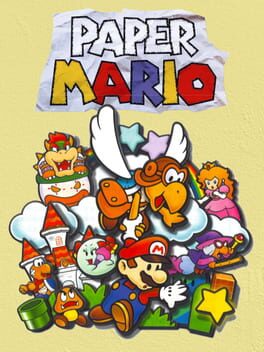
Paper Mario, a turn-based JRPG entry in the Mario franchise with a paper-based aesthetic and platforming elements, sees the titular character working his way through the Mushroom Kingdom's diverse locales and biomes, meeting its inhabitants, fighthing unruly enemies and recruiting an array of companions in order to once again save Princess Peach from the clutches of the evil Koopa King Bowser.

Role-playing (RPG) / Adventure / Fantasy / Science fiction
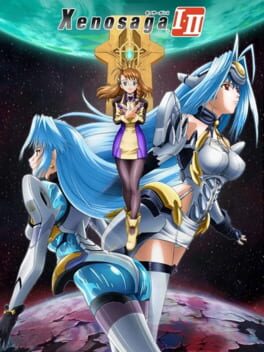
Xenosaga I & II is a combined remake and retelling of Xenosaga Episode 1 and 2 redesigned for the Nintendo DS. The story changes were handled by the creator of the series. The game changes large parts of the storyline in Episode 1 while following the elements established in the original game. This includes adding new characters and changing how some scenarios play out. Changes in Episode 2 were much larger as the main character perspective of the game was switched from Jr. to Shion to match up with Episode 1 and 3. Some characters are removed from the story or have their fates changed or revealed. Some dungeons are removed, edited, or replaced. It also answers some questions that the original did not as you follow a different path through the same overall story. It also changes the combat mechanics of Episode 2 to match Episode 1.

Point-and-click / Role-playing (RPG) / Adventure / Action / Horror
Persona 3 Portable is an enhanced remake of Persona 3 for the PlayStation Portable. The game features an option to play as a female character, which alters some aspects of the story. In addition to the new playable character, there are two new difficulty levels to select from alongside the original game's three. The game also features some other story related changes regardless of the player character gender. The battle system is also updated to be closer that of Persona 4.

Role-playing (RPG) / Adventure / Fantasy / Science fiction
Kyuuyaku Megami Tensei is a Super Famicom remake made by Atlus of Namco’s original Megami Tensei and Megami Tensei 2 games on the Famicom. It was released in 1995 and was the last game in the Megaten series to be released on the Super Famicom.