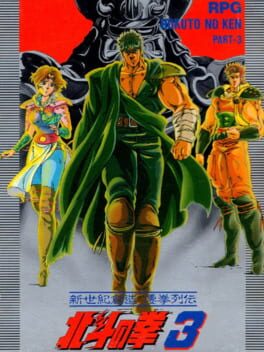
Hokuto no Ken 3: Shinseiki Souzou Seiken Retsuden is the third Hokuto no Ken video game developed by Shouei Systems and released by Toei Animation for the Family Computer (the Japanese version of the Nintendo Entertainment System) on October 19, 1989. Unlike the first two Hokuto no Ken video games for the platform, which were side-scrolling action games, Hokuto no Ken 3 is a role playing game which adapts the storyline of the original manga from the beginning to the Kingdom of Shura story arc. It was the first in a trilogy of RPGs based on the franchise.

Role-playing (RPG) / Adventure
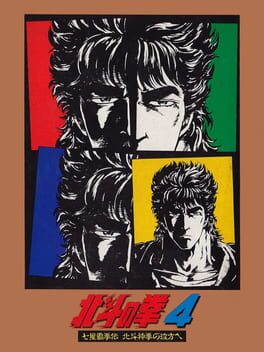
Hokuto no Ken 4: Shichisei Hakenden - Hokuto Shinken no Kanata he is the fourth Hokuto no Ken video game released by Toei Animation and developed by Shouei System for the Family Computer, released on March 29, 1991. It is second of three role playing games based on the series produced by Toei, following the previous game in the series. The story takes place in the 21st century, several years after the conclusion of the original, in which a new generation of martial artists seeks to follow the foot-steps of Kenshiro and his rivals, and save from its third dark age. The game's story was written by Hiroshi Toda, who wrote episodes of the Hokuto no Ken anime series, and supervised by original author Buronson.

Role-playing (RPG) / Turn-based strategy (TBS) / Adventure / Action / Fantasy
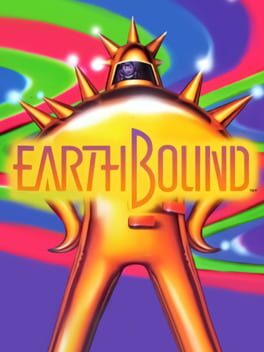
A turn-based JRPG and sequel to the then-Japan-only Earthbound Beginnings (1989) in which Ness, a young boy living in a land based on the USA, leaves home to go on an adventure through strange locations, get to know quirky characters, and defeat an unknowable alien threat called Giygas while facing up to the realities of growing up and becoming familiar with the real world.

Role-playing (RPG) / Adventure / Card & Board Game / Fantasy / Science fiction
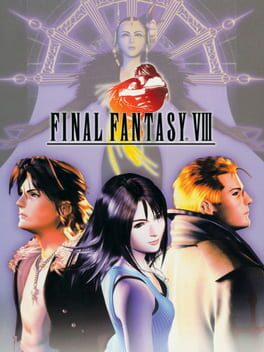
Final Fantasy VIII is the eighth main installment in the Final Fantasy series. The gameplay makes a departure from many series standards. While it still uses the Active Time Battle system, it deviates from the series' traditional means of boosting a character's power via leveling, although levels are not completely abandoned as they were in Final Fantasy II. In addition, it does not have a Magic Point-based system for spell-casting. Instead, magic is collected, drawn, and created from items, and is used to power up the characters via the junction system.

Role-playing (RPG) / Adventure / Action / Science fiction
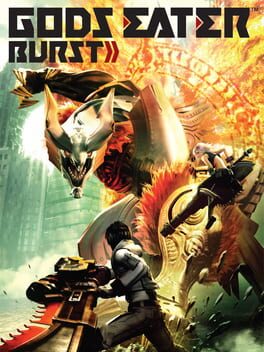
Gods Eater Burst is an action role-playing game and an enhanced version of God Eater. The enhanced version features an expanded story and new game mechanics. The game's mission-based single-player mode consists of more than 100 missions, with co-operative play of up to three teammates over local adhoc wireless multiplayer or AI-controlled teammates. The game features character creation, allowing customization of hairstyle, hair color, face, skin, clothing, voice and weapons using special materials. Equipment is divided into five groups: Blade, Gun, Shield, Control Unit and Upgrades. Weapons can be switched between melee, ranged and shield in-mission. Along with the second story arc, God Eater Burst adds two new gameplay features: Bullet Customization and Burst Mode.

Role-playing (RPG) / Adventure / Action / Fantasy
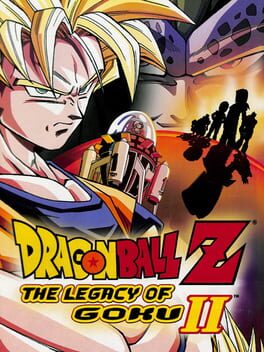
Dragon Ball Z: The Legacy of Goku II was released on June 17, 2003. The plot of the game picks up where The Legacy of Goku left off, and continues until the end of the Cell Games Saga when Gohan defeats the evil android Cell. The game introduced several new concepts to the series. The first was transformations, which allowed characters to become temporarily stronger, at the cost of slowly draining their energy. It also introduced the scouter, which allowed players to look up the stats of other characters in the game, as well as basic information about them. The game also introduced charged melee attacks, which allowed characters to unleash a powerful physical strike after a short charging period. The game also allowed characters to further supplement their stats with capsules that were scattered around the game world. Despite being titled "The Legacy of Goku" this game featured the most limited play as the character Goku. Due to the game's success, a second version was released titled Dragon Ball Z: The Legacy of Goku II International exclusive to Japan on July 23, 2004. In this version all characters were given new profile images and their names were reverted to their original Japanese. However, Mister Satan still retains his English name "Hercule" on the front of his parade float. [Source] - Wikipedia.

Role-playing (RPG) / Adventure / Fantasy / Science fiction
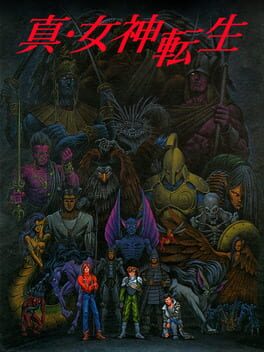
The story follows a nameless protagonist who lives in near-future Tokyo. When a portal to the realm of demons is opened, United States officials order a nuclear attack on Tokyo. Transported with two other supporting characters thirty years into the future, the protagonist finds the Earth ruined by a demon invasion, which is now the stage for an escalating conflict between the Order of Messiah and the Ring of Gaea, conflicting cults who wish to bring about kingdoms for their respective patron deities (YHVH and Lucifer). The story is influenced by moral decisions the protagonist makes, aligning him either with the Order, the Ring of Gaea, or setting him up as an independent agent. The gameplay uses first-person navigation of dungeons and turn-based battles against demons. The player can recruit demons as allies by talking to them rather than fighting them, and two to three demons can be fused to create new demons.

Shooter / Role-playing (RPG) / Adventure / Action / Science fiction
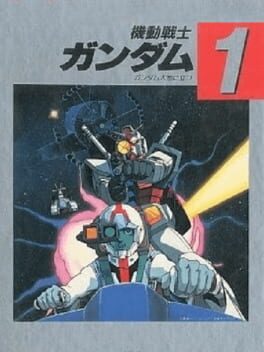
Kidou Senshi Gundam Part 1: Gundam Daishi ni Tatsu!! (機動戦士ガンダム PART 1 ガンダム大地に立つ!! "Mobile Suit Gundam Part 1: Gundam Stands on the Ground!!") is an adventure/shooter/RPG from 1983, based on the popular Mobile Suit Gundam anime television series.

Role-playing (RPG) / Adventure / Science fiction
The humans who breathed the toxin-filled air on the Earth's surface became one with the Earth and kept dissolving. The history of humanity ended and dominion of the planet returned to the demons. These mutant creatures did not depend on oxygen to survive. Therefore, they were able to breathe the air and use the land.Meanwhile, an army of robots wage World War IV against the demons in order to conquer what is now known as Makai - the Demon World. These robots came to the planet on a wave of energy that created an explosion that turned the world into a wasteland. Much later in the game, concurrent themes including Adolf Hitler, war, creating a perfect race of people, and the destruction of humanity in the year 1999 are revealed to the player inside one of the robot's main bases. Can the demons gain dominion on the humans' old planet or will robots enforce impose a millennium of logic and dictatorial force throughout Makai? Playing as the robots is not an option that is open to the player. Therefore, the player must take advantage of his or her mutant army and crush the robot invaders. This game builds on the fear of robot domination of the world that has been featured greatly in movies from The Terminator to Terminator Salvation. The gameplay is similar to Final Fantasy as the turn-based fights are viewed from a third-person perspective.