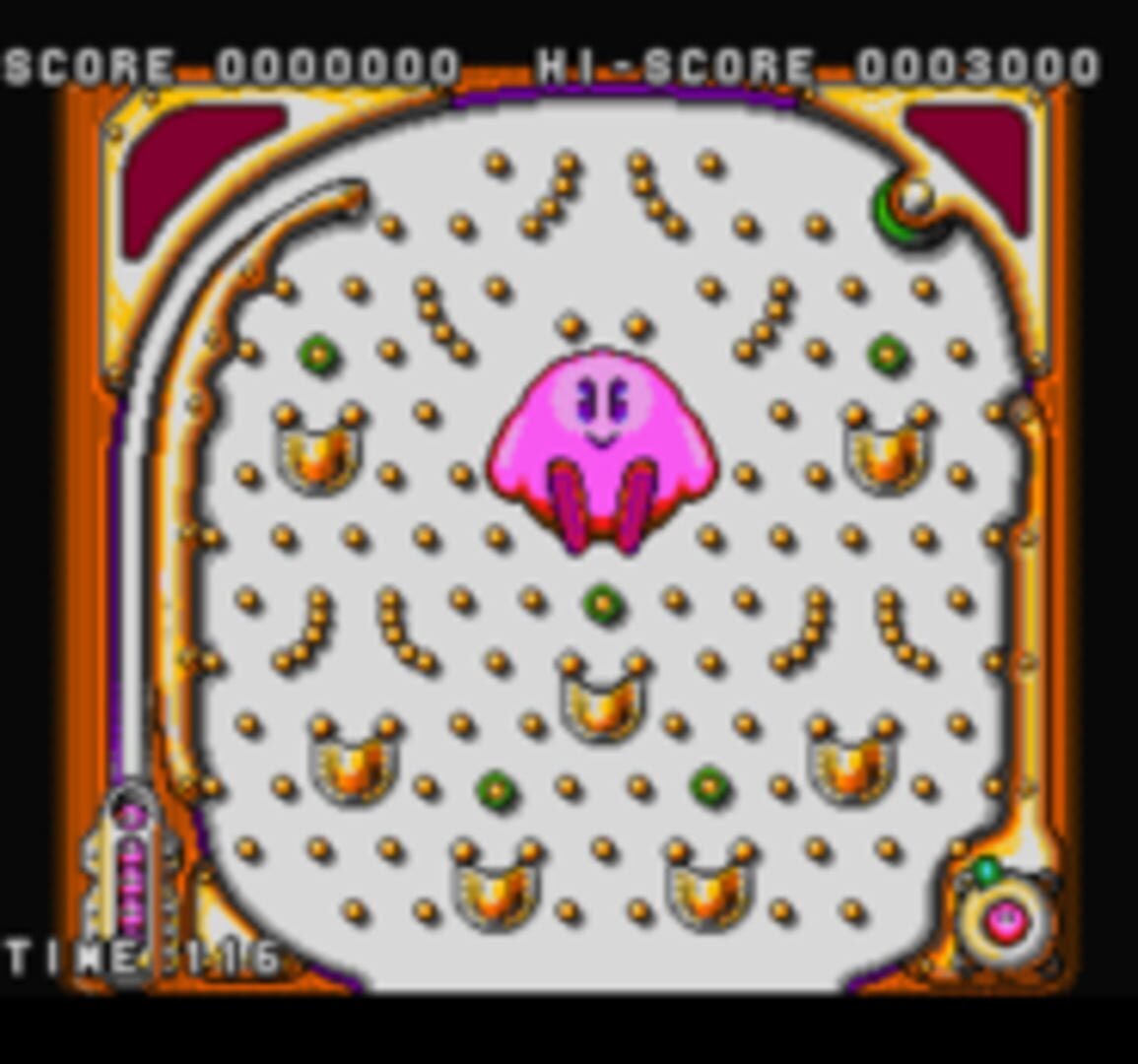

This game is like a pachinko machine; the goal is to launch the spherical Kirbys the player is given into the pockets of the machine. The player is given two minutes to fire an unlimited number of Kirbys, and he/she is given control of the power put into each shot. Ten points are awarded whenever a Kirby lands in a pocket. If a shot lands directly atop the big Kirby in the center, the player will temporarily win a chance to earn more points; the big Kirby will raise his arms and give 100 points to each shot that hits him in one of three locations. When time is up, the game ends. Like every other sub-game in Kirby's Toy Box, this game could only be downloaded by the Satellaview during the brief period it was broadcast.

In this game, the player fires spherical Kirbys through a spiral tube, which is designed to look like Efreeti. This tube has holes in it, which a speedy Kirby will pass right over. The point is to fire the Kirbys with just the right amount of power to pass over certain holes but slow down and fall into another hole. Different holes give different numbers of points, so the goal of the player is to shoot his/her Kirbys into the highest-scoring hole as much as possible. When the player runs out of Kirbys, the game ends. Like every other sub-game in Kirby's Toy Box, this game could only be downloaded by the Satellaview during the brief period it was broadcast.

In Kirby's Toy Box - Ball Rally, the player's goal is to guide Kirby through an obstacle course. He/she can do this using proper timing and the A Button; when A is pressed, some green platforms extend while others retract. Spherical Kirbys are released from the top-most door one by one. They can't stop rolling, so the player must extend the right platforms to guide the Kirbys safely over spikes. As more Kirbys join the playing field, it becomes increasingly difficult to guide them all to the exit. The player scores points by getting a Kirby to the exit. There are 50 Kirbys altogether. Like every other sub-game in Kirby's Toy Box, this game could only be downloaded by the Satellaview during the brief period it was broadcast.

In Kirby's Toy Box - Arranging Balls, the player is given the goal of launching spherical Kirbys into the nine holes occupied by Mr. Frostys. The player is given a certain number of Kirbys to launch, and the game ends when he/she runs out of Kirbys to shoot. The player can choose how much power to put into each shot. Points are awarded if the player lands three Kirbys in a row—the more rows the player completes, the more points he/she will earn. Like every other sub-game in Kirby's Toy Box, this game could only be downloaded by the Satellaview during the brief period it was broadcast.

In Kirby's Toy Box - Cannonball, the player controls a giant robotic Rick, which can shoot spherical Kirbys out from its head. The game is a simplified take on the same concept used by numerous other games based around lobbing parabolic projectiles at opponents over hills with destructible terrain, such as Scorched Earth and the |Worms series. A large hill divides the screen into two halves, with Player 1 on the left; the right side is occupied by another robot hamster, which is controlled by a CPU or a second player. The goal of the game is defeat the opponent robot by hitting it with enough Kirbys. Each robot can move its head to change the direction and angle of the Kirbys it fires. They can also walk slowly forward and backward. The robots can blast tiny holes in the hill by shooting it with Kirbys. When one robot is defeated, the game ends with surviving robot being the winner. There are multiple stages to play on, but the only difference between them is the scenery. Clouds will stop any Kirby that hits them, causing the projectile to lose all momentum and fall. Like every other sub-game in Kirby's Toy Box, this game could only be downloaded by the Satellaview during the brief period it was broadcast.

Samurai Kirby is a sub-game of Kirby Super Star. This sub-game was also ported and released as a trial version for the Satellaview as part of the Kirby no Omochabako (Kirby's Toy Box) series of standalone minigames. No footage or file of this version has since been found.

Megaton Punch is a sub-game of Kirby Super Star. This sub-game was also ported and released as a trial version for the Satellaview as part of the Kirby no Omochabako (Kirby's Toy Box) series of standalone minigames. No footage or file of this version has since been found.

Puzzle / Arcade / Comedy / Kids
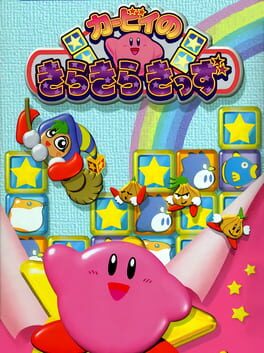
Kirby's Star Stacker is the official English title given to a puzzle Kirby game that was originally released on Japan's Super Famicom system on February 1, 1998. It is a remake of Kirby's Star Stacker, which is known in Japan under exactly the same name as the remake. The game was originally released as a new title for the Nintendo Power flash RAM service, but was released in standard cartridge form a year later. It was intended for international release, but the SNES's lifespan ended in North America and Europe before the game could be localized in either region. The standard cartridge release of the game also came out in the exact year of the SNES's discontinuation in North America, further compounding its isolation. The game was the final title in the Kirby series officially published for Super Famicom. A North American and European release would eventually be seen through the Nintendo Switch Online service in September 2023.

Puzzle / Arcade / Fantasy / Comedy
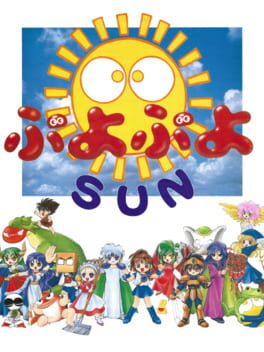
Satan has enlarged the sun in a devious attempt to get a perfect tan. Arle Nadja embarks on a quest to defeat him in this competitive puzzle game. This is the 3rd installment of the Puyo Puyo games series, and the sequel to Puyo Puyo Tsu. After the highly acclaimed success of its predecessor, Compile took a slightly more retro approach, so players had a more original feel to the game over that of Tsu. The name of Puyo Puyo SUN comes from a Japanese pun on san, and also indicates a new Puyo brought into the game. As Sun Puyo were used in this game, and the game itself is not only set on a tropical beach, but is the third in the series (san (三)) is the Japanese word for the number three), the name served multiple purposes. This game was released only in Japan. Following the arcade release, Puyo Puyo Sun was ported to the then-current home consoles. The Saturn version was released merely three months after the arcade release, while the other ports were released in late 1997 and throughout 1998. The Saturn, PlayStation, and Windows 95 versions feature fully voiced cutscenes unlike the original ST-V version.