Role-playing (RPG) / Adventure / Action / Fantasy
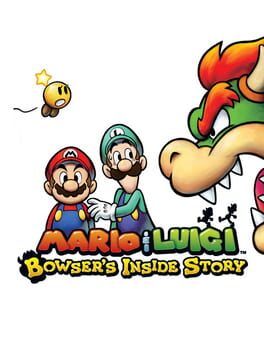
Mario & Luigi: Bowser's Inside Story is the third game in the Mario & Luigi series of games. Players control Mario and Luigi simultaneously in the side-scrolling platform environment of Bowser's body, while also controlling the Koopa King himself in the top-down world of the Mushroom Kingdom. Similar to games like Earthbound, enemy encounters are seen as actual enemies that players can avoid or attempt to strike early. The actual battles are a combination of turn-based menu attacks, and timed reactions to enemies during battle. By watching the way an enemy reacts, you can anticipate their attack and avoid it or counterattack.
Platform / Puzzle / Action / Comedy
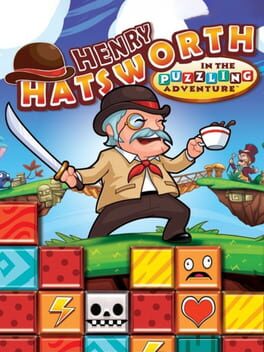
In Henry Hatsworth in the Puzzling Adventure players embark on single player fun like no other. Here Henry Hatsworth, a quirky, lighthearted character serves as your guide on a journey through a new style of gaming on your Nintendo DS that combines the action of an adventure game with the challenge of a puzzle game. In this two-in-one extravaganza players explore five exotic worlds, fight a variety of opponents, and venture through more than 30 levels, including nearly a dozen hidden levels while taking on outrageous world-ending bosses.
Platform / Adventure / Action / Science fiction
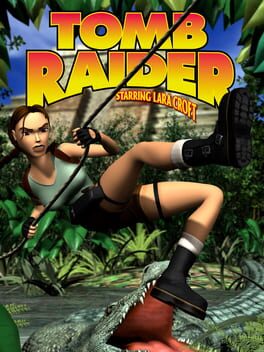
Tomb Raider is an action-adventure video game released for the Game Boy Color. This release is significant as it is the first portable game in the Tomb Raider series. This version has the standard Tomb Raider gameplay of running, jumping and switch-flipping, but presented in a side-view 2D style, reminiscent of Flashback. At Lara's disposal are 25 or so moves, which are crammed onto the 2 GBC buttons. There are also game-save crystals at special points throughout the levels. Although it shares its title with the first entry in the series, Tomb Raider for Game Boy Color follows a different storyline.
Role-playing (RPG) / Adventure / Action / Fantasy
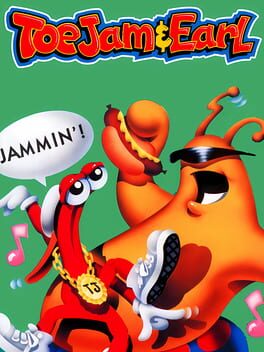
ToeJam & Earl is an early 1990s dungeon crawler. The game features two alien rappers, who have crash-landed on Earth and parodies 1980s urban culture. The game's design was heavily influenced by the role-playing video game Rogue, and took from it such features as the random generation of levels and items. Played from a 2D-top-down perspective the game contains both single-player and two-player cooperative modes. The latter displays a single screen when both characters are near each other, but splits it apart when they are not. Playing the game with two players reveals dialogue and jokes between the characters not heard in the single player game.
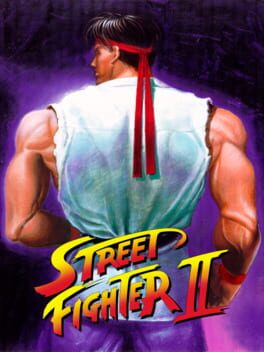
A sequel to Street Fighter, Street Fighter II improved upon the many concepts introduced in the first game, including the use of command-based special moves and a six-button configuration, while offering players a selection of multiple playable characters, each with their own unique fighting style and special moves. Street Fighter II is credited with starting the fighting game boom during the 1990s. Its success led to the production of several updated versions, each offering additional features and characters over previous versions, as well as many home versions. Some home versions of the Street Fighter II games have sold millions of copies, with the SNES port of the first Street Fighter II being Capcom's best-selling consumer game of all time as of 2008. Street Fighter II follows several of the conventions and rules already established by its original 1987 predecessor. The player engages opponents in one-on-one, close-quarters combat in a series of best-of-two-out-of-three matches. The objective of each round is to deplete the opponent's vitality before the timer runs out. If both opponents knock each other out at the same time or the timer runs out with both fighters having an equal amount of vitality left, a "double KO" or "draw game" is declared. Additional rounds will be played until sudden death. In the first Street Fighter II, a match could last up to 10 rounds if there was no clear winner; this was reduced to 4 rounds in the Champion Edition and onward. If there is no clear winner by the end of the final round, then either the computer-controlled opponent will win by default in a single-player match, or both fighters will lose in a 2-player match. After every third match in single-player mode, the player will participate in a "bonus game" for additional points. The bonus games include (in order) a car-breaking event; a barrel-breaking bonus game where the barrels are dropped off from a conveyor belt above the player; and a drum-breaking bonus game where drums are flammable and piled over each other. The bonus games were removed from the arcade version of Super Street Fighter II Turbo. As in the original, the game's controls use an eight-directional joystick and six attack buttons. The player uses the joystick to jump, crouch, move the character towards or away from the opponent, and guard against the opponent's attacks. There are three punch buttons and three kick buttons, each with varying strength and speed (Light, Medium, and Heavy). The player can perform a variety of basic moves in any position, including grabbing/throwing attacks, which were not featured in the original Street Fighter. Like in the original, the player can perform special moves by inputting a combination of directional and button-based commands. Street Fighter II differs from the original in that it features multiple playable characters, each with distinct fighting styles and special moves. Additionally, the player can "cancel" an animation by performing another move, enabling combinations of basic and special moves. Both of these features would be expanded upon in subsequent installments.
Role-playing (RPG) / Adventure / Action / Fantasy
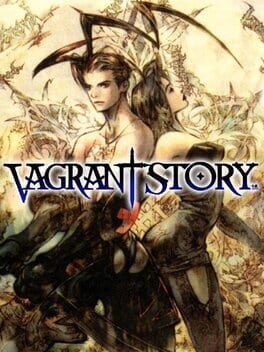
Adventure into a world of unparalleled depth and danger with SquareSoft's Vagrant Story. In this sweeping dungeon-crawling epic you play as Ashley Riot, a young assassin and spy for the organization known as Riskbreakers. Your goal is to unravel a deep and twisted plot and come to terms with the recent death of your wife and child. If this sounds a bit too cerebral never fear. Your path to recapturing your sense of humanity hinges on the destruction of countless vicious monsters and the exploration of dark and dangerous dungeons. Vagrant Story is awash in gorgeous scenery and features designs from Yasumi Matsuno and Akihiko Yoshida, the acclaimed artists and creators behind Final Fantasy Tactics.
Shooter / Action / Science fiction
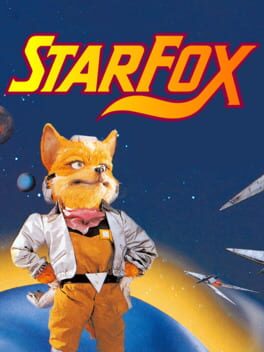
Star Fox, released as Starwing in Europe, is a 1993 rail shooter video game developed and published by Nintendo, with assistance from Argonaut Software, for the Super Nintendo Entertainment System. The first game in the Star Fox series, Star Fox follows Fox McCloud and the rest of the Star Fox team defending their homeworld of Corneria against the attacking forces of Andross.