

A prequel to Mahjongg Artifacts: Chapter 2, the Story Mode of Mahjongg Artifacts introduces players to the start of the adventure through graphic comic scenes. As players explore five ancient cultures and master more and more complicated Mahjong layouts, they will uncover lost relics as well as special tiles that will help them in their quest. The Classic mode of the game will allow players to choose which layouts and tile sets they want to complete, while Endless Mode constantly produces a never-ending arrangement of tiles, which will provide a limitless challenge.

Puzzle / Strategy / Turn-based strategy (TBS) / Non-fiction
It's game night and everyone's invited. Play more than 20 classic board, card and party games alone, with friends or via Nintendo Wi-Fi Connection. With familiar favorites like checkers, darts and poker, Clubhouse Games is for everyone and part of the Touch Generations library. Video game newcomers will appreciate the easy-to-use interface. Players can challenge up to seven friends with one game card via Multi-Card Play or DS Download Play. Can't play checkers without shouting "KING ME!" across the table? The in-game (PictoChat-like) feature takes table talk to a new level. There's no need to lug around cards or boards when you want to play a quick game. Clubhouse Games is one-stop gaming that will appeal to everyone's tastes, whether they're in the mood for bowling, backgammon, bridge or billiards.

Puzzle / Card & Board Game / Non-fiction
Ide Yousuke no Mahjong Juku is a Miscellaneous game, developed and published by Seta Corporation, which was released in Japan in 2000.

Jangou Simulation: Mahjong-dou 64 is a Miscellaneous game, developed by Art and published by Video System, which was released in Japan in 1997.

Puzzle / Simulator / Card & Board Game / Non-fiction
Tel-Tel Mahjong is a Sega Mega Drive Mahjong video game that was released exclusively in Japan in 1990. Part of the Tel-Tel series that included Tel-Tel Stadium, it was one of the few games that used the Mega Modem, allowing for two-player games via the Sega Net Work System. Up to three players can play the "host" player in addition to being able to play against computer opponents.

Mario's Super Picross is the first sequel to the Game Boy game, Mario's Picross, and can be played on the Super Famicom. After the commercial failure of Mario's Picross in the West, this sequel was released only in Japan. The game plays much the same way as the first, except Wario appears in it and presents his own set of special rules, which also return in the sequel. Other features includes game-saves, hints and tutorials.

Puzzle / Arcade / Non-fiction
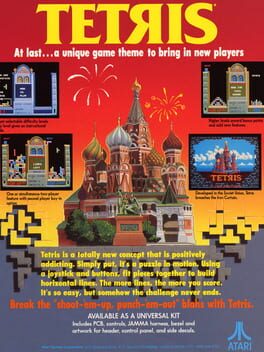
Tetris is a puzzle game developed originally released for arcades. Players must stack differently shaped falling blocks to form and eliminate horizontal lines from the playing field. The game features several difficulty levels and two-player simultaneous play.

Puzzle / Strategy / Non-fiction
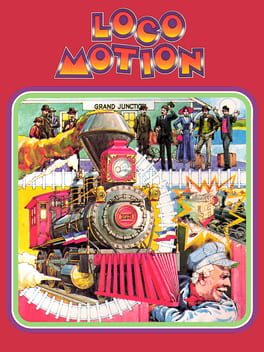
Loco-Motion is basically an updated version of a sliding block puzzle game where the player can move pieces horizontally or vertically within a frame to complete a picture. However, the presence of a constantly moving locomotive complicates matters. The player controls the playfield and the aim is to guide the locomotive around the tracks to collect the passengers waiting at the stations located around the edges of the screen. The player uses a joystick to slide a piece of the track into the vacant square. The locomotive is always moving, but the player has the option of making it move faster to get to the passengers more quickly by using a button next to the joystick. The player must avoid crashing the locomotive into the dead-end barricades (shown as a yellow 'X'), and also ensure that it does not run into the edge of the gap or a barrier at the playfield edge, either of which costs a life.

Puzzle / Simulator / Quiz/Trivia / Non-fiction / Educational
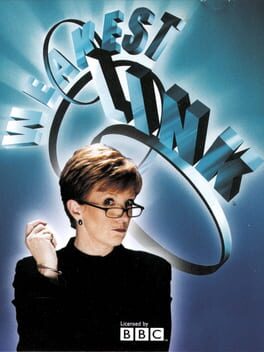
The Weakest Link is an interactive adaptation of the NBC game show made famous by host Anne Robinson's cold, no-nonsense demeanor and catchphrase, "You are the weakest link. Goodbye!" Robinson contributes to the game through video clips and voiceovers, while the actual gameplay is rendered using polygon graphics. Players choose from 24 existing characters to represent themselves, ranging from a 17-year-old high school senior to a 66-year-old retired bank manager. The rules are the same as in the TV show with one exception: On the show, players provide answers off the top of their head, but here you given are four answers to choose from. Initially, only the first letter of each answer is given, but after ten seconds the full text of the answers are revealed. In Easy mode, the full text is always available, and in Junior mode, players choose from only two answers.