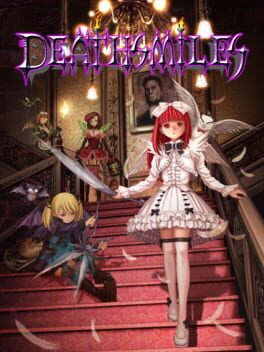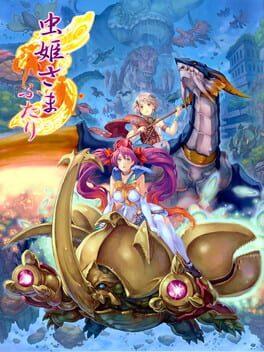
Mushihime-sama Futari is a bullet-hell shoot 'em up where players control one of two insect-themed warriors through relentless waves of enemy fire. The game blends precise dodging with strategic weapon use in a vibrant, high-speed world filled with colorful enemies and bosses. Originally released in arcades, this version delivers the purest form of the game's challenging gameplay, requiring sharp reflexes and pattern recognition to survive its intense bullet patterns. The iOS adaptation, titled Bug Princess 2, brings the same core experience to mobile devices, adapting controls for touchscreens while maintaining the game's signature intensity.
Shooter / Arcade / Fantasy / Historical
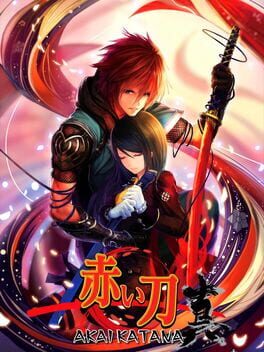
"Akai Katana" is a horizontally scrolling shooter bullet hell developed by Cave and released in Japan on August 20, 2010 for arcades. A port to the Xbox 360 with additional game modes, "Akai Katana Shin", followed on May 26, 2011 in Japan. Rising Star Games published the console release in North America and Europe on May 15, 2012 simply as" Akai Katana".
Shooter / Fantasy / Historical
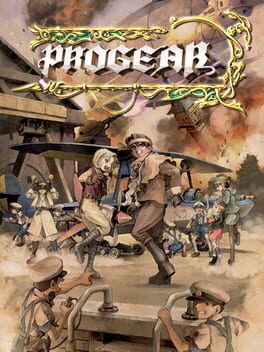
Progear is an arcade video game developed by CAVE and published by Capcom on the CPS-2 arcade system board in 2001. This was Cave's only horizontal scrolling shooter until Deathsmiles in 2007. The game features a steampunk-like style and art design. This game is the second of two CAVE shoot 'em ups to be released in America with the third CAVE NTSC-U/C release being Princess Debut, and in limited print; and as a result, the US version is somewhat rare. Sometime in the past, the people of the country of Parts had found a way to become immortal, but only with elderly nobles. Five of these elders—Ballossum Pench, Gabriel Hammer, Jimchuck Spanner, Olsorro Slasher, and Leonard Drill—obtained immortality, and became known as the Motoruin sages. Eventually, they attempted to take over the Parts kingdom and start a new world order, collapsing the government and destroying parts of the country in the process. As their plans unfold, five children of one of these villages decide to battle the Motoruin using another new invention: the semi-automatic propelling engine, known as "Progear". At the start of the game, the player is given a choice between two pilots/planes and three gunners, which determines the effectiveness of their respective modes. Each character's costume can be changed by holding the start button at the selection screen.

Espgaluda II is a manic shooter originally released by Cave in the arcades in 2005 as a sequel to Espgaluda.

Pink Sweets is a manic shooter. Its story presents an alternate universe version of Ibara; in this universe, none of that game's villains died, and the player controls one of the four boss characters from the previous game. It presents a similar rose-draped steampunk aesthetic which provides an excuse for the player's ships to fly through a very floral 19th century. Designer Shinobu Yagawa drew on his experience working on Raizing games such as Battle Garegga to present a game that plays a bit differently from the traditional Cave mold. The player's ship has a traditional shmup-style shot, but is also able to charge a special attack by not firing. A fully-charged, unfired special attack acts as a form of shield that can cancel certain enemy bullets; when fired, the fully-charged special attack acts as a kind of miniature bomb.
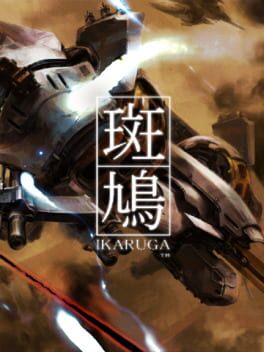
Shooter / Puzzle / Indie / Action / Science fiction
In this vertical scrolling spaceship shooter, you control a ship that can change its polarity at will. As blue/white, the ship can easily destroy red/black enemies, and vice versa. Bullets of your polarity can be collected to fuel your energy gauge, but those opposite will kill you. Destroying an enemy ship causes them to fire revenge bullets which can be absorbed and fired back by the player. Different difficulties exist to change exactly how you interact with polarized points, or how they appear. It is the spiritual successor to Radiant Silvergun, featuring similar level and boss design, as well as it's buddhism inspired themes and aesthetics. Both are directed by Hiroshi Iuchi, who also composed Ikaruga's soundtrack.