Super Nintendo Entertainment System / Super Famicom / PlayStation
Developed by Riverhillsoft for Atlus USA.
Real Time Strategy (RTS) / Role-playing (RPG) / Strategy / Fantasy / Warfare
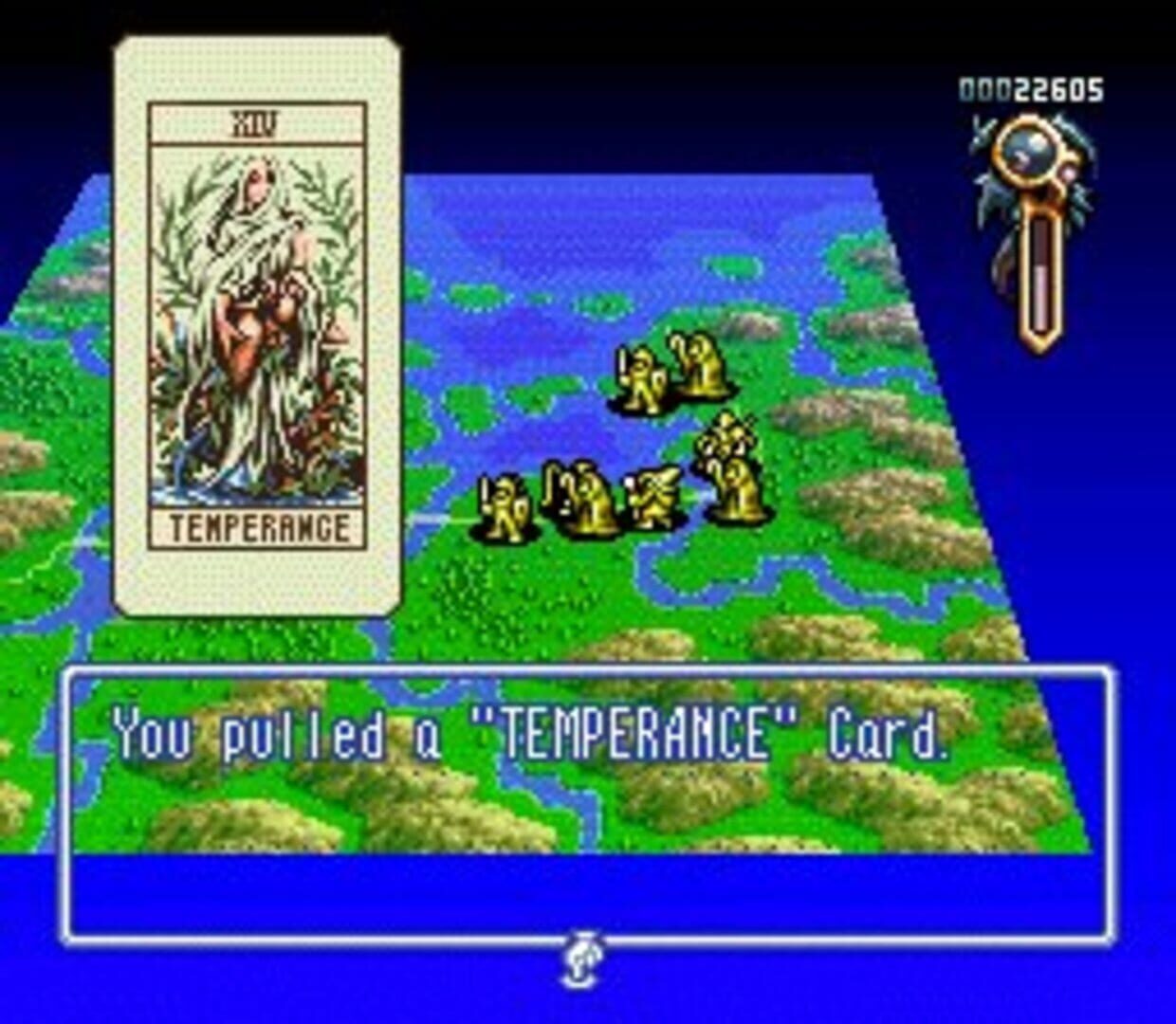
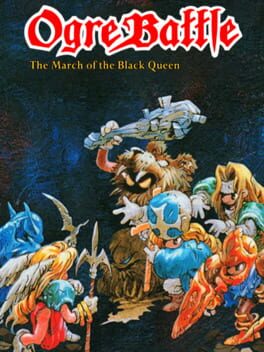
It’s up to you to defeat the Empire. It’s been nearly a quarter of a century since the Zetegenian Empire first conquered the Kingdoms of Zenobia with a wrath of fear and bloodshed. You are the leader of a band of rebels who’ve fought to preserve the last shred of honor in this desperate time of treachery. Manage the ranks of a full-blown rebel army, complete with hundreds of characters, magic items, weapons and mystical Tarot cards. You must succeed in ousting the evil usurpers - your fate, and that of the entire population, depends on it.

Real Time Strategy (RTS) / Role-playing (RPG) / Strategy / Fantasy / Warfare
"Ogre Battle 64: Person of Lordly Caliber is a tactical RPG for the Nintendo 64. Featuring a gripping storyline with multiple possible endings, and a genre-defining character class system, this strategic epic has rightly retained its place in the hearts of tactical RPG fans for over a decade. The game tells the story of Magnus Gallant, a recently graduated officer of the Palatinean Army who is assigned to the troubled southern region of his native land. There he witnesses the plight of the lower classes – the victims of a tyrannical ruling elite whose only thought is for the preservation of their own lofty status. With civil war brewing, Magnus is faced with a terrible choice: to betray his own noble origins in the name of liberty, or turn a blind eye to the evils of his rotten society."

Role-playing (RPG) / Strategy / Turn-based strategy (TBS) / Fantasy / Historical
Tactics Ogre is a 3D isometric tactical role-playing game. The player starts out with a band of troops, builds a small army and fights many battles with choices to make in between, that will determine which one of the eight possible endings will be reached in a non-linear storyline. The player has the option to recruit characters, control individual equipment of each character, with over six male character classes, six female character classes, three demi-human classes, and more. It is also possible to train at safe locations to prepare the army before the next battle or storyline advancement.

Role-playing (RPG) / Strategy / Turn-based strategy (TBS) / Fantasy / Warfare
"Highlights and Key Features: - Over 40 hours of gameplay and multiple endings! - Discover powerful character classes with the new Emblem System! - Cast a wide assortment of magic spells to defeat the enemy! - Go head-to-head against a friend by using the Game Boy® Advance Game Link® cable! - All new Quest Mode enables you to discover hidden items and weapons not available in the main game. - Utilize the Exchange Mode to trade items, spell books and characters with a friend. - Save up to 3 games!"

Role-playing (RPG) / Strategy / Turn-based strategy (TBS) / Fantasy / Warfare
Fire Emblem: The Dark Dragon and Sword of Light is the first game in the Fire Emblem series, developed by Intelligent Systems and published by Nintendo. It was first released on the Famicom (known internationally as the Nintendo Entertainment System) on April 20, 1990. It takes place on the continent of Archanea. It stars Marth, a character who later appeared in Super Smash Bros. Melee. The first time the game was released outside of Japan was in the form of a limited edition port for Nintendo Switch, under the same name, that runs a localization script in the background, but the original version of the game was never released outside of Japan.

Role-playing (RPG) / Adventure / Fantasy
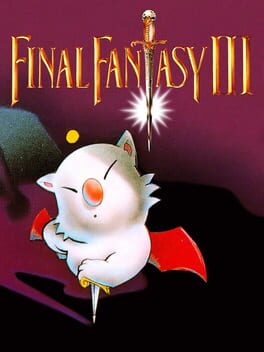
Final Fantasy VI is the sixth main installment in the Final Fantasy series, developed and published by Square. It was the final title in the series to feature two-dimensional graphics, and the first story that did not revolve around crystals. The game gives players up to fourteen playable characters, the largest cast in the series, and features the Active Time Battle pseudo-turn based menu command system. A party can consist of up to four characters, though some events require the player to assemble three different parties of up to four and switch between them. Each character has a unique command ability, such as Terra's Trance, Locke's Steal, Edgar's Tools or Sabin's Blitz, and can also learn Magic spells from earning AP from battles with magicite equipped. Each character's rare Desperation Attack will randomly activate after using the Attack command when at critical health.

Platform / Puzzle / Role-playing (RPG) / Action / Fantasy
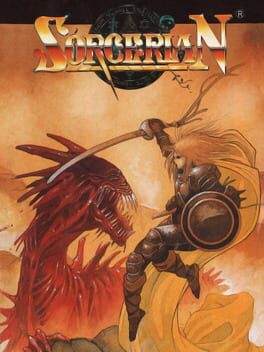
Sorcerian is a side-scrolling action-RPG. The player can create up to ten characters, from whom up to four members can be present in a party at the same time. Each character is highly customizable, with four different classes/races (fighter, wizard, elf, and dwarf) and over 60 possible jobs/occupations (ranging from clown to exorcist) available for them to perform; each has its own strengths and weaknesses, affecting the seven primary attributes (strength, intelligence, protection, magic resistance, vitality, dexterity, and karma) in different ways, as well as different equipment limitations. The player can choose from fifteen different scenarios, or quests, to play through in the order of their choice. The party must battle enemies and perform tasks within the given levels to clear each scenario, before moving onto another scenario of their choice. The player controls the entire party at the same time, with all four members running in a line, jumping in sequence, and attacking in unison. The party members follow behind in a manner similar to the Options in the arcade shooter Gradius (1985). Sorcerian also employs class-based puzzles, such as using a high-strength character to force open doors. All the characters have a default starting age of 16. Each time a player begins a new scenario, a year passes by, while additional time passes by in towns as a character goes through training or enchants items. The characters age at different rates depending on their race, with humans reaching old age at 60, dwarves at 100, and elves at 200. Upon reaching old age, for every year that passes, a character can die permanently at a random time. There is also an “Advance Time” to speed up the flow of time. Another new feature of Sorcerian was its episodic format that extended across various expansion packs. Besides the default fifteen scenarios that come with the game, there were a number of additional scenario packs released. The aging system was created with the additional scenario packs in mind.
Role-playing (RPG) / Strategy / Turn-based strategy (TBS) / Fantasy / Historical
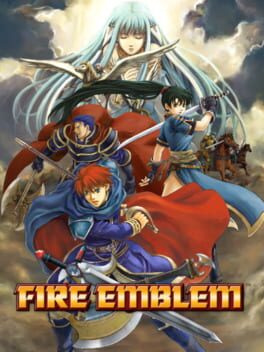
It is the seventh game of the Fire Emblem series, the second game in the series to be released for the Game Boy Advance, and the first to be released in both North America and Europe. It features a prologue storyline designed to introduce newcomers to Fire Emblem gameplay and tactical basics. The overall narrative is a prequel to the events of the previous game, Fire Emblem: The Binding Blade, which is set twenty years later. The game was first released under the localized title "Fire Emblem" in the West, but it was later rebranded as "Fire Emblem: The Blazing Blade" when Fire Emblem Heroes was released.

Role-playing (RPG) / Strategy / Turn-based strategy (TBS) / Fantasy / Warfare
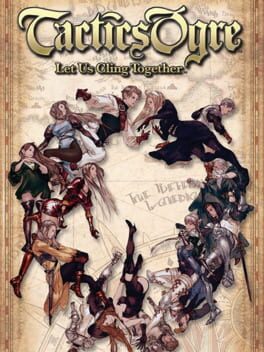
A remake version of the Super Famicom game Tactics Ogre: Let Us Cling Together, released on PlayStation Portable. The North American and European versions keep the original Title: "Tactics Ogre: Let Us Cling Together". The PSP remake presents several changes compared to the previous releases. New characters and events are included, and the script has been re-translated. Most importantly, the remake severely downplays the effects of a character's death in battle, giving players extra opportunities to keep characters alive even if their hit points have been reduced to zero in battle. The previous releases permanently eliminated characters once their hit points had been reduced to zero in battle. The remake also adds a crafting system and completely revamps the experience system, giving experience to all the party members after a battle, instead of giving it to single party members after executing individual actions