

Pacapaca Passion 21999
A Japan only PlayStation rhythm game in the Pacapaca Passion series
Screenshots & Artwork
Featured in
A Japan only PlayStation rhythm game in the Pacapaca Passion series
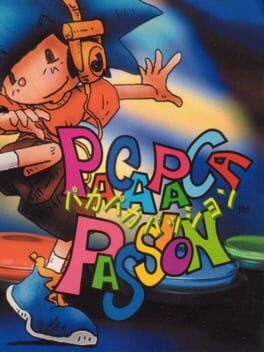
Paca Paca Passion is a rhythm game with dancers; however, this is very different then Bust A Move. I thank the closest game that I could compare this to is Beat Mania or Pop’n Music. There is a bar on the far left and right of the screen, a white line moves down this bar, and when you see a colored line on the bar, you press the corresponding button when the white bar moves over it.
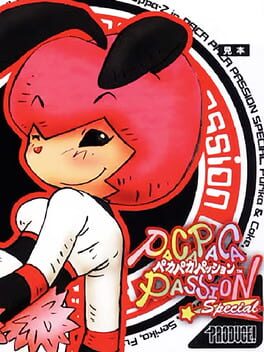
The third title in Japan-only rhythm game series Pacapaca Passion. Paca Paca Passion Special is the third and last game in the Paca Paca Passion series of music games made by Namco and that are conversion of Arcade Machines made too by Namco. The game features different melodies and game modes, and also a vs mode against a computer or another human player. Since this is the latest one in the series the game features the best graphics in the series with good cartoon 3d graphics.
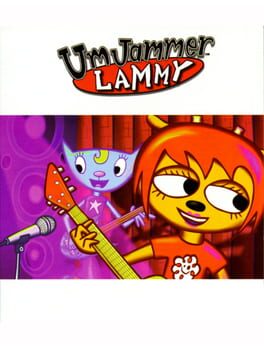
Um Jammer Lammy is a rhythm-based game that takes place in the PaRappa world and tells the story of the all-girl pop rock band, MilkCan. The game has very humorous and catchy music tracks, co-op gameplay, and a plethora of unlockables.
In this anything goes world, take to the beat of DJ Shinkawa's music to win the fight! This is all about rhythm and style, so don't mute the sound as you go into the battle. With tapping feet, keep the beat and keep your eyes and ears open!
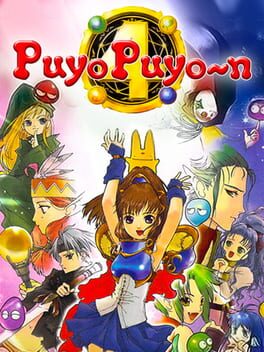
This game was released only in Japan. It is the fourth game in the Puyo Puyo series and the last set during the Madou-era in the main series. Continuing the trend of naming the games after puns, the name comes from a pun on "yon", the Japanese word for the number 4, but this time this is the only reference to the pun. The gameplay in is similar to that of Puyo Puyo 2, but adds super attacks. Clearing chains now builds up a "charge meter" which allows players to use them. The only other addition was a new game mode which could be played with a number of different field sizes, smaller or bigger than the standard 6x12, however, it removes several game modes that were present in Puyo Puyo Sun, i.e. the tournament, task and chain training modes. The art is also vastly different to the previous game in the series and, of course, the Fever series; this style was only otherwise used for Minna de Puyo Puyo.
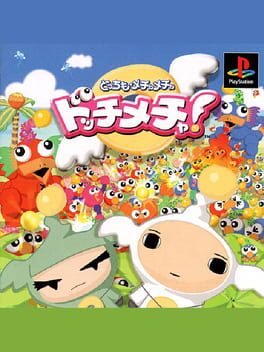
Strategy game in which the player take the role of a little alien that have to pass some missions to reach his objectives.

Puzzle / Strategy / Card & Board Game / Comedy / Kids
"GORYUZIN ELECTRO" is a board game acknowledged for its quality by the Good Toy Committee in Japan in 1997. Based on the legend of the dragon, you have to compete connecting special frames and see to what extend can you proceed into your opponent's territory. No matter how many times you play, it is a fun game for everyone. The gameplay is difficult to explain, the goal of the game is to use all of the player pieces or use the ones that the player needs to reach to other part of the board, (for example the player starts in the bottom of the screen and have to reach the top) the harder part is to that before the opponent do it, both players compete to use their pieces to create obstacles that avoid the opponent to reach the other side, using the opening (that is too the closing piece) to close the line and get a point (or more depending of the pieces used). The game got a challenging gameplay but the difficulty level is really hard.
A rhythm-action game like no other from the same team that created WarioWare. Rhythm Tengoku contains 48 minigames that put your rhythm to the test in a variety of crazy scenarios. Rhythm Tengoku was developed by Nintendo R&D1 and released exclusively in Japan for the GBA in 2006 and in arcades with Sega's help in 2007. Being developed by the same studio responsible for the WarioWare games, Rhythm Tengoku mixes the mini-game based gameplay with rhythm game elements, featuring unusually high-quality music for a GBA game. The game started development in 2004. A 2002 prototype for a GBA drum sequencer was incorporated into Rhythm Tengoku as well: the player can freely drum within the Sound Test or take on 19 drum lessons. (Source) The game contains eight stages with five rhythm games and one remix of the previous five each, adding up to 48 different mini-games total. Each game can be completed without hitting every note perfectly, although doing so will unlock various rhythm-related bonus games and modes, such as a drum set where you have to mimic what the drummer does. Much like the Wario Ware series of games, Rhythm Tengoku is all about following your senses and trying to be aware of various cues in the visuals and audio. This emphasis on sense instead of language makes it quite easy for anyone to pick up and play, even though the game is entirely in Japanese (and consequently only available in the Asian region or through an import website). For example, one of the game's levels has you rapping with a computer-controlled character. He'll speak a colour-coded Japanese phrase, and the player must press 'A' in different rhythms. Although the game explains what rhythms to do for which phrase, non-Japanese speaking players can watch hand movements on-screen to figure it out without the need for language. Occasionally, challenges will crop up, asking you to complete a level without any mistakes. Doing so earns you a certificate for that level, and a pink heart with a 'P' on it appears in that level's description.