Panel de Pon GB Restoration2021
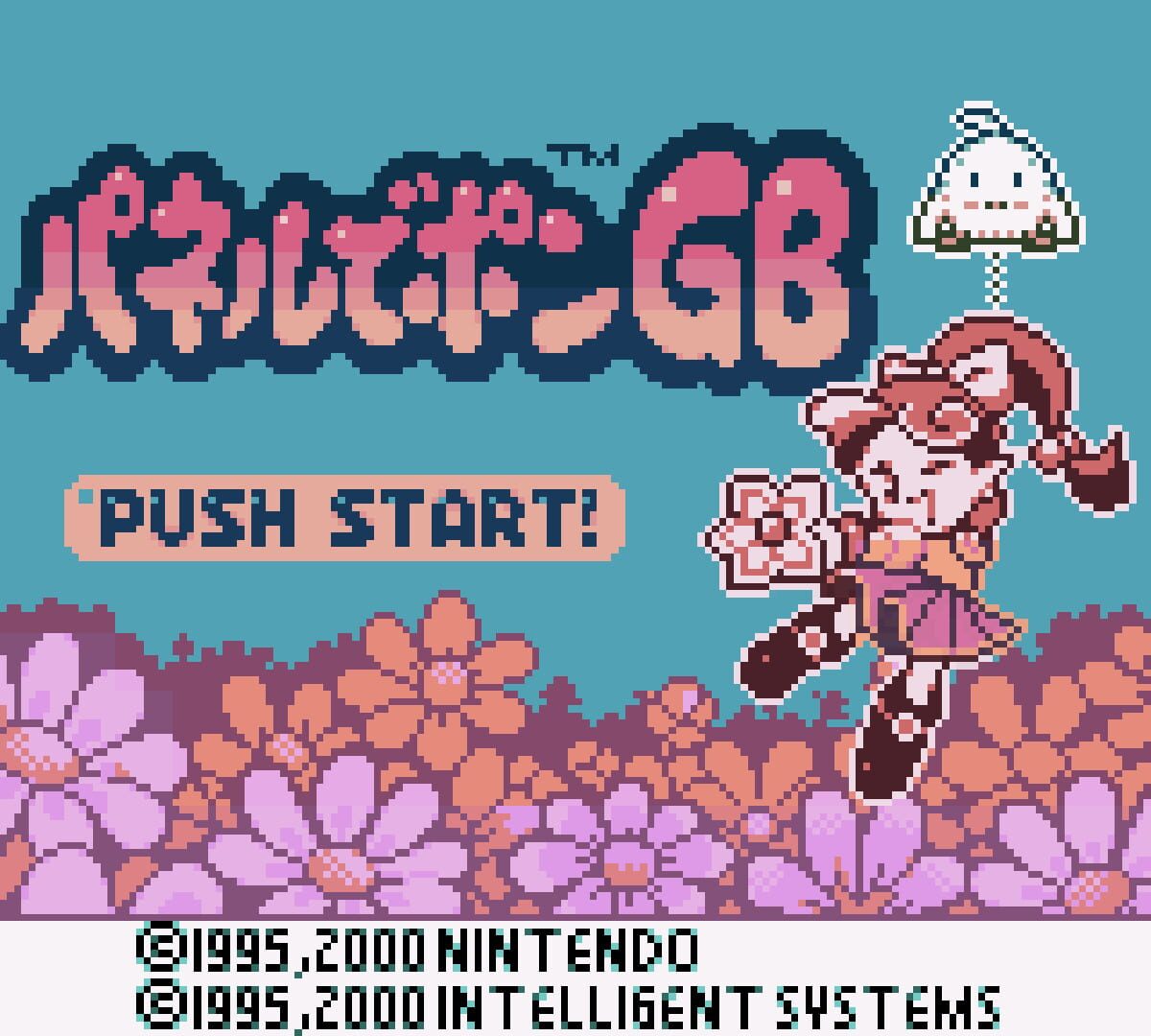
Panel de Pon GB Restoration is a ROMhack/mod of Pokémon Puzzle Challenge which intends to restore the game to its original concept of being a game in the Panel de Pon series.
Screenshots
Featured in
Panel de Pon GB Restoration is a ROMhack/mod of Pokémon Puzzle Challenge which intends to restore the game to its original concept of being a game in the Panel de Pon series.
Platform / Puzzle / Strategy / Action / Fantasy
The “Bubble Bobble: Lost Cave” Project aims to create a new experience for every lover of the classic Bubble Bobble arcade game, designed by Fukio “MTJ” Mitsuji and crew back in 1986. The aim is to provide the original Bubble Bobble coin-op with a whole hundred of different levels. Gameplay-wise, the game is going to retain all the mechanics of the original, but Bubblun and Bobblun will have to face a 100 challenging new stages.
Puzzle / Arcade / Fantasy / Comedy
Satan has enlarged the sun in a devious attempt to get a perfect tan. Arle Nadja embarks on a quest to defeat him in this competitive puzzle game. This is the 3rd installment of the Puyo Puyo games series, and the sequel to Puyo Puyo Tsu. After the highly acclaimed success of its predecessor, Compile took a slightly more retro approach, so players had a more original feel to the game over that of Tsu. The name of Puyo Puyo SUN comes from a Japanese pun on san, and also indicates a new Puyo brought into the game. As Sun Puyo were used in this game, and the game itself is not only set on a tropical beach, but is the third in the series (san (三)) is the Japanese word for the number three), the name served multiple purposes. This game was released only in Japan. Following the arcade release, Puyo Puyo Sun was ported to the then-current home consoles. The Saturn version was released merely three months after the arcade release, while the other ports were released in late 1997 and throughout 1998. The Saturn, PlayStation, and Windows 95 versions feature fully voiced cutscenes unlike the original ST-V version.
Platform / Puzzle / Arcade / Action / Fantasy
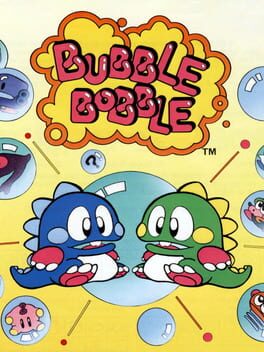
In the game, each player controls one of the two Bubble Dragons, Bub and Bob. The player can move along platforms, as well as jump to those above and to the side, similar to most platform games. The player can also blow bubbles. These can trap enemies, who are defeated if the bubble is then burst by the player's spiny back. Bubbles that contain enemies can be popped at the same time resulting in different foods being projected around the level. Each enemy trapped in a bubble equates to a different food. Food is consumed and transferred to points (an increasing scale of 1000 points is awarded for each enemy burst in tandem with another meaning: one enemy burst equals one food item worth 1000 points, two enemies burst equals two food items worth 1000 and 2000 points, three enemies burst equals three food items worth 1000, 2000 and 4000 points, and so on), which results in earning lives. These same bubbles also float for a time before bursting, and can be jumped on, allowing access to otherwise inaccessible areas. Players progress to the next level once all enemies on the current level are defeated. Enemies turn "angry" — becoming pink-colored and moving faster — if they are the last enemy remaining, escape from a bubble after being left too long or a certain amount of time has been spent on the current level. A monster will also become angry if either player collects a skull (the only negative item in the game), and the monster is hit by the resulting comet crossing the screen (however, this is a rare occurrence). After a further time limit expires, an additional invincible enemy appears for each player, actively chasing them using only vertical and horizontal movements. These do not need to be defeated to complete the level, and disappear once a player's life is lost. Contact with enemies and their projectiles (rocks, lasers, fireballs, etc.) results in death.
Puzzle / Arcade / Fantasy / Comedy
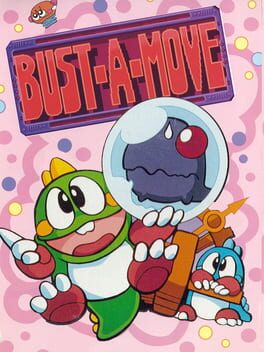
Bust-A-Move (also known as Puzzle Bobble) is a real-time puzzle game in which the player controls a device called "pointer" at the bottom of the screen, aiming and releasing randomly colored bubbles upwards. Depending on the aiming, the bubbles may float up directly or bounce off the walls, changing their trajectory. The goal is to aim the bubbles in such a way that they will touch identically colored ones. When such bubbles form a group of three or more, they pop and disappear from the screen. If the ceiling of the area is covered by too many bubbles, it will gradually descend; the game is over when it nearly reaches the player-controlled pointer. Should the player fail to release the bubbles within a specific time limit, they will be released automatically, unaffected by the pointer's aiming.
Puzzle / Arcade / Fantasy / Kids
The story begins when Kururin’s brothers and sisters go missing, and it is up to him to find them. Kururin is initially unsure that he is up to the task because he has never left his home world before. Being the adventurous and helpful fellow he is, Kururin agrees to rescue his lost family. Teacher Hare trains Kururin in the art of controlling the Helirin, a stick-shaped helicopter that has a slow-spinning propeller. Piloting the Helirin through the different worlds will be a difficult task, but using Teacher Hare's valuable lessons, Kururin bravely sets out on his adventure to rescue his lost family.
Puzzle / Arcade / Action / Fantasy
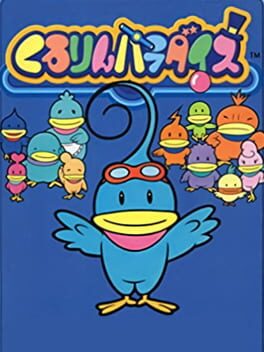
Kururin Paradise revolves around avoiding collisions as the player maneuver a robot through levels. The robot is shaped like a stick, and constantly spins. The second in the Kururin franchise, Paradise involves navigating complex levels with a constantly-rotating robot. Spring objects within levels change the direction of rotation when collided with, and an unlockable ability allows for increasing the speed of rotation. The player has three hit points. After three collisions with objects in the level (discounting the aforementioned springs), the level is re-started. Some levels have intermediate points that replenish health fully. However, they do not save progress. If the player loses all of his or her hit points, they still restart the level from the beginning. Almost all of the game is in Japanese.
Puzzle / Strategy / Arcade / Fantasy / Kids
In the tradition of the Bust-A-Move series, Taito's Bust-A-Move '99 is a traditional puzzle game. The main objective is to destroy or get rid of (by dropping) all the bubbles located within the stage. Once you do this, you'll graduate to the next level. While the premise may sound simple, the logic and execution is not. Using a "bubble shooter", you must aim and shoot your bubbles to the top of the screen so that you can bring three bubbles of the same color together. When you do this, the bubbles will pop. One way to earn points is to have the popping bubbles as well as the bubble that was shot fall off the screen (in multi-player, it puts these bubbles on your opponent's side). This also gives you a lot less bubbles to take care of. Bubbles are constantly falling down. Popping them all in a short amount of time is necessary because the longer it takes you to pop them all, the faster they will drop. If you fail to clear out all the bubbles and they reach the bottom of the screen, the game is over. Bust-A-Move '99 contains some new options never seen in the Bust-A-Move series. There are now special bubbles (star, metal and rainbow to name a few), obstructive bubbles and blocks and new backgrounds. You are also given the opportunity to create your very own stages with the create-a-level editor.
Puzzle / Arcade / Fantasy / Comedy
Panel de Pon is a game included in Nintendo Puzzle Collection for the Nintendo GameCube, which is the finished version of the cancelled Nintendo 64 video game Panel de Pon 64. The cancelled version ended up being released as Pokémon Puzzle League, albeit it was rebranded and featured characters from the Pokémon anime instead of the traditional fairies from the Panel de Pon franchise. A Nintendo 64 prototype is known to exist, but it is currently publicly unavailable.