Developed by Accolade.
Simulator / Strategy / Tactical / Action / Science fiction
PSI-5 Trading Company is a space simulation/action game. Players command an interstellar trading ship, hiring a specialized crew to operate the ship's subsystems and hauling valuable cargo to its destination amid a galaxy full of pirates, hostile aliens, and other hazards.

Simulator / Strategy / Turn-based strategy (TBS) / Action / Science fiction
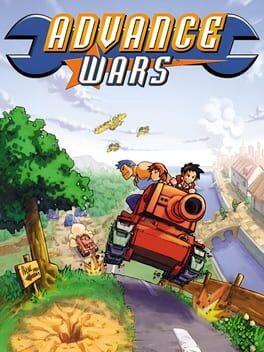
Just because this battle fits in the palm of your hand doesn't mean the stakes are small. On the contrary, this all-or-nothing fight will have you accessing guns, grenades, launchers, and weaponry of all sorts. Players assume command of an army that's out to reclaim a world that's been broken up by warring factions. The battle map is essentially a grid, and moving units is like moving chess pieces on a board -- each of the units can move a specific amount of spaces within this grid, and can only attack at a certain distance from specific enemies. Advance Wars features more than 115 maps, a map editor, head-to-head play via link cable, and an easy-to-understand tutorial mode for beginners.

Simulator / Strategy / Turn-based strategy (TBS) / Action / Science fiction
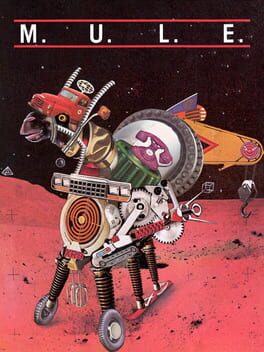
M.U.L.E. is about four hopeful explorers trying to make a fortune on a virgin planet. This is done by producing various goods (Food, Energy, Smithore, Crystite). Each of these goods have their uses: if you don't have enough food, you will have less time during your turn. If you don't have enough energy, your output will be lower. If enough smithore isn't produced, there will be a shortage of M.U.L.E.s. Crystite is the big earner that can make or break your game. You start the game by selecting your race. Some are easier to play, some harder. There are three levels of difficulty, in the easiest the game only lasts 6 turns, but the real game is 12 turns. Crystite is not available at the easiest level. Each turn starts with land claim. Each player gets to choose a spot of land for themselves from the map. If two players choose the same spot, the player with less money wins. The map consists of different landscape. River is best for producing food, plains for energy, mountains for smithore. Crystite is hidden and must be first found by taking a land sample to the town. After the land claim each player takes turns in cultivating their land and do other tasks. They can buy M.U.L.E.s to start production on their land, sabotage other players by buying M.U.L.E.s and letting them loose, try to catch the Wumpus for cash and try to find crystite veins. The time to do these things depends on if the player has enough food. Finally the player goes to the casino and wins a small amount of money, depending on how much time was left.
Shooter / Simulator / Strategy / Action / Science fiction
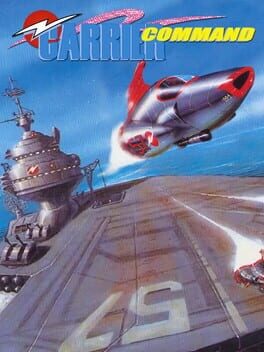
Carrier Command is a landmark 1980s computer game available on Amiga, Atari ST, PC, ZX Spectrum, Apple Macintosh, Commodore 64 and Amstrad CPC computers. Described by The Games Machine as a "seminal game destined to change the state of gaming", Carrier Command won accolades from across the industry.

Shooter / Simulator / Strategy / Action / Science fiction
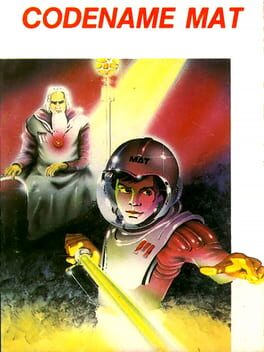
The story has the solar system under threat from Myon invaders. MAT ("Mission: Alien Termination") is a teenager implanted with all the combined tactical skills of the planetary leaders. MAT pilots a prototype spacecraft, the USS Centurion, in an attempt to defend the system from the alien's all-out attack.[6] The game's action takes place in a realtime 3D representation of MAT's view from the ship. The player has access to forward and rear views, which switch automatically if the tracking computer is active. Threats come in the form of Myon Fighters which engage the player immediately, Cruisers which only engage at short range, and Starbases which also attack immediately but withdraw when their shields are damaged.[6] The player's ship can suffer damage. If the Centurion's energy is reduced to zero, it is destroyed and the game ends. The ships instruments, engines and weapons can also be damaged; these can be repaired if the ship docks at a planet.[6]

Role-playing (RPG) / Simulator / Strategy / Action / Science fiction
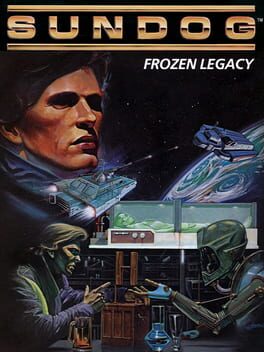
You just inherited a one-man star freighter - the SunDog - from an uncle who died under mysterious circumstances. You also inherited the contract he signed to aid in the building of a colony for a religious group. You have three tasks to perform: find the location of the colony; find, buy, and deliver goods needed for its construction; and locate the cryogenically-frozen colonists needed to populate the colony. In order to accomplish your task, you have to explore different planets and it's cities and travel between several solar systems. You trade goods in the hope of making a profit while space pirates and muggers are a constant threat to your efforts to free yourself from a life in slavery in some godforsaken mines somewhere in space.

Shooter / Simulator / Strategy / Action / Science fiction
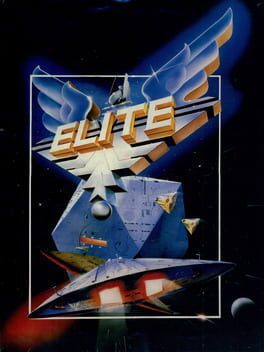
Elite is a space trading video game, written and developed by David Braben and Ian Bell and originally published by Acornsoft for the BBC Micro and Acorn Electron computers in September 1984. Elite's open-ended game model, and revolutionary 3D graphics led to it being ported to virtually every contemporary home computer system, and earned it a place as a classic and a genre maker in gaming history. The game's title derives from one of the player's goals of raising their combat rating to the exalted heights of "Elite". Elite was one of the first home computer games to use wire-frame 3D graphics with hidden line removal. It added graphics and twitch gameplay aspects to the genre established by the 1974 game Star Trader. Another novelty was the inclusion of The Dark Wheel, a novella by Robert Holdstock which gave players insight into the moral and legal codes to which they might aspire.

Strategy / Turn-based strategy (TBS) / Tactical / Action / Science fiction
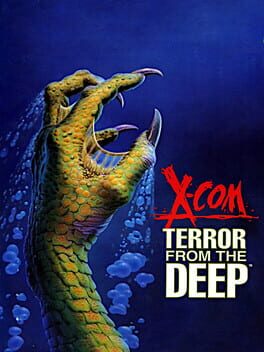
The war continues... X-COM: UFO Defense brought you to a galactic battlefield. X-COM: Terror from the Deep brings the alien terror into a totally new dimension. Seeking to take advantage of a weakened Earth, X-COM's deep space foes unexpectedly change strategy and launch a powerful second front against planet Earth. In the dark depths of vast oceans, long sleeping forces are awakened by reanimation signals sent out across the galactic silence by their interstellar brothers and sisters. Slowly but surely, an army of hibernating alien sea creatures awakens. Your combat now extends to the strange new worlds of the deep where superior alien technologies threaten the very survival of your planet earth.