Fighting / Arcade / Action
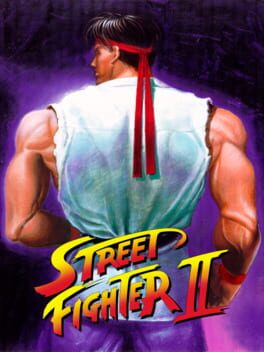
A sequel to Street Fighter, Street Fighter II improved upon the many concepts introduced in the first game, including the use of command-based special moves and a six-button configuration, while offering players a selection of multiple playable characters, each with their own unique fighting style and special moves.
Street Fighter II is credited with starting the fighting game boom during the 1990s. Its success led to the production of several updated versions, each offering additional features and characters over previous versions, as well as many home versions. Some home versions of the Street Fighter II games have sold millions of copies, with the SNES port of the first Street Fighter II being Capcom's best-selling consumer game of all time as of 2008.
Street Fighter II follows several of the conventions and rules already established by its original 1987 predecessor. The player engages opponents in one-on-one, close-quarters combat in a series of best-of-two-out-of-three matches. The objective of each round is to deplete the opponent's vitality before the timer runs out. If both opponents knock each other out at the same time or the timer runs out with both fighters having an equal amount of vitality left, a "double KO" or "draw game" is declared. Additional rounds will be played until sudden death. In the first Street Fighter II, a match could last up to 10 rounds if there was no clear winner; this was reduced to 4 rounds in the Champion Edition and onward. If there is no clear winner by the end of the final round, then either the computer-controlled opponent will win by default in a single-player match, or both fighters will lose in a 2-player match.
After every third match in single-player mode, the player will participate in a "bonus game" for additional points. The bonus games include (in order) a car-breaking event; a barrel-breaking bonus game where the barrels are dropped off from a conveyor belt above the player; and a drum-breaking bonus game where drums are flammable and piled over each other. The bonus games were removed from the arcade version of Super Street Fighter II Turbo.
As in the original, the game's controls use an eight-directional joystick and six attack buttons. The player uses the joystick to jump, crouch, move the character towards or away from the opponent, and guard against the opponent's attacks. There are three punch buttons and three kick buttons, each with varying strength and speed (Light, Medium, and Heavy). The player can perform a variety of basic moves in any position, including grabbing/throwing attacks, which were not featured in the original Street Fighter. Like in the original, the player can perform special moves by inputting a combination of directional and button-based commands.
Street Fighter II differs from the original in that it features multiple playable characters, each with distinct fighting styles and special moves. Additionally, the player can "cancel" an animation by performing another move, enabling combinations of basic and special moves. Both of these features would be expanded upon in subsequent installments.