
Puyo Pop Fever is a 2003 puzzle video game developed by Sonic Team and published by Sega. It is the fifth main installment in the Puyo Puyo puzzle game series and the second Puyo Puyo game to be programmed by Sonic Team after Puyo Pop (which was released just after the series' original developer, Compile, went bankrupt). This was the start of the what can be considered a reboot of the Puyo Puyo franchise, with this entry's plot revolving around Professor Accord losing her flying cane.
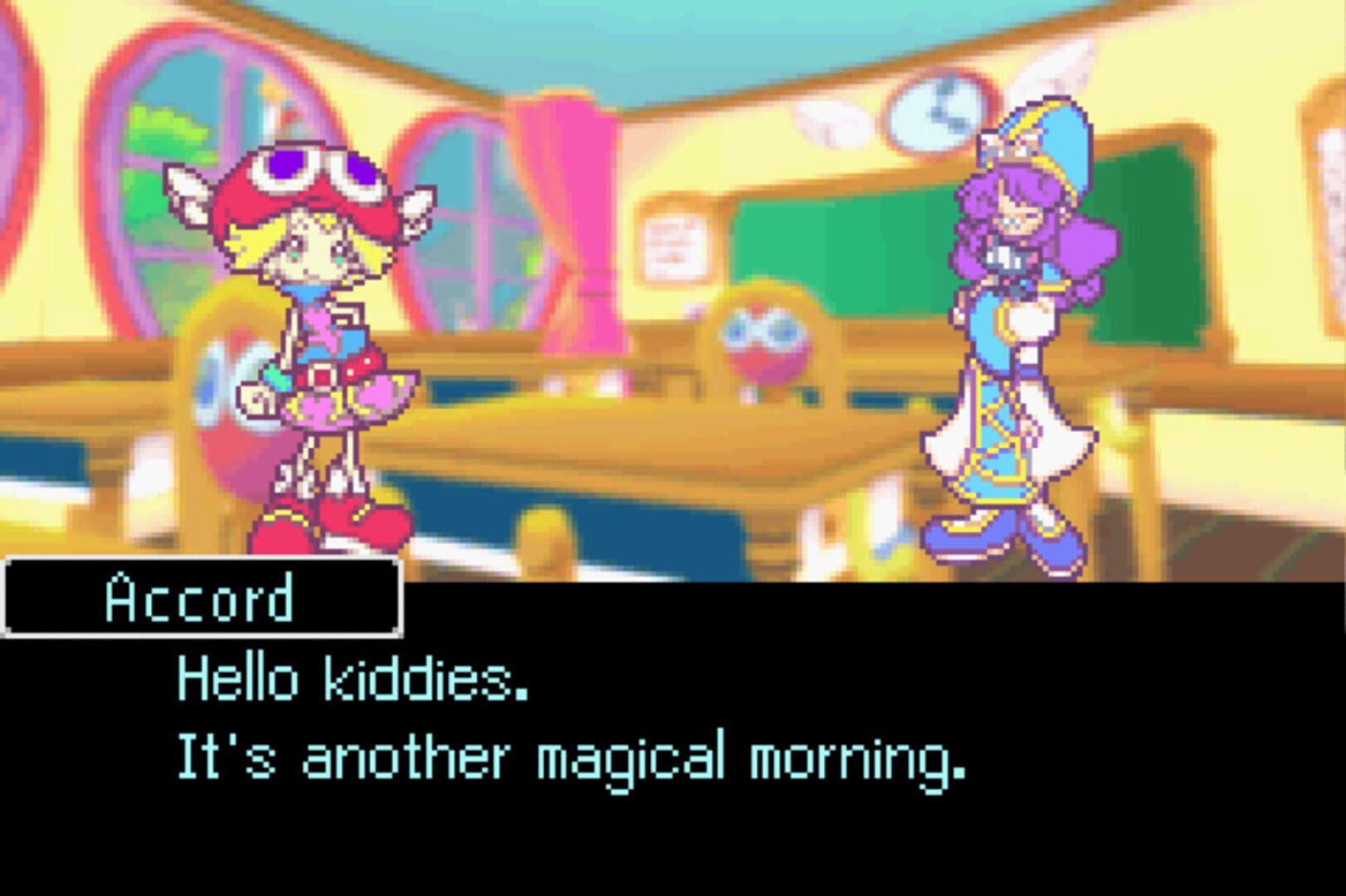
The game's story mode is divided into three courses that follow the adventure about Amitie, a spunky girl who attends a magic school, where she is taught by Accord how to cast magical spells using Puyo. In the main story of the game, Accord has lost her Flying Cane, the equivalent of a magic wand, and claims to have a reward for the student who can find it. The player plays the role of Amitie as she ventures across the Puyo Puyo Fever world to find the cane, while meeting many wacky characters along the way and battling them. In a harder version of the story mode, one plays as Amitie's rival, Raffina. Which story mode one is playing determines what characters one will meet and which ultimately finds the wand. When playing as Raffina near to the end of the game, it is revealed that Accord never actually lost her flying cane. She then plans on revealing Accord's and Popoi's secret, but fails in her ending, as she is knocked unconscious by Accord, losing all memories of the flying cane incident. She regains consciousness near her school where Amitie and her friends congratulate her.
Puyo Puyo! 15th Anniversary was created by Sonic Team to commemorate the 15th anniversary of Puyo Puyo. As such, it revives both the gameplay rules of the arcade Puyo Puyo and Puyo Puyo Tsu, as well as six characters from the Madou Monogatari era of the series. It was released for Nintendo DS in 2006, and in 2007 for PlayStation 2, PlayStation Portable, and Wii This game was followed by Puyo Puyo 7.

It is the 2nd anniversary game in the series and as such shares more similarities to "Puyo Puyo! 15th Anniversary" than "Puyo Puyo 7". This game came out 4 months before "Sonic Generations", which is also commemorating the 20th anniversary of the Sonic games. There are 24 playable characters available, each with their own 8-stage course (similar to Puyo Puyo! 15th Anniversary). This game, as it's predecessor, was released only in Japan.

Puzzle / Role-playing (RPG) / Adventure / Action / Fantasy
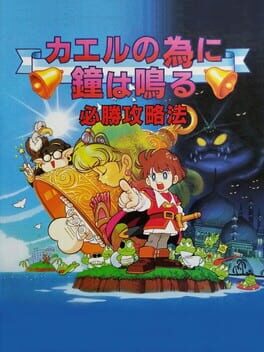
In a land far away, the two princes—Richard (of the Custard Kingdom) and the game's main protagonist (prince of the Sablé Kingdom)—have shared a friendly rivalry since they were small children. They often compete, although it usually ends in a tie or close win. In Fencing however, Prince Richard is always the victor. One day a messenger arrives from a small neighboring kingdom, warning the princes that the evil King Delarin has invaded the Mille-Feuille Kingdom and captured the beautiful princess Tiramisu. In yet another boastful attempt to best the Sablé Prince, Richard grabs a boat and rushes towards the kingdom. The Sablé Prince is left trying to catch up. While on his journey, he and Richard (and many others) are transformed into frogs in an attempt to reveal the true happenings in this kingdom. The game and its characters were mentioned many times in the Super Smash Bros. series as trophies, stickers, spirits and as the Assist Trophy of the Sablé Prince. In these series, the game was officially romanized as "Kaeru no Tame ni Kane wa Naru".

Puzzle / Arcade / Fantasy / Comedy
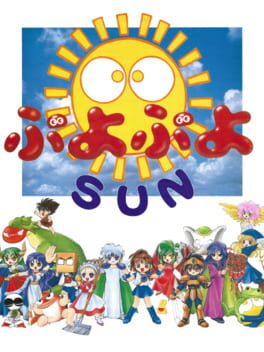
Satan has enlarged the sun in a devious attempt to get a perfect tan. Arle Nadja embarks on a quest to defeat him in this competitive puzzle game. This is the 3rd installment of the Puyo Puyo games series, and the sequel to Puyo Puyo Tsu. After the highly acclaimed success of its predecessor, Compile took a slightly more retro approach, so players had a more original feel to the game over that of Tsu. The name of Puyo Puyo SUN comes from a Japanese pun on san, and also indicates a new Puyo brought into the game. As Sun Puyo were used in this game, and the game itself is not only set on a tropical beach, but is the third in the series (san (三)) is the Japanese word for the number three), the name served multiple purposes. This game was released only in Japan. Following the arcade release, Puyo Puyo Sun was ported to the then-current home consoles. The Saturn version was released merely three months after the arcade release, while the other ports were released in late 1997 and throughout 1998. The Saturn, PlayStation, and Windows 95 versions feature fully voiced cutscenes unlike the original ST-V version.

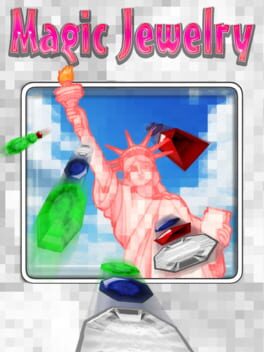
Magic Jewelry is a tile-matching puzzle video game for the NES. It was programmed by Hwang Shinwei in Taiwan and released in 1990 by RCM, without a license from Nintendo.

Puzzle / Role-playing (RPG) / Strategy / Fantasy
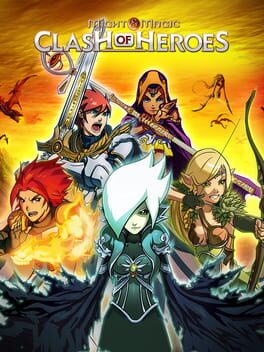
Scattered across five different regions, five special heroes must travel their own dangerous paths to grow in strength, unravel a demonic plot & ultimately save the world from chaos.

This is the 7th game in the main Puyo Puyo series, which is denoted by the 7. A break from the previous Fever series games, the game is set in a world similar to the real world instead of Primp Town. In this game, a new game mode known as Transformation was added as the default mode. Five new characters were introduced, and a few characters from past games in the series were reintroduced, either as playable characters or cameos.

Platform / Puzzle / Role-playing (RPG) / Action / Fantasy
Play as five members of a family that set out to kill a dragon hidden within a giant maze.