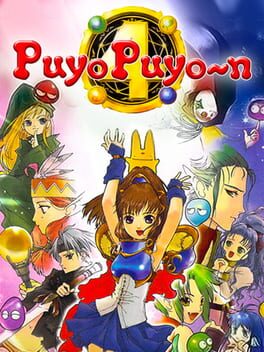
This is the 7th game in the main Puyo Puyo series, which is denoted by the 7. A break from the previous Fever series games, the game is set in a world similar to the real world instead of Primp Town. In this game, a new game mode known as Transformation was added as the default mode. Five new characters were introduced, and a few characters from past games in the series were reintroduced, either as playable characters or cameos.
The main story follows Ringo's mission to try and stop Puyo from flooding her world. Instead of the course system used in previous games, the story is divided into six linear acts, each act taking place in several different areas, and each act being divided into several episodes. Although some characters seem to join the party in a sort of Puyo Puyo~n fashion, the player is only allowed to use Ringo for the first playthrough. Completion of the game allows for the use of the other party members when one replays the episodes, leading to alternate scenarios.
Puzzle / Arcade / Fantasy / Comedy
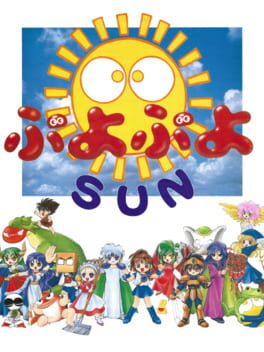
Satan has enlarged the sun in a devious attempt to get a perfect tan. Arle Nadja embarks on a quest to defeat him in this competitive puzzle game. This is the 3rd installment of the Puyo Puyo games series, and the sequel to Puyo Puyo Tsu. After the highly acclaimed success of its predecessor, Compile took a slightly more retro approach, so players had a more original feel to the game over that of Tsu. The name of Puyo Puyo SUN comes from a Japanese pun on san, and also indicates a new Puyo brought into the game. As Sun Puyo were used in this game, and the game itself is not only set on a tropical beach, but is the third in the series (san (三)) is the Japanese word for the number three), the name served multiple purposes. This game was released only in Japan. Following the arcade release, Puyo Puyo Sun was ported to the then-current home consoles. The Saturn version was released merely three months after the arcade release, while the other ports were released in late 1997 and throughout 1998. The Saturn, PlayStation, and Windows 95 versions feature fully voiced cutscenes unlike the original ST-V version.

Puzzle / Arcade / Action / Fantasy
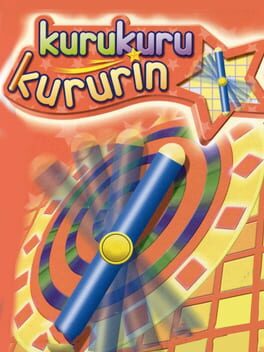
Kururin Paradise revolves around avoiding collisions as the player maneuver a robot through levels. The robot is shaped like a stick, and constantly spins. The second in the Kururin franchise, Paradise involves navigating complex levels with a constantly-rotating robot. Spring objects within levels change the direction of rotation when collided with, and an unlockable ability allows for increasing the speed of rotation. The player has three hit points. After three collisions with objects in the level (discounting the aforementioned springs), the level is re-started. Some levels have intermediate points that replenish health fully. However, they do not save progress. If the player loses all of his or her hit points, they still restart the level from the beginning. Almost all of the game is in Japanese.

This game was released only in Japan. It is the fourth game in the Puyo Puyo series and the last set during the Madou-era in the main series. Continuing the trend of naming the games after puns, the name comes from a pun on "yon", the Japanese word for the number 4, but this time this is the only reference to the pun. The gameplay in is similar to that of Puyo Puyo 2, but adds super attacks. Clearing chains now builds up a "charge meter" which allows players to use them. The only other addition was a new game mode which could be played with a number of different field sizes, smaller or bigger than the standard 6x12, however, it removes several game modes that were present in Puyo Puyo Sun, i.e. the tournament, task and chain training modes. The art is also vastly different to the previous game in the series and, of course, the Fever series; this style was only otherwise used for Minna de Puyo Puyo.

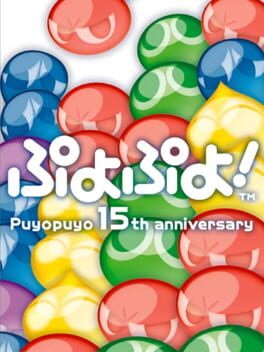
Puyo Puyo! 15th Anniversary was created by Sonic Team to commemorate the 15th anniversary of Puyo Puyo. As such, it revives both the gameplay rules of the arcade Puyo Puyo and Puyo Puyo Tsu, as well as six characters from the Madou Monogatari era of the series. It was released for Nintendo DS in 2006, and in 2007 for PlayStation 2, PlayStation Portable, and Wii This game was followed by Puyo Puyo 7.

Platform / Puzzle / Action / Fantasy
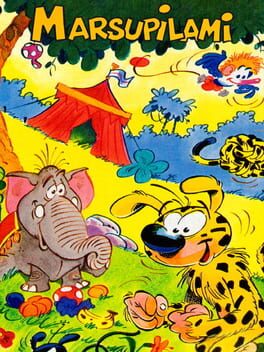
Marsupilami is a character created by Belgian cartoonist "Franquin". Marsupilami is a long tailed made-up character who was stolen from the jungle and performs in a circus. After helping the other animals escape, Marsupilami must make his way back to the country he came from - Palombia. The aim is to guide his Elephant companion, Bonelli, through the levels, passed obstacles and traps. As he progresses, he gains more abilities by collecting power ups. Each level is timed so each action must be thought about carefully.

Platform / Puzzle / Arcade / Action / Fantasy
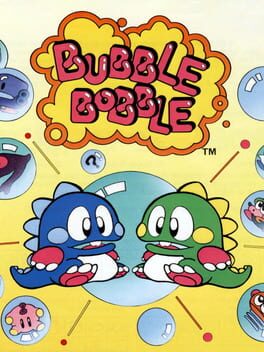
In the game, each player controls one of the two Bubble Dragons, Bub and Bob. The player can move along platforms, as well as jump to those above and to the side, similar to most platform games. The player can also blow bubbles. These can trap enemies, who are defeated if the bubble is then burst by the player's spiny back. Bubbles that contain enemies can be popped at the same time resulting in different foods being projected around the level. Each enemy trapped in a bubble equates to a different food. Food is consumed and transferred to points (an increasing scale of 1000 points is awarded for each enemy burst in tandem with another meaning: one enemy burst equals one food item worth 1000 points, two enemies burst equals two food items worth 1000 and 2000 points, three enemies burst equals three food items worth 1000, 2000 and 4000 points, and so on), which results in earning lives. These same bubbles also float for a time before bursting, and can be jumped on, allowing access to otherwise inaccessible areas. Players progress to the next level once all enemies on the current level are defeated. Enemies turn "angry" — becoming pink-colored and moving faster — if they are the last enemy remaining, escape from a bubble after being left too long or a certain amount of time has been spent on the current level. A monster will also become angry if either player collects a skull (the only negative item in the game), and the monster is hit by the resulting comet crossing the screen (however, this is a rare occurrence). After a further time limit expires, an additional invincible enemy appears for each player, actively chasing them using only vertical and horizontal movements. These do not need to be defeated to complete the level, and disappear once a player's life is lost. Contact with enemies and their projectiles (rocks, lasers, fireballs, etc.) results in death.

Puzzle / Arcade / Fantasy / Comedy
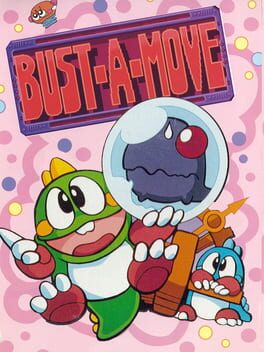
Bust-A-Move (also known as Puzzle Bobble) is a real-time puzzle game in which the player controls a device called "pointer" at the bottom of the screen, aiming and releasing randomly colored bubbles upwards. Depending on the aiming, the bubbles may float up directly or bounce off the walls, changing their trajectory. The goal is to aim the bubbles in such a way that they will touch identically colored ones. When such bubbles form a group of three or more, they pop and disappear from the screen. If the ceiling of the area is covered by too many bubbles, it will gradually descend; the game is over when it nearly reaches the player-controlled pointer. Should the player fail to release the bubbles within a specific time limit, they will be released automatically, unaffected by the pointer's aiming.

Puzzle / Arcade / Fantasy / Kids
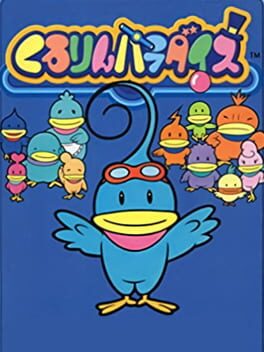
The story begins when Kururin’s brothers and sisters go missing, and it is up to him to find them. Kururin is initially unsure that he is up to the task because he has never left his home world before. Being the adventurous and helpful fellow he is, Kururin agrees to rescue his lost family. Teacher Hare trains Kururin in the art of controlling the Helirin, a stick-shaped helicopter that has a slow-spinning propeller. Piloting the Helirin through the different worlds will be a difficult task, but using Teacher Hare's valuable lessons, Kururin bravely sets out on his adventure to rescue his lost family.