Puyo Puyo 21994
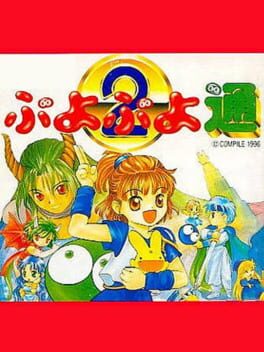
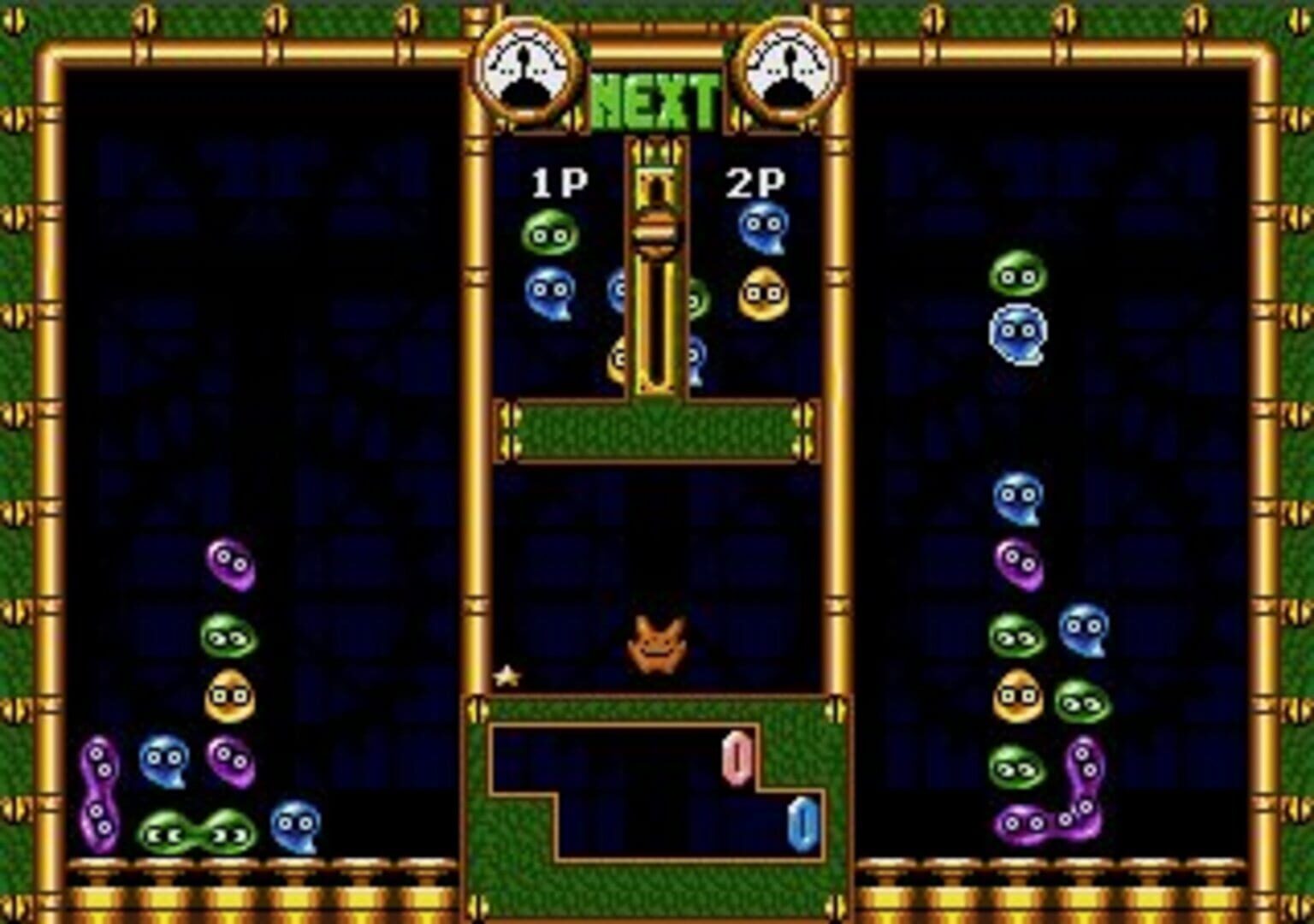
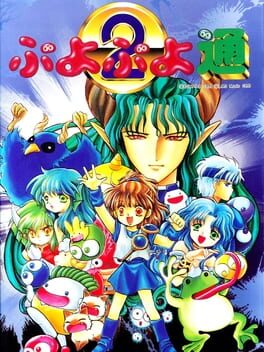
The object of this head-to-head puzzle game is to clear your grid of falling patterns called puyos by forming chains of four or more same-colored puyos in a straight line or one of several geometric patterns.
Screenshots
Featured in
The object of this head-to-head puzzle game is to clear your grid of falling patterns called puyos by forming chains of four or more same-colored puyos in a straight line or one of several geometric patterns.
Puzzle / Strategy / Arcade / Action / Fantasy
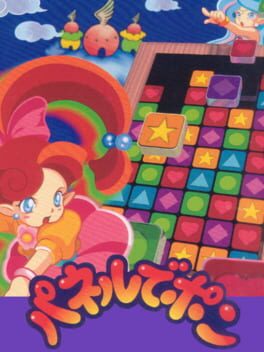
A tile matching puzzle game for the Super Famicom, the first in the Puzzle League series. It was later modified to feature Yoshi and Mario related characters to be released in the western regions, under the name of "Tetris Attack". It was also a downloadable game for the Satellaview that was broadcast in at least 4 runs between November 19, 1995 and January 31, 1998. Although the game was Japan exclusive, it did eventually see releases in the rest of the world in 2020 as part of the Nintendo Switch Online lineup.
Puzzle / Arcade / Action / Fantasy
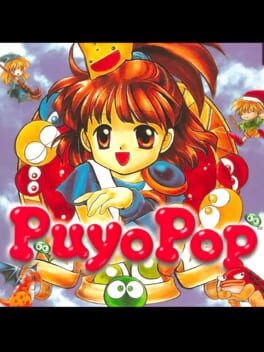
A Neo Geo Pocket port of Puyo Puyo Tsuu, licensed to SNK by Sega, was released in North America and Europe as Puyo Pop. Unlike previous English Puyo Puyo games, the NGPC Puyo Pop retains both the character designs and (almost) all of the character names from the Japanese version. As in the English translations of the first game, Satan is renamed "Dark Prince."
Puzzle / Arcade / Action / Fantasy
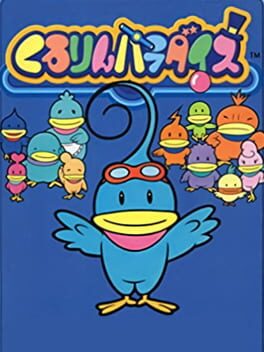
Kururin Paradise revolves around avoiding collisions as the player maneuver a robot through levels. The robot is shaped like a stick, and constantly spins. The second in the Kururin franchise, Paradise involves navigating complex levels with a constantly-rotating robot. Spring objects within levels change the direction of rotation when collided with, and an unlockable ability allows for increasing the speed of rotation. The player has three hit points. After three collisions with objects in the level (discounting the aforementioned springs), the level is re-started. Some levels have intermediate points that replenish health fully. However, they do not save progress. If the player loses all of his or her hit points, they still restart the level from the beginning. Almost all of the game is in Japanese.
Platform / Puzzle / Arcade / Action / Fantasy
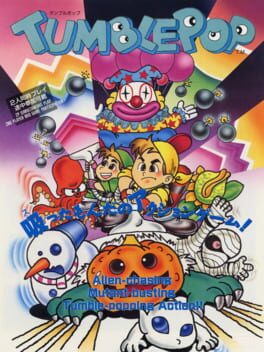
The game involves one or two ghost-busters who can suck monsters, ghosts, aliens and various other oddball characters into vacuum-cleaner-like devices and spit them back as bouncing/rolling balls. Expelled enemies function as projectiles that can damage and kill other opponents on the screen when colliding with them. The game's looks are reminiscent of Pang. Throughout the game, the player/s can collect letters of the alphabet found in randomly appearing bubbles in order to gradually spell the word "TUMBLEPOP", the progress of which is permanently displayed at the bottom of the screen. When completed, players are transported to a bonus level which gives them the opportunity to obtain higher scores and an extra life, although this level is strictly timed. The word goes back to default after completion.
Platform / Puzzle / Arcade / Action / Fantasy
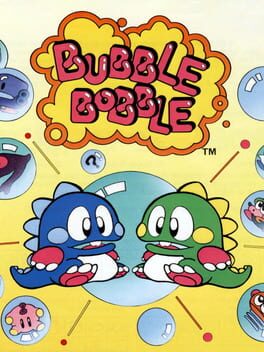
In the game, each player controls one of the two Bubble Dragons, Bub and Bob. The player can move along platforms, as well as jump to those above and to the side, similar to most platform games. The player can also blow bubbles. These can trap enemies, who are defeated if the bubble is then burst by the player's spiny back. Bubbles that contain enemies can be popped at the same time resulting in different foods being projected around the level. Each enemy trapped in a bubble equates to a different food. Food is consumed and transferred to points (an increasing scale of 1000 points is awarded for each enemy burst in tandem with another meaning: one enemy burst equals one food item worth 1000 points, two enemies burst equals two food items worth 1000 and 2000 points, three enemies burst equals three food items worth 1000, 2000 and 4000 points, and so on), which results in earning lives. These same bubbles also float for a time before bursting, and can be jumped on, allowing access to otherwise inaccessible areas. Players progress to the next level once all enemies on the current level are defeated. Enemies turn "angry" — becoming pink-colored and moving faster — if they are the last enemy remaining, escape from a bubble after being left too long or a certain amount of time has been spent on the current level. A monster will also become angry if either player collects a skull (the only negative item in the game), and the monster is hit by the resulting comet crossing the screen (however, this is a rare occurrence). After a further time limit expires, an additional invincible enemy appears for each player, actively chasing them using only vertical and horizontal movements. These do not need to be defeated to complete the level, and disappear once a player's life is lost. Contact with enemies and their projectiles (rocks, lasers, fireballs, etc.) results in death.
Platform / Puzzle / Arcade / Action / Fantasy
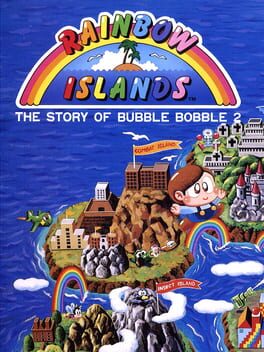
Rainbow Islands is a 1987 arcade game developed and published by Taito. The arcade version was licensed to Romstar for North American manufacturing and distribution. The game is subtitled "The Story of Bubble Bobble 2" and is the sequel to Taito's hit game Bubble Bobble from the previous year. It is the second of four arcade games in the Bubble Bobble series. The game was ported for numerous home computers and game consoles.