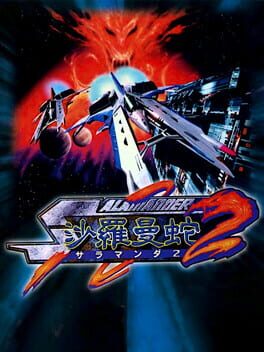

Like the original Salamander, and as opposed to the Life Force releases, Salamander 2 abandons the selection-bar based power-up system, in favor for a simplified system that focuses on powering weapons up based on specific icons. For example, the player cannot increase his ship speed until a speed icon is picked up; additional speed icons further increase the ship velocity. Several weapons, when additionally upgraded, turn into a 'super' weapon for approximately ten seconds. If the player has the ripple laser, and then gets another icon for it, the player will receive the high-powered Buster ripple for a short period of time. Options have been slightly changed with the arrival of 'option seeds', which are small options that orbit the ship firing only the basic initial shot. Two option seeds can combine into one full option. Moreover, options can also be sacrificed to utilize a short-term homing beam weapon. Several enemy bosses typical to Gradius games return, including the Brain Golem (the first level boss) and the Tetran (the second level boss). There are a total of six levels. Since the game is similar to its prequel, Salamander 2 does not use the Revival Start feature from Gradius (which pushes the player back to a pre-determined checkpoint if a life is lost), many people consider this title to be easier than other titles in the Gradius series due to this. Once the game has been completed, it starts its second-loop at a much higher difficulty. The music is also changed to remixed versions of Salamander's music in some stages. The first player's ship is called Vic Viper while the second player's ship is Super Cobra.
Year 0999 in the space calendar... The subspace life form Doom began its invasion. Their appearance caused distortions in the universe, sending multiple colonized star systems hurtling into subspace. Those who managed to escape with their lives fled to the home planet and final stronghold of Gradius, where they launched a counterattack. Now two super-dimensional fighters are taking off, the final hopes of all mankind riding on their shoulders. Vic Viper and Super Cobra! Prepare for takeoff!
Shooter / Arcade / Science fiction
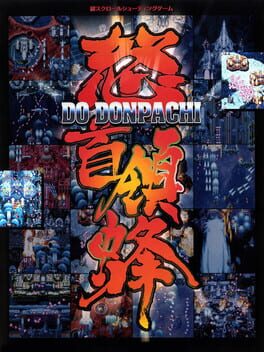
Compared to DonPachi, DoDonPachi is generally known for introducing new gameplay elements while improving or changing existing ones. The overall background of the game, unlike following sequels, remains more or less centered around a supposed invasion by a mysterious race of mechanized aliens, which the player is called to face throughout its run. However, more sinister and shocking secrets lie beneath the surface, accessible only to those brave and skilled enough to clear the entire game.

Shooter / Arcade / Action / Science fiction
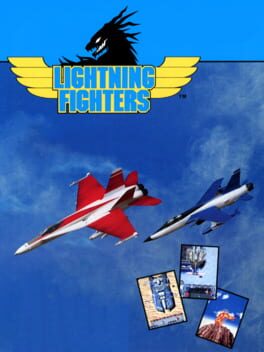
Lightning Fighters, released in Japan as Trigon, is a 1990 scrolling shooter arcade game by Konami. It is commonly compared to Raiden, though the two games were released very close to each other, and they were both meant to compete with the works of Toaplan. Though Lightning Fighters has become an obscure arcade-only title, Konami has referenced it multiple times over the years. Gradius Gaiden features a boss modeled after the ship and weapons from the game, and Yu-Gi-Oh! cards such as "Trigon", "Delta Tri" (based on the mentioned Gradius Gaiden boss), and "Dragon Laser" also represent the game.

Shooter / Adventure / Arcade / Action / Science fiction
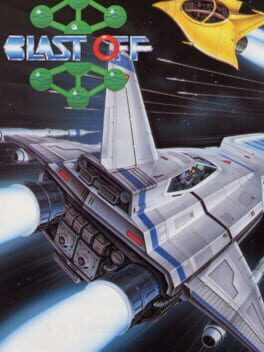
As in many other vertical scrolling shooters (including Namco's own Xevious), the player controls a ship, facing the top of the screen, that can move freely while the background scrolls down, bringing enemies in to view; the player may destroy enemies for points. The game uses two buttons - one is used to make the ship fire circular lasers, while the other is used to cycle through its four firing patterns. The red pattern is two lasers in a spiral pattern, while the blue one is one laser straight ahead and one behind, the yellow one is one laser straight ahead, one left, and one right and the green one is two lasers diagonally forward (one to the left and one to the right), and one straight behind; by holding down the button, the ship fires more powerful, spherical lasers. Even though the game is the sequel to Bosconian (which used a synthesized, DAC-generated voice saying "Blast off!" at the beginning of every round), Blast Off had more in common gameplay-wise with Namco's own Dragon Spirit than with Bosconian; this is especially noticeable in the third area of every world, where the player's ship undergoes an increase in size, and must destroy a boss. Despite several gameplay differences, the connection with Bosconian was emphasized in the marketing of the game, with the hexagonal space stations from Bosconian appearing in Namco's press literature, and on the game's title screen, and also making appearances in the game itself - and the game is also worth noting for its usages of various Engrish phrases, such as "To push start only 1 player button" (on title screen), "Go next" (at end of world), "Congraturations" (at end of game) and "Entry your name" (on high score table). There are a total of six worlds in this game, and each one has three areas (so there are a total of eighteen "stages" to play through).

Shooter / Arcade / Action / Science fiction
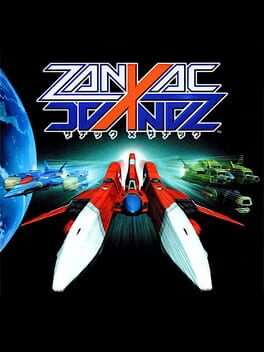
Zanac X Zanac is a shoot'em up game released by Compile to commemorate the 15th anniversairy of the original game. This title includes two games - a reimagination of the original game, called Zanac Neo and 3 different versions of the NES port of Zanac.

Shooter / Puzzle / Indie / Action / Science fiction
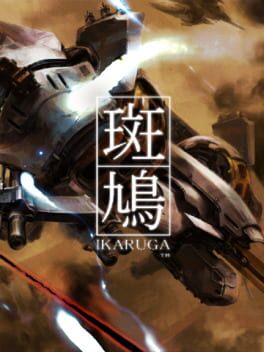
In this vertical scrolling spaceship shooter, you control a ship that can change its polarity at will. As blue/white, the ship can easily destroy red/black enemies, and vice versa. Bullets of your polarity can be collected to fuel your energy gauge, but those opposite will kill you. Destroying an enemy ship causes them to fire revenge bullets which can be absorbed and fired back by the player. Different difficulties exist to change exactly how you interact with polarized points, or how they appear. It is the spiritual successor to Radiant Silvergun, featuring similar level and boss design, as well as it's buddhism inspired themes and aesthetics. Both are directed by Hiroshi Iuchi, who also composed Ikaruga's soundtrack.

Shooter / Platform / Arcade / Action / Science fiction
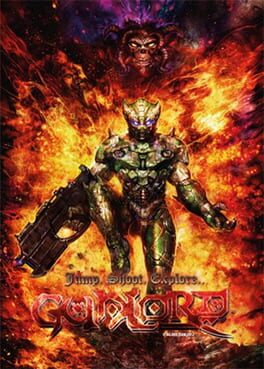
After the space pilot Vanessa Gaiden defeated the Evil Empire in the events of the game Last Hope, she got missing on her way back and wasn't heard of anymore. Vanessa's husband, Gordian Gaiden, sets out to search for her. Meanwhile, a new evil has appeared in the galaxy: a planet lord called "The Master", who can create and control evil beings made of steel, and uses his power to terrorize the galaxy. On his search, Gordian comes across the evil presence of The Master and sets out in his Gunlord suit for the planet Kairos II.

Shooter / Arcade / Science fiction
Prepare yourself for one of the most intense shoot ‘em ups to hit Nintendo DSiWare. Your mission is simple: get the highest score possible, across eight phases of fierce vertical-scrolling action.

Shooter / Arcade / Action / Science fiction
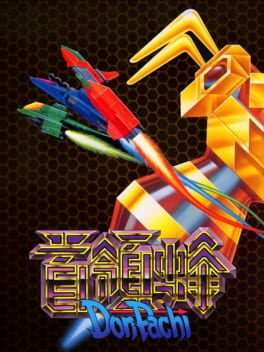
DonPachi is a 1995 vertical manic shoot-'em-up originally in arcades and was the first game from the developer Cave. Settings are mainly woodland and enemies are military vehicles and robots, culminating in the final boss, a huge robotic bee. One of three weapon configurations is chosen at start and then leveled up through dropped power-ups. DonPachi was ported to the Sega Saturn and Sony Playstation in 1996.