Similar Games
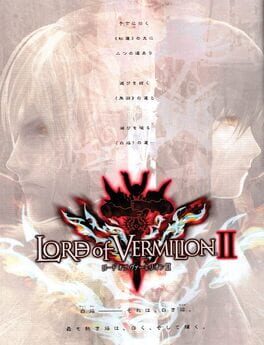
Strategy / Turn-based strategy (TBS) / Action
An upgraded sequel to the original arcade-only, Japanese-only strategy action game. LoVII notably includes guest characters from properties like Magic: The Gathering, Final Fantasy IV, and Secret of Mana.
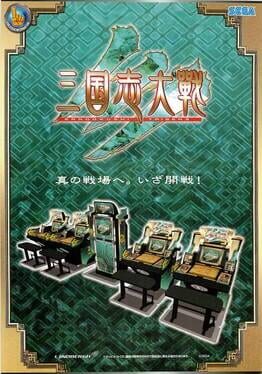
Real Time Strategy (RTS) / Strategy / Turn-based strategy (TBS) / Fantasy / Historical
Sangokushi Taisen is a real-time strategy card-based arcade game developed by Sega.
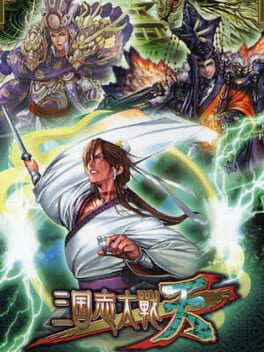
Real Time Strategy (RTS) / Strategy / Turn-based strategy (TBS) / Fantasy / Historical
A Nintendo DS port of version 3.0 of Sangokushi Taisen, a card-based arcade real-time strategy game.
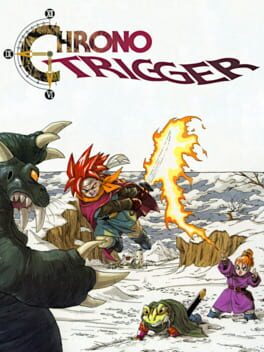
Role-playing (RPG) / Action / Fantasy
When a newly developed teleportation device malfunctions at the Millennial Fair, young Crono must travel through time to rescue his misfortunate companion from an intricate web of past and present perils. The swashbuckling adventure that ensues soon unveils an evil force set to destroy the world, triggering Crono's race against time to change the course of history and bring about a brighter future.
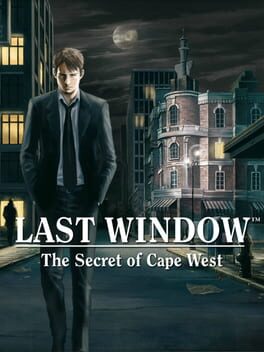
Point-and-click / Puzzle / Quiz/Trivia / Mystery
Last Window: The Secret of Cape West is an adventure video game developed by the now-defunct Cing and published by Nintendo for the Nintendo DS handheld game console. It is the sequel to Hotel Dusk: Room 215, starring protagonist Kyle Hyde and placed one year after the events of its predecessor. The game has visual and audio styles similar to that of the first game. In Last Window, Kyle Hyde is living in the Cape West Apartments, Los Angeles, in 1980. The story of this sequel is separate from the first game, even though it includes some connections to it. Last Window was the last game developed by Cing before the company filed for bankruptcy on March 1, 2010.
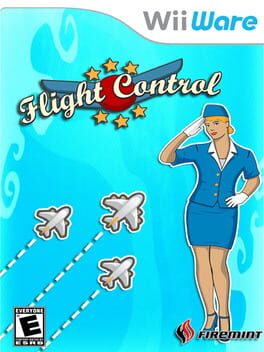
Air traffic control is the world's most stressful job, but not for you. You don't need heading angles, flight rules or meteorological reports, you're a natural! A prodigy! A born controller! - Incredibly easy to learn! Just touch and drag the aircraft to their landing zones and avoid collisions.- Insanely addictive – it only takes a minute to get started, but it’s impossible to stop!-NEW - Fly solo, or share landing duties with a friend - online via Game Center on iOS4.2, over local Wi-Fi network or Bluetooth- NEW - Turn on the voice chat option to talk with the other controller when in online multiplayer mode (off by default)-Aim for a new personal best or compete against other Flight Controllers in online leaderboards- Earn achievements when you complete challenges - Visit all 5 airfields including Beach, Original, Windy, Australian Outback and Aircraft Carrier, each with unique characteristics and challenges!- Featuring 10 aircraft types including jets, helicopters and seaplanes!
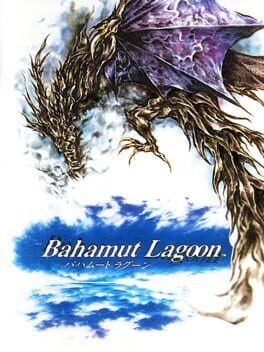
Role-playing (RPG) / Strategy / Turn-based strategy (TBS) / Action / Fantasy
Bahamut Lagoon combines RPG mechanics with squad-based combat. Characters have HP, MP (SP for fighter characters), EXP, equipment, stats and class-specific, SP-draining special elemental abilities very much like traditional console RPGs. The player can explore his surroundings, talk to people and visit shops when not in battle, though to a limited degree as there is no world map and no way to leave the current area. The game's core is its turn-based battles fought on a 2d grid. Characters are assembled into parties of four and the player allowed a maximum of six parties, which are usually well outnumbered. The two opposing sides act in alternating turns so that each party can move once and/or attack once a turn. Attacks are divided into distant and close-up combat. In the former, a party uses a special ability (e.g. casting fireballs, throwing lightning, healing allies) of one of its members at a distance. The range and possible area of effect damage vary per ability. If the attacking party has two or more characters with the same ability, they join in the action to multiply its effectiveness. Distant combat results in less money and generally less damage, but the target cannot retaliate. Distant attacks can also affect the field; fire and ice ignite or extinguish forests and melt or freeze ice, etc. Close-up, each unit in two adjacent opposing parties can act once. Very much like Final Fantasy SNES combat, they can attack an enemy, use an item or a special ability (though these can't be combined and most only affect one target instead of all) or defend. Dragons are the player's ace in the hole. They have their own stats and gain experience like normal characters do. In battle, each party has a dragon attached to it and draws a large portion of its strength from that of its dragon: if a party's dragon is slain, the party will lose the ability to use special attacks and class-specific abilities for the remainder of the map. The beast acts as a very powerful autonomous unit that moves after its party does and it cannot be controlled beyond very simple commands, e.g. "Come!" Out of battle, dragons will eat anything and raising them by feeding them items is an important part of the game. Feeding can improve their stats as well as affect their behavior on the field, and the dragons develop into new forms as they grow. The player can change the characters in each of the parties, their formation as well as what dragon represents them at will.
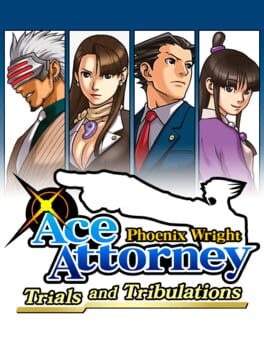
Point-and-click / Adventure / Visual Novel / Comedy / Mystery
Phoenix Wright: Ace Attorney − Trials and Tribulations (known as Gyakuten Saiban 3 in Japan) is the third game in the Ace Attorney series. Players take on the role of Phoenix Wright, a defense attorney known for taking on seemingly impossible cases. While the game focuses on a few specific cases, the overarching story of the Phoenix Wright franchise spans the length of the series, involving obscure characters from large families and intricate webs of lies, plots, and murder. The nature of the series remains generally lighthearted, something that's reinforced by its playful, anime-inspired visual style, but the nature of the crimes committed can be cold and downright disturbing. While the game's legal acumen is highly dubious, its aim seems to be more about producing comedic or stereotypically dramatic courtroom moments. Ace Attorney 3 makes light use of the DS touch screen, allowing the player to examine crime scenes and inspect evidence and character profiles. The top screen is used more for storytelling purposes, displaying various dialogue and conversations between characters. During these sequences the lower screen becomes a selection menu, displaying a series of questions to ask witnesses and further your investigation in search of evidence to use in defense of your client in each chapter.