Slipstream is a sprite-based Formula One racing game featuring four different race tracks; Germany, Japan, Australia and the obligatory Monaco. players can chose to race in any one of eight different F-1 racing cars, with each offering different levels of handling, acceleration, speed and grip. The game also offers three different play modes; Time Trial (raced over a single course), World Championship (raced over all four courses) and Time Trial (also raced over all four courses). Each car has a basic high and low gear. Also, as the player races the course, a 'Turbo' meter builds up. The Turbo will occasionally kick in and give the player's car a temporary speed boost. Rival cars are also able to turbo-boost.

Racing / Arcade / Action / Non-fiction
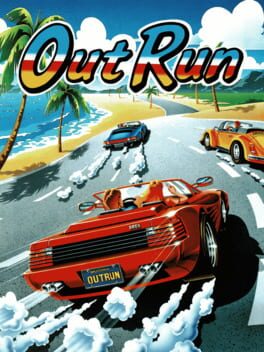
OutRun is a racing game originating in the arcades. The player can race across varied terrain in a readily available Ferrari, complete with a female passenger, over a series of short tracks. Gameplay is viewed form just above and behind the car. The roads are full of sharp bends and hazards, contact with which can cause the car to roll and lose the player's time. On each section of track there is a fork in the road, allowing the player to choose which direction he or she wishes to go in. The player has to to complete five track sections in total, out of the fifteen in the game.


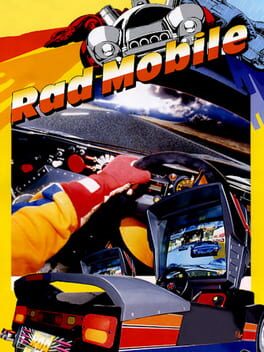
Rad Mobile is a first person perspective racer and had the player engage into a non-stop road race across the USA while avoiding traffic and police cars under the time limit. The only player controlled car is a Ferrari 330 P4 type prototype racing against computer controlled opponents driving generic cars. The player would race with fifteen other rivals across the track, all attempting to prevent the player from winning. During some of the courses the player would have the opportunity to activate different controls, which include headlights for night driving and windshield wipers during rainstorms. If the player does not activate these controls when prompted, effects such as a restricted view of the road or a wet windshield will occur.

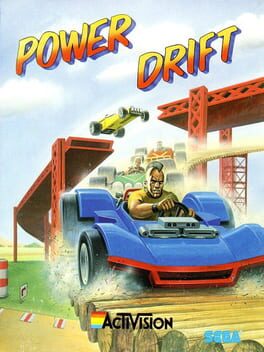
Power Drift is a kart racing game released in arcades by Sega in 1988. More technologically advanced than Sega's earlier 2.5D racing games, like Hang-On (1985) and Out Run (1986), in Power Drift the entire world and track consist of sprites. The upgraded hardware of the Sega Y Board allows individual sprites and the background to be rotated–even while being scaled–making the visuals more dynamic. Designed and directed by Yu Suzuki, the game was a critical and commercial success upon release in arcades. It was subsequently ported to various home computers in Europe by Activision in 1989, followed by a PC Engine port published in Japan by Asmik Ace in 1990. It was not released on Sega consoles until the Sega Ages release for the Sega Saturn in 1998.

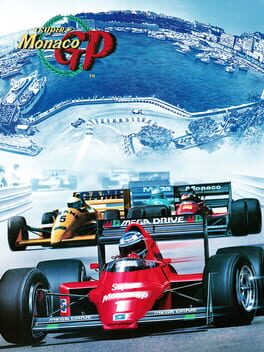
A superb Formula One racing game from Sega that took sprite-scaled graphics to a whole new level. The game's single track offered a very reasonable representation of the famous Monaco Grand Prix circuit. Players could chose to race with one of three different skill/gear settings : Beginner : Automatic Gears Intermediate : 4-Speed Manual gears Professional : 7-Speed Manual Gears Before entering the Grand Prix, a qualification lap had to be completed. In the event of qualifying, the qualifying time determined the player's position on the starting grid. During the race itself, checkpoints had to be reached within a set time, or the race was over.

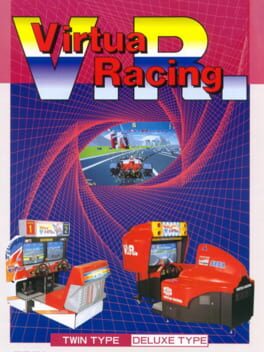
This game was the first game released for the Sega Model 1 arcade platform, and also the first to use the name "Virtua" in its title (something which would be followed by numerous Sega arcade games, including Virtua Fighter, Virtua Cop and Virtua Tennis. It is considered a milestone in 3D graphics and the racing genre, and acts as a foundation for most modern racing games.

Racing / Real Time Strategy (RTS) / Role-playing (RPG) / Action / Science fiction
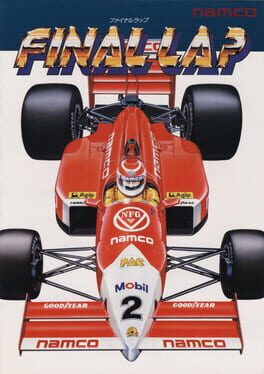
Final Lap is a racing video game produced by Namco,[2] and released by Atari Games for the United States in 1987. It was the first game to run on Namco's then new System 2 hardware, and is a direct successor to Namco's two earlier Pole Position games (1982-1983). Final Lap was the first racing game to allow up to eight players to simultaneously race on the Suzuka Circuit, in a Formula One race. This was, at the time, considered a revolutionary feature and was implemented by linking together up to four two-player sitdown-style arcade cabinets.[2][3] It was also arguably the first racing game to implement "rubber banding" to ensure that less talented players were never too far behind the leader, a concept that would be taken much further by the Mario Kart series.[3] There was also a single player mode, in which the player's score was based on how far the car travelled until time ran out or if the player completed four laps (on default settings; the arcade operator can set the lap number to be as low as three or as high as six).