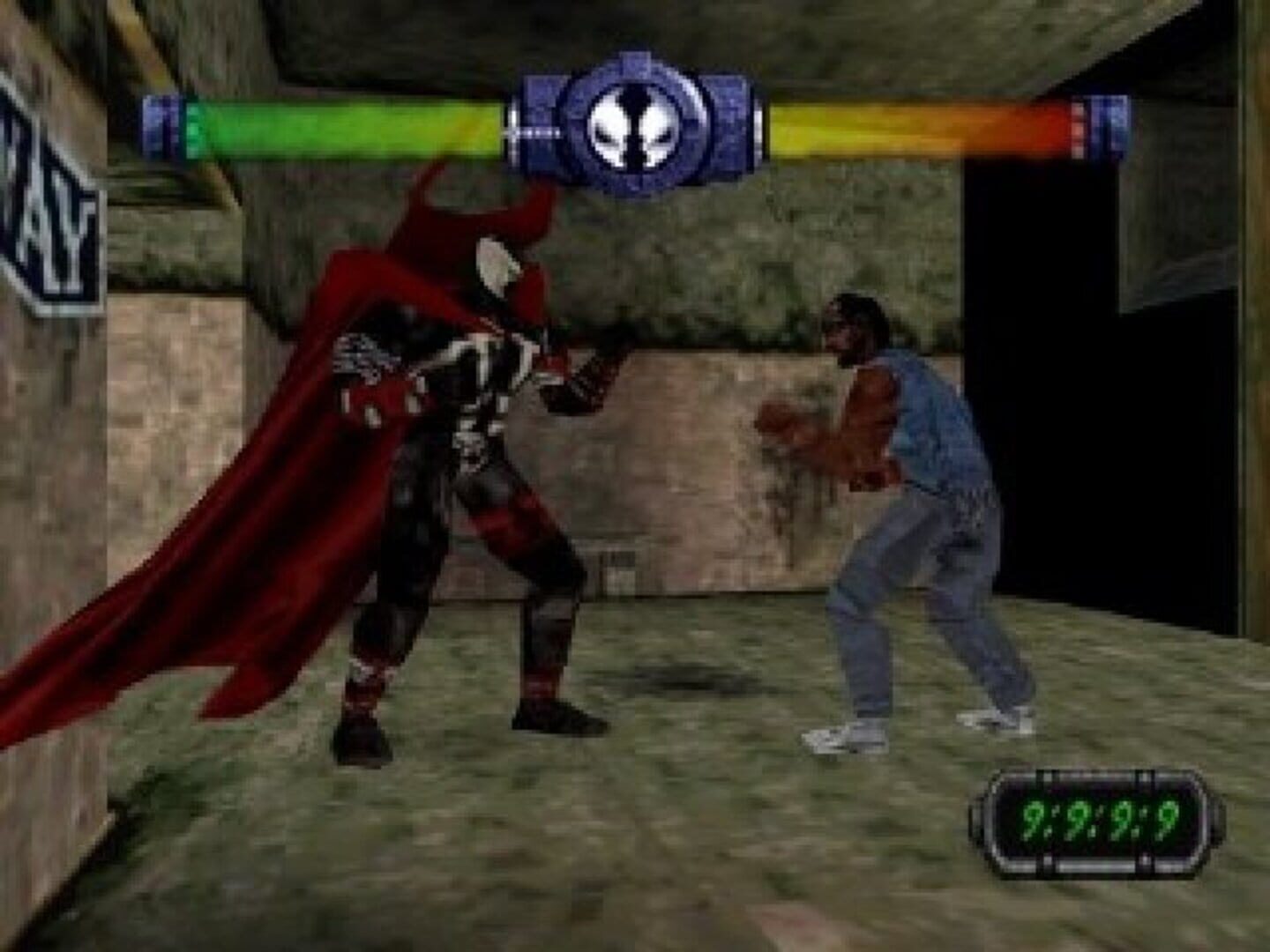
Spawn: The Eternal is based on Todd McFarlane's Spawn comics. The game switches back and forth between two styles of play. There's an exploration mode, which is along the lines of Tomb Raider. Spawn must climb and jump his way through a variety of environmental obstacles while smashing crates and furniture to find power-ups. When you approach an enemy, however, the engine switches into something between a 3D fighting game and an old-fashioned side-scrolling beat-em-up. Spawn must defeat one or more enemies, who may be surrounding him before he can continue.

Fighting / Hack and slash/Beat 'em up / Adventure / Action
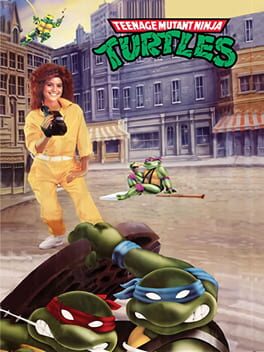
NOTE: This is the original 4-Player Arcade release, not the NES Title. The player chooses from one of the four Ninja Turtles: Leonardo, Michelangelo, Donatello, and Raphael. After Shredder kidnaps the Turtles' friend April O'Neil and their mentor Splinter, they must give chase, save their comrades, and defeat the evil Shredder. The player chooses from one of the four Ninja Turtles: Leonardo, Michelangelo, Donatello, and Raphael. Depending on the version of the game, the characters are either, chosen at the start of the game or assigned by control panel. After Shredder kidnaps the Turtles' friend April O'Neil and their mentor Splinter, they must give chase, save their comrades, and defeat the evil Shredder. Up to four players (two in some versions) can take control of any of the Turtles. Donatello has slower attacks but a longer range, Michelangelo and Raphael have faster attacks but a shorter range, and Leonardo is a well-rounded Turtle with average range and speed. The eight-way joystick controls the movements of the Turtle, the jump button makes them jump and the attack button makes them hit in front of them using their weapon. In addition to this, some combinations are possible. The Turtles can throw Foot soldiers overhead, and by pressing the jump and attack buttons, a special attack is performed. Raphael rolls along the ground and finishes with a kick, while the other Turtles do a sweeping jump attack with their weapons. Turtles can also spring off the wall in certain areas. Enemies can be defeated more quickly by slamming them into walls or solid objects. Many objects such as traffic cones, parking meters, fire hydrants and exploding oil drums can be hit or damaged with attacks in order to help defeat nearby enemies. In the attract mode, the game showed the first part of the cartoon opening, along with a portion of the Teenage Mutant Ninja Turtles theme song. Most of the enemies the Turtles face are the Foot Soldiers, all color-coded to indicate their attack patterns and weapon of choices. Some enemies, such as the standard purple-clad Foot Soldiers and Roadkill Rodney robots, have the ability to restrain the Turtles' mobility and drain their health, leaving the player open to attack for other enemies. The bosses in the game include Rocksteady and Bebop (individually at first in that order, and later the two of them together), Baxter Stockman, Granitor, General Traag, Krang, and Shredder himself.
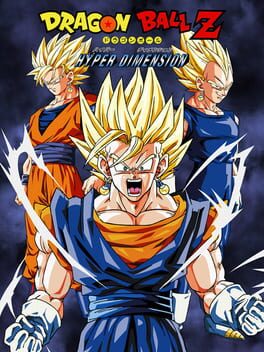
Dragon Ball Z: Hyper Dimension is a 2D fighting game and the last DBZ game made for the Super Famicom (SNES). It is based around the most memorable battles from DBZ and introduces more traditional and fluid combat mechanics.

Fighting / Hack and slash/Beat 'em up / Adventure / Action / Fantasy
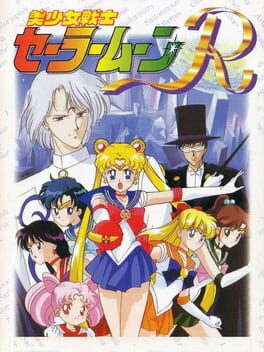
Bishoujo Senshi Sailor Moon R is a video game released for the Super Famicom by Bandai in 1993. It serves as a sequel to Bishoujo Senshi Sailor Moon. Upon starting the game, the player can choose one of 5 characters (2 can be selected for co-op). The game is divided into four levels; each level being divided further into two sub-levels. The player will fight numerous enemies, mostly consisting of default Droids based on their manga incarnations. At the end of each level, a boss must be defeated to proceed. Pressing a special button makes the character use a devastating attack that kills all lesser enemies on screen and causes significant damage to a boss character, although the use of the attack is limited. Bonus items can be picked up from the ground or found in breakable objects, usually in the form of food items that replenishes the life meter to varying degrees. Chibiusa Mode is synonymous with an "Easy Mode". Chibiusa's sprite is too short to be hit by most attacks, and the enemies are also made easier to beat. There is also bonus Battle Mode, which acts as a 1v1 arcade fighter for 2 players. Selecting this mode with only one player allows it to work as a training mode, with the other character remaining motionless.

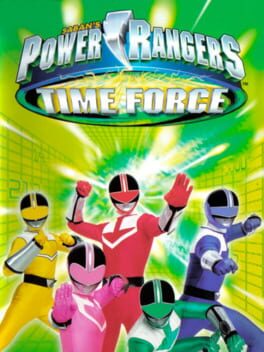
Power Rangers Time Force is a video game based on the 9th season of the TV series, Power Rangers: Time Force released in 2001 and published by THQ. The game was released for the PlayStation, Game Boy Color, Game Boy Advance, and PC.

Fighting / Arcade / Action / Fantasy
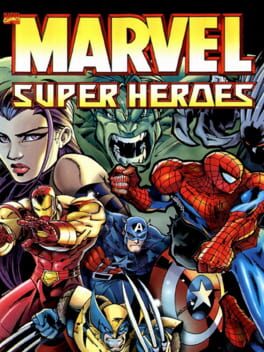
Marvel Super Heroes is a 2D fighting game and the second Capcom title to feature characters from the Marvel comic universe. Each character starts with a set of gems. These can be activated during a fight to improve speed, power and defence, or provide special abilities to create crushing stone walls, open up a rift in space, or reverse the opponent's controls. The use of the gems is inspired by the The Infinity Gauntlet comic book series.

Fighting / Platform / Hack and slash/Beat 'em up / Action
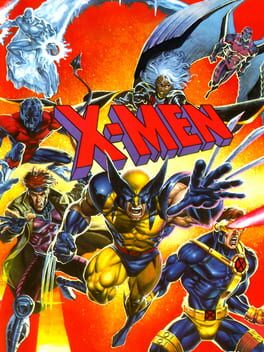
X-Men is a side-scrolling action game based on the comic book series of the same name. The player can control one of four playable characters: Gambit, Nightcrawler, Wolverine, or Cyclops. In addition, it is possible to call upon four other X-Men in when necessary.

Fighting / Platform / Hack and slash/Beat 'em up / Action / Science fiction
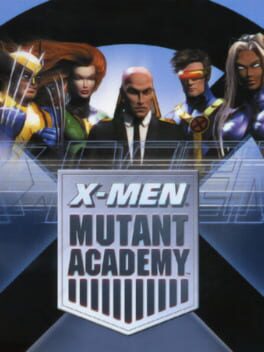
X-Men: Mutant Academy is a 3-D/2D fighting game developed by Paradox, the company behind Activision's Wu-Tang: Shaolin Style and the never-published Thrill Kill, and based on the X-Men characters from Marvel Comics. The game was released for the Game Boy Color and PlayStation as a tie-in to X-Men. X-Men: Mutant Academy is a basic fighting game that uses six buttons: three buttons for punches and three for kicks. Due to the success of the game, it was followed by two sequels: X-Men: Mutant Academy 2 and X-Men: Next Dimension. The game's characters can be played both with their comic book costumes and their costumes from the 2000 film X-Men. Characters not present in the film were given costumes of a similar design.

Fighting / Platform / Hack and slash/Beat 'em up / Action
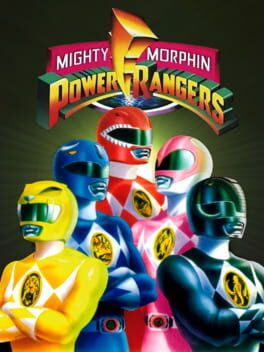
The Super NES version of Mighty Morphin Power Rangers is a side-scrolling action game composed of seven stages, with two different gameplay styles.