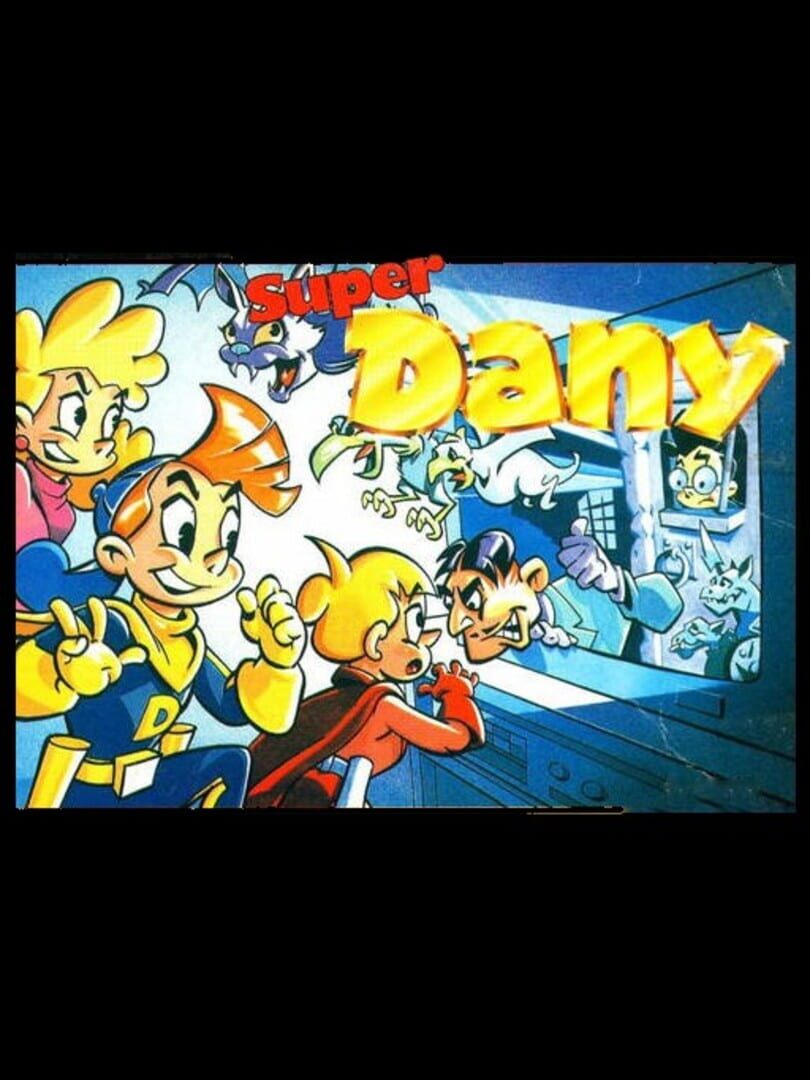
A French puzzle-platformer advergame in which the player switches between Dany and friends, each with their own special ability, in order to progress through stages.
Featured in
A French puzzle-platformer advergame in which the player switches between Dany and friends, each with their own special ability, in order to progress through stages.
Platform / Puzzle / Adventure / Action / Historical
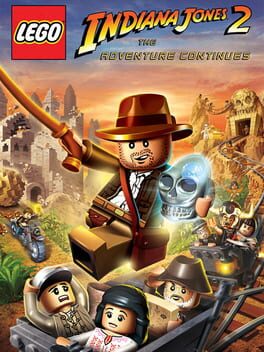
LEGO Indy is back in his biggest adventure yet. Battle through all four movies, including all-new levels from the original adventures and your favorite new moments from The Kingdom of the Crystal Skull... or in true LEGO fashion, get creative and build your own levels to play with friends! New modes including two-player drop-in, drop-out split-screen gameplay lets you play together with your friends and family like never before.
Platform / Puzzle / Role-playing (RPG) / Action / Fantasy
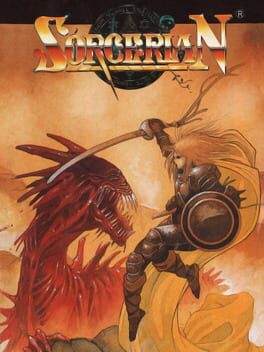
Sorcerian is a side-scrolling action-RPG. The player can create up to ten characters, from whom up to four members can be present in a party at the same time. Each character is highly customizable, with four different classes/races (fighter, wizard, elf, and dwarf) and over 60 possible jobs/occupations (ranging from clown to exorcist) available for them to perform; each has its own strengths and weaknesses, affecting the seven primary attributes (strength, intelligence, protection, magic resistance, vitality, dexterity, and karma) in different ways, as well as different equipment limitations. The player can choose from fifteen different scenarios, or quests, to play through in the order of their choice. The party must battle enemies and perform tasks within the given levels to clear each scenario, before moving onto another scenario of their choice. The player controls the entire party at the same time, with all four members running in a line, jumping in sequence, and attacking in unison. The party members follow behind in a manner similar to the Options in the arcade shooter Gradius (1985). Sorcerian also employs class-based puzzles, such as using a high-strength character to force open doors. All the characters have a default starting age of 16. Each time a player begins a new scenario, a year passes by, while additional time passes by in towns as a character goes through training or enchants items. The characters age at different rates depending on their race, with humans reaching old age at 60, dwarves at 100, and elves at 200. Upon reaching old age, for every year that passes, a character can die permanently at a random time. There is also an “Advance Time” to speed up the flow of time. Another new feature of Sorcerian was its episodic format that extended across various expansion packs. Besides the default fifteen scenarios that come with the game, there were a number of additional scenario packs released. The aging system was created with the additional scenario packs in mind.
Platform / Puzzle / Role-playing (RPG) / Action / Fantasy
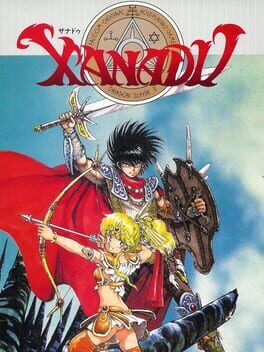
In Legend of Xanadu, the player controls a young adventurer named Areios. Monsters attack his homeland, and he is forced to flee. After traveling by ship and arriving at the town Bolda, Areios finds out that strange things have been happening in the North Cave near the town. His first mission will be to venture to the North Cave and investigate the matter. Of course, soon Areios finds himself involved in a battle against sinister forces, and commences the longest and most dangerous adventure of his life! The game is an action RPG set in the Dragon Slayer universe, with a gameplay style similar to Falcom's other popular series, Ys. Controlling Areios, the player explores the top-down world, visiting towns and fighting monsters in vast outdoor areas and dungeons. Like in Ys series, it is sufficient to "bump" into a monster in order to inflict damage. Areios gains hit points and becomes stronger by sustaining damage from enemies and resting. His weapons and armor can gain experience and level up. In many areas, companions will join Areios and help him in combat, controlled by the computer AI. The game is divided into chapters; the final stage of each chapter is a side-scrolling/platform level, which Areios has to navigate in order to reach the boss enemy, defeat him, and end the chapter. In such stages, the combat turns into a more familiar action-oriented style, with the player being required to press buttons in time in order to execute attacks and jump. There is a day/night cycle in the game, manifested not only in graphical changes, but also in the schedules of townspeople: when it's dark, people will return to their homes and go to sleep, etc.
Platform / Puzzle / Horror / Historical
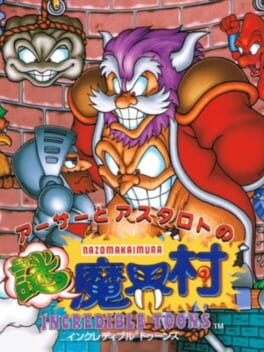
A Japanese-only entry in Dynamix's The Incredible Machine series based on the Ghosts 'N Goblins series. It is the only The Incredible Machine game with a plot, which is the same as in every Ghosts 'N Goblins game: the princess is kidnapped by Astaroth (the main villain of the games), so Arthur (the main character in the series) has to save her. It features all of the known characters of the series, such as the Red Arremer (who would get his own game series: Gargoyle's Quest). It also features items from the game, for example the armor icon, which is required for Arthur to move in this game. Not only does it have the most well known characters in the Ghosts 'N Goblins games, it also features remixed music of the series. As with the The Incredible Machine games, there are different kinds of puzzles, one of them even involves killing Arthur. However, unlike the The Incredible Machine games, there are no Head-to-Head puzzles and no Freeform Machine mode, so there's only single player puzzles.
Platform / Puzzle / Adventure / Action / Comedy
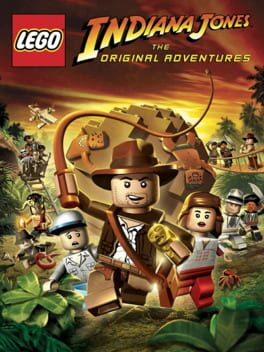
Build, Battle and Brawl your way out of trouble! Play through all three classic Indiana Jones movies and relive your favorite Indy adventures in the tongue-in-cheek worlds of LEGO. Explore and Discover - Battle enemies, solve puzzles, and seek out the world's greatest treasures.
Platform / Puzzle / Adventure / Action / Fantasy
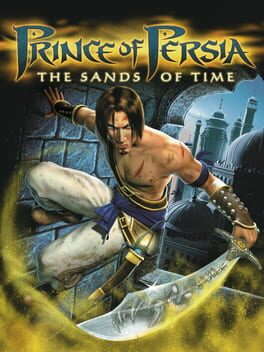
The Gameboy Advance version of the classic title Prince of Persia: Sands of Time. It follows almost the same story as its mainstream counterpart but features significantly different gameplay. There are enemies that are unseen in the main version but present in this game, rumored to have been cut from the original script.
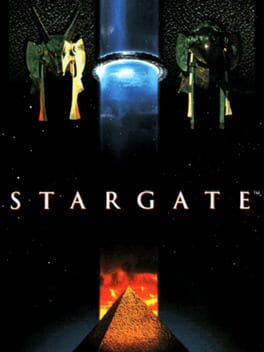
Shooter / Platform / Puzzle / Action / Fantasy
Warp through the Stargate to an intergalactic dimension of non-stop action, danger and adventure! Face a hostile and unknown world in over 30 missions. From the village of Naganda to Ra's pyramid spacecraft, you're armed with an arsenal of weapons and incredible alien fire power. It's up to you to defeat the evil ruler Ra and unlock the mystery of the Stargate! It will take you a million light years from home... but can you find your way back?
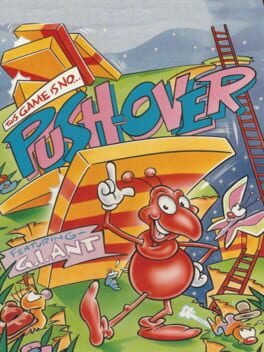
Platform / Puzzle / Strategy / Comedy
Pushover is a platform puzzle game developed by Red Rat Software and published by Ocean Software in 1992 for the Amiga, Atari ST, DOS and Super NES. Notably, the game was sponsored by Smiths' British snack Quavers (now owned by Walkers), where the game plot revolves around the then Quavers mascot 'Colin Curly' losing his Quavers packets down a giant ant hill. The player is then tasked with controlling 'G.I. Ant', a large soldier ant, to recover the Quavers by solving a series of puzzles. The SNES version lacks the Quavers branding, and instead the aim is to recover bundles of cash dropped down the ant hill by Captain Rat. The game consists of 100 levels of increasing complexity over nine different themed worlds. Each level features several interconnected platforms holding a number of "dominoes". The aim is to rearrange the dominoes, such that with a single push, all of the dominoes are toppled, thus opening the exit to the next level. There are 11 different types of domino, identified by red and yellow patterns, each with different actions. The player controls G.I. Ant, who can move certain dominoes by carrying them one at a time. Various factors can result in failure to complete a level. As well as toppling all of the dominoes, the player must be able to access the exit door once the dominoes have fallen. For instance, the player will be unable to reach the exit if a ledge leading to the exit has been destroyed, or if a gap leading to the exit has not been bridged, or if a line of dominoes lie across the exit. G.I. Ant may die by falling from a large height, by falling off the bottom of the screen, or by being crushed under a falling domino. The player is then greeted with the message "You Failed, You Died" and has to restart the level. Also, the level will be failed if any dominoes are destroyed by landing one domino on top of another. Each level has a time limit during which it must be completed. However, if the time runs out the player is still able to continue with the puzzle if they wish. By pausing the game once the time has run out, a small hint will be displayed, giving advice on how to complete the level. As a side note, the hint for level 98 informs the player that the game's designer cannot remember how to complete the level without trickery ("Use a drop! There is a way to make it work with a push, but I can't find it!"). The themed worlds, in order, are an industrial complex, an Aztec world, a space station, an electronic world, a Greek temple, a Medieval castle, a Meccano-inspired world, a dungeon and a Japanese temple. Each world has 11 levels, making a total of 99 regular levels. A packet of Colin's Quavers is retrieved after each world, with nine packets in all to be collected. Many of the early levels are tutorials demonstrating how each type of domino will act. Often there is only a single solution to each level, though some levels have multiple solutions. The final level, level 100, must be completed using dominoes with hidden markings. A password system allows the player to continue an earlier game, without having to restart from the first level. Additionally, upon completing a level the player gains a token, which once a level has been failed, allows the player to return to the point before the domino push, rather than having to return to the initial state of the level.