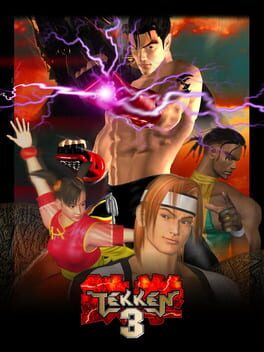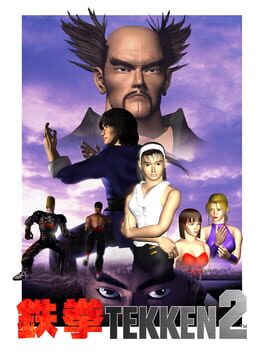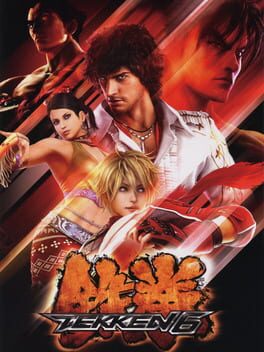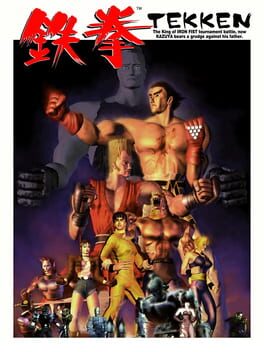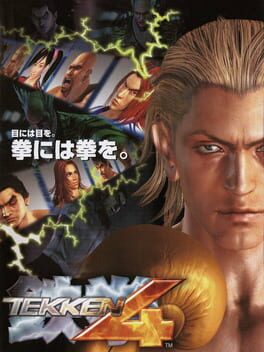
Tekken 4 marks the return of Namco's premier fighting franchise, Tekken. This version features enhanced graphics, gameplay mechanics, and fearsome fighters. Newcomers engage old favorites in interactive, multileveled arenas. The addition of walls, terrain effects, position changes, and enhanced sidestepping will force you to adjust your fighting strategy. Expanded game modes such as Training, Team Battle and the new Tekken Force provide the player with a deeper gameplay experience.
Screenshots & Artwork
Storyline
Two years ago, Heihachi failed to capture Ogre. Not willing to give up, Heihachi ordered his researchers to collect blood samples, skin tissue, and hoof fragments left behind by Ogre (or known as True Ogre in its true manifestation) in order to conduct genetic experiments. Heihachi’s goal was to create a new life form by splicing Ogre’s genome with his own. However, the research was unsuccessful. After extensive experimentation, Heihachi’s bioengineers came to the conclusion that an additional gene - the Devil Gene - was necessary in order to successfully splice Ogre’s genetic code into another living organism. Heihachi learned that his own genome lacked the Devil Gene, but he knew someone who did... Jin Kazama. Jin, who vanquished Ogre in The King of Iron Fist Tournament 3, was shot and mortally wounded by Heihachi. As his life slipped away, Jin transformed into a Devil. Upon his transformation, he struck down Heihachi and took flight. Jin’s whereabouts were unknown after the Tournament. Heihachi searched for Jin to no avail. However, Heihachi discovered a photograph during his investigation that stirred his curiosity. The 20-year-old photograph was an image of a burnt corpse covered with laceration wounds. Heihachi paid particular attention to the corpse’s back, which had what looked like deformed, protruding wing-like limbs. Convinced that the picture was of Kazuya, his own son whom he threw into a volcano 20 years ago, Heihachi diverted all his resources into a search for the body. This search eventually led Heihachi to G Corporation, a leading-edge biotech firm making unprecedented advances in the field of biogenetics research. Heihachi discovered that G Corporation found the corpse and extracted and analyzed its genetic data. In fact, Heihachi learned that the company was in the midst of creating a new life form by using the data. Heihachi also determined that Kazuya’s remains and research data were secured at G Corporation’s Nebraska and Nepal research laboratories, respectively. Friday, 25 December. The Tekken Force raided G Corporation’s maximum security research laboratory in Nepal. The bottom floors of the building were obliterated, and the remaining data storage facility containing file servers was airlifted by a group of heavy-duty helicopters. At the same time, a separate unit led by Heihachi infiltrated the underground research facility in Nebraska, where Kazuya’s remains were preserved. As Heihachi observed from his helicopter, he soon realized that unlike the Nepal facility, the operations in Nebraska were not going according to plan. The tactical status monitor screens showed the first wave of the Tekken Force troops being blown out from the storage room where Kazuya’s remains were supposedly kept. A silhouette of a large figure slowly emerged from the room... When Heihachi could see clearly enough, he instantly recognized the large figure as Kazuya. Kazuya was resurrected in G Corporation’s research facility. After his resurrection, Kazuya offered his body as research material to determine the true nature of the Devil that resided within him. Kazuya’s goal was to unify his two selves into one. Kazuya theorized that if he unified his body with the Devil, he would be able to truly harness its powers. He could then finally take revenge against Heihachi and the Mishima Zaibatsu. Enraged that Heihachi thwarted his plans, Kazuya obliterated the heavily armed Tekken Force and vanished into the flames of the lab’s wreckage. Heihachi was infuriated by Kazuya’s escape and took out his anger on his hapless subordinates who reported the escape. Abel, Heihachi’s lead scientific advisor, urged the enraged Heihachi to quickly find a way to capture Kazuya. Once his anger subsided, Heihachi focused his mind and decided on a plan. An evil smile crept upon his lips. Two years had passed since The King of Iron Fist Tournament 3. The Mishima Zaibatsu announced The King of Iron Fist Tournament 4 and placed the massive financial empire as the top prize. The champion who manages to defeat Heihachi at the end of the Tournament would inherit the Mishima Zaibatsu. Well aware that the tournament is just a trap designed to lure him out, Kazuya nevertheless enters - it is his chance to defeat Heihachi. In the round 7, Jin and Kazuya was scheduled to fight. However, on the way to fight Kazuya who waits in the stage Jin was ambushed and captured by Tekken Force before he was taken and chained in the Honmaru. Kazuya was announced as a default winner and he was sent to the final stage where he met Heihachi and asked him where Jin was. Heihachi promised he would answer after the fight; he was planning to take Kazuya to Honmaru after winning the fight and finish him off along with Jin by chaining him. He intentionally did this because he was more interested in torturing Kazuya. In the final stage 2 were clashed into battle resulting in Kazuya as a winner. After losing in the fight, Heihachi was being forced to take Kazuya to Honmaru and he was knocked out by Kazuya's devil power. Kazuya tried to suck out Jin's devil power but he failed. Eventually Jin woke up after being taunted by Kazuya and broke out of chain with rage. Kazuya fought against confronting Jin, but he was not able to defeat him and was left unconsciousness. Then Heihachi woke up and tried to kill exhausted Jin but he was defeated again and he was about to be killed if not for Jin's reminiscence of his mother, Jun Kazama, which caused him to spare Heihachi in honor of his mother. Stretching his Devil wings, Jin took a flight, leaving the unconscious Kazuya and Heihachi in Hon-Maru..