Developed by Appaloosa Interactive for Sega.
Fighting / Hack and slash/Beat 'em up / Arcade / Action / Comedy
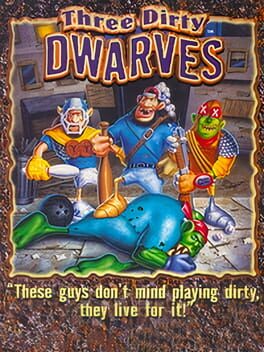
Four genetically altered geeks have opened the trans-dimensional gates to reality and summoned a rag-tag posse of filthy orc dwarves to rescue them from their maniacal captor. Run amuch with up to 3 players, through over 20 hard-hitting whacko worlds of car-tooney ghettos and freaked-out bosses!
Four children genetically engineered by the army grow up to be child geniuses instead of perfect soldiers, prompting General Briggs to use them to manufacture weaponry. To escape, the children play their favorite role-playing game and lead the party - a trio of slow-witted but heroic dwarves - to a gateway into the real world. The dwarves' equipment burns up during atmospheric entry. They land in a sporting goods store and make use of the equipment inside for their weapons and armor. The monsters from the role-playing game world have followed the dwarves into the real world, and the dwarves must battle their way through them to find the children and confront General Briggs

Fighting / Hack and slash/Beat 'em up / Adventure / Action
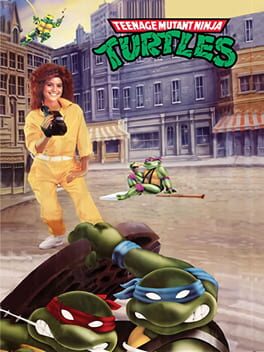
NOTE: This is the original 4-Player Arcade release, not the NES Title. The player chooses from one of the four Ninja Turtles: Leonardo, Michelangelo, Donatello, and Raphael. After Shredder kidnaps the Turtles' friend April O'Neil and their mentor Splinter, they must give chase, save their comrades, and defeat the evil Shredder. The player chooses from one of the four Ninja Turtles: Leonardo, Michelangelo, Donatello, and Raphael. Depending on the version of the game, the characters are either, chosen at the start of the game or assigned by control panel. After Shredder kidnaps the Turtles' friend April O'Neil and their mentor Splinter, they must give chase, save their comrades, and defeat the evil Shredder. Up to four players (two in some versions) can take control of any of the Turtles. Donatello has slower attacks but a longer range, Michelangelo and Raphael have faster attacks but a shorter range, and Leonardo is a well-rounded Turtle with average range and speed. The eight-way joystick controls the movements of the Turtle, the jump button makes them jump and the attack button makes them hit in front of them using their weapon. In addition to this, some combinations are possible. The Turtles can throw Foot soldiers overhead, and by pressing the jump and attack buttons, a special attack is performed. Raphael rolls along the ground and finishes with a kick, while the other Turtles do a sweeping jump attack with their weapons. Turtles can also spring off the wall in certain areas. Enemies can be defeated more quickly by slamming them into walls or solid objects. Many objects such as traffic cones, parking meters, fire hydrants and exploding oil drums can be hit or damaged with attacks in order to help defeat nearby enemies. In the attract mode, the game showed the first part of the cartoon opening, along with a portion of the Teenage Mutant Ninja Turtles theme song. Most of the enemies the Turtles face are the Foot Soldiers, all color-coded to indicate their attack patterns and weapon of choices. Some enemies, such as the standard purple-clad Foot Soldiers and Roadkill Rodney robots, have the ability to restrain the Turtles' mobility and drain their health, leaving the player open to attack for other enemies. The bosses in the game include Rocksteady and Bebop (individually at first in that order, and later the two of them together), Baxter Stockman, Granitor, General Traag, Krang, and Shredder himself.
Fighting / Hack and slash/Beat 'em up / Adventure / Action
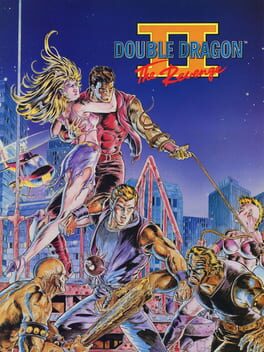
The original arcade version of "Double Dragon II" is essentially an improved version of the first game. The biggest change in the game's controls are in the replacement of the original's punch and kick buttons with two directional-based attack buttons (Left Attack and Right Attack) similar to Renegade. Pressing the attack button of the player's current direction will do a standard series of punches, while pressing the opposite attack button will perform a back kick. A few new moves are added as well, including a Hurricane Kick. Like in the original game, the arcade version of Double Dragon II is divided into four missions: a heliport, a lumber storehouse, a wheat field, and the new hideout of the boss. Each stage has its own boss character with his own theme. After defeating Willy (the final boss from the original game) in the fourth stage, the player will confront a double of their own character for the game's final battle. If two players reach the end together, then both will each to have to face their own clone for the final battle.

Fighting / Hack and slash/Beat 'em up / Adventure / Action
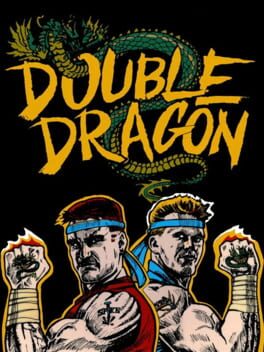
Double Dragon is a 1987 beat 'em up video game developed by Technōs Japan and distributed by Taito for arcades across Asia, North America and Europe. It is the first title in the Double Dragon franchise. The player character has a repertoire of martial arts techniques which they can perform using the joystick and three action buttons (kick, jump, and punch) individually or in combination. Techniques range from basic punches and kicks to more elaborate manoeuvres like hair-grabbing moves and elbow strikes. When playing with another player, one can assist the other by grabbing their partner's opponent from behind. Caution should be taken, though, as some enemies can do the same thing to the players. The player begins the game with a certain number of extra lives and a life gauge which depletes as the player takes hits. If the life gauge runs out or the time limit reaches zero, the player will lose a life. There is a small variety of enemy characters that the player will face through the course of the game. Certain enemies carry melee weapons, which can be knocked out of their hands and picked up to use against them. Available weapons include baseball bats, whips, throwing knives, and dynamite; in addition, rocks, oil drums, and boxes can be found in certain places. The game is divided into four stages or "missions," consisting of a city slum, a factory, the woods, and the gang's hideout. The game normally ends if a single player defeats the final boss alone. However, if two players complete the game together, they are forced to fight each other to determine who will win Marian's affections.

Fighting / Platform / Hack and slash/Beat 'em up / Action
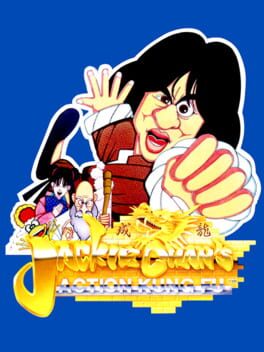
Jackie and his sister, Josephine, are tough on tyrants. As China's supreme kung fu champs, they guard their country against the Prince of Sorcerers, who lurks just beyond the Great Wall. It comes as no surprise when this fiend and his ghouls try yet again to seize China for themselves. But this time they're clever, casting a spell over Josephine which causes her to vanish into thin air! Jackie is in shock! How can he save his country without his sister? The two have been an unbeatable team! Meanwhile, a demon horde led by the Sorcerer storms the Great Wall and prepares to establish a fierce empire. At the urging of his revered Master, Jackie must now battle the dreaded Sorcerer and rescue Josephine. Maybe he can learn a little magic on his own, because he's going to need all the help he can get!

Fighting / Hack and slash/Beat 'em up / Arcade / Action
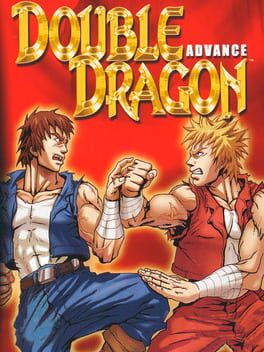
Double Dragon Advance is a side-scrolling beat 'em up game developed by Million and published by Atlus for the Game Boy Advance. Released in 2003, it serves as an enhanced remake of the original Double Dragon arcade game, incorporating elements from the entire Double Dragon series. The game follows brothers Billy and Jimmy Lee as they battle through various stages to rescue Marian from a dangerous gang. It features new levels, enemies, and moves not found in the original version, along with improved graphics and expanded combat mechanics.

Fighting / Hack and slash/Beat 'em up / Arcade / Action / Comedy
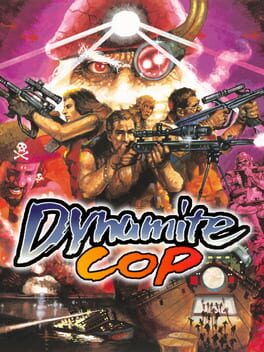
A beat 'em up video game published by Sega and initially released in arcades on Sega Model 2 hardware. It is the sequel to the 1996 game, Dynamite Deka which was released outside Japan as Die Hard Arcade. The game was ported to the Dreamcast and released internationally in 1999, this time without the Die Hard license. A third sequel, Asian Dynamite, was released only in arcades.

Fighting / Hack and slash/Beat 'em up / Arcade / Action / Science fiction
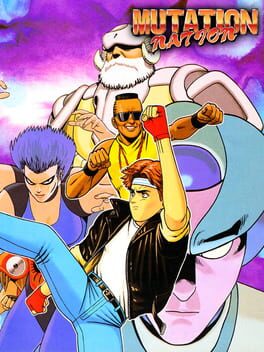
The Slum... an area of town completely forgotten. No one could imagine the cruelness suffered by innocent people who were transformed into horrible mutant creatures by genetic experiments. They hovered everywhere and completely took control of the town. Mutation Nation is a 1-2 player action game where you must control your hero and beat up any mutant that gets in your way, by either using your fists or one of four special attacks. A boss at the end of each area needs to be defeated if you want to proceed further through the game.

Fighting / Hack and slash/Beat 'em up / Arcade / Action / Comedy
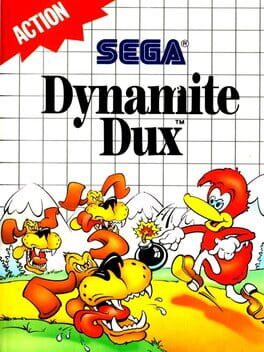
Side-scrolling beat 'em ups in which you must rescue a trapped female friend are nothing unusual. Where this one stands out, however, is the setting of your character as a duck called Bin, and with motion having a clear waddling appearance. The enemies to fight are all from the animal kingdom, but somewhat warped - crocodiles with boxing moves and cows armed with rocket packs for example. Bin has six levels to clear before he can rescue Lucy from Archaca's clutches.