Developed by Konami.
Role-playing (RPG) / Strategy / Turn-based strategy (TBS) / Fantasy
You assume the role of Ash Lambert, a hero torn between saving his country and restoring honor to the disgraced Lambert dynasty. As he struggles with his inner demons and personal problems, he will meet various companions throughout his journey. They will help your character fight to overthrow the oppressive regime and ward off an ancient being that threatens the world. Vandal-Hearts is a 3D turn-based strategy game. Unlike many games of the genre, the various battlefields have sloped surfaces that will either work to your advantage or against you. It will be up to you to accommodate your strategy and amount an appropriate offensive assault against your foes as well as set up defensive measures.
Thousands of years ago, the holy man known to history as Toroah the Messiah traveled far and wide across the continent of Sostegaria, spreading his teachings throughout the land. After his death, his descendants and heirs assumed absolute political power over the region, forming the basis of the Holy Ashah Dynasty and ruling through a combination of religious doctrine and military power for millennia. The kings and queens of the Holy Ashah Dynasty, however, did not always rule wisely or justly, and, as time passed, the citizenry began to resent the power of their leaders. Fifteen years ago, this growing discontent found its ultimate expression in the person of Arris the Sage, who united the disparate anti-royal factions throughout Sostegaria and shaped them into a powerful guerrilla army. Under the cunning leadership of Arris, this Liberation Army managed to outwit and outmaneuver the Royal Army, and finally smashed through to the palace of the Ashah Dynasty itself, and burnt it to the ground. With the monarchy dissolved, the rebels establish a ruling council founded on the principles of democracy and popular sovereignty. From the ashes of the Holy Ashah Empire emerges the Republic of Ishtaria. The leaders of the revolution naturally assumed leadership positions within the new republic: all, that is, except for Arris himself, who suddenly disappeared and has not been seen of, nor heard of, ever since. Today, the fledgling republic is in increasingly dire straits: the autocratic Minister of Defense, Hel Spites, and his elite anti-terrorism squad, the Crimson Guard, are using ever-increasing force to stamp out the last vestiges of resistance to Ishtarian rule, while they allow outlaws to roam the countryside and pirates to sail the seas. Meanwhile, Ash Lambert and his colleagues at the third battalion of the Ishtarian Security Forces begin to suspect a conspiracy at the highest levels of government. Ash's attempts to draw attention to the situation, though, only draw the ire of the conspirators themselves, leaving only Ash and his allies to foil their plans and restore order to the nation. After the credits, an extra cutscene is available that shows Eleni hearing Ash's ocarina theme while claiming "he" has come back.
Role-playing (RPG) / Strategy / Turn-based strategy (TBS) / Fantasy / Historical
It is the seventh game of the Fire Emblem series, the second game in the series to be released for the Game Boy Advance, and the first to be released in both North America and Europe. It features a prologue storyline designed to introduce newcomers to Fire Emblem gameplay and tactical basics. The overall narrative is a prequel to the events of the previous game, Fire Emblem: The Binding Blade, which is set twenty years later. The game was first released under the localized title "Fire Emblem" in the West, but it was later rebranded as "Fire Emblem: The Blazing Blade" when Fire Emblem Heroes was released.

Role-playing (RPG) / Strategy / Turn-based strategy (TBS) / Fantasy
As a student of Astral the wizard, you and your friends study all the usual subjects: reading, writing, and sword fighting. As your time at school draws to an end, dark events are taking place on the island of Grans. The two Jewels which seal the Door to Darkness have been stolen, allowing a creature of awesome power to be unleashed. Finding where the Jewels were taken, and why, is a task only the bravest of adventurers can undertake.

Role-playing (RPG) / Strategy / Turn-based strategy (TBS) / Fantasy
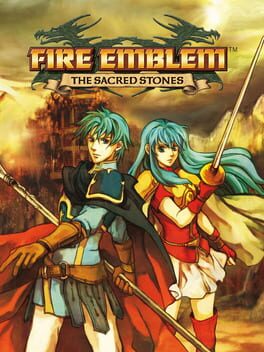
In Fire Emblem: The Sacred Stones, you must help protect the nation of Renais from the invading Grado Empire. Plan your strategy, choose your units, and then lead your soldiers in to battle. The more experience your soldiers gain, the more you can upgrade their abilities. This time, your soldiers can gain experience by fighting new monsters in the Tower of Valni.

Role-playing (RPG) / Strategy / Turn-based strategy (TBS) / Fantasy / Warfare
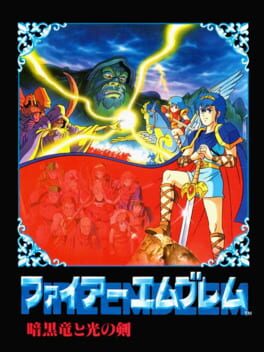
Fire Emblem: The Dark Dragon and Sword of Light is the first game in the Fire Emblem series, developed by Intelligent Systems and published by Nintendo. It was first released on the Famicom (known internationally as the Nintendo Entertainment System) on April 20, 1990. It takes place on the continent of Archanea. It stars Marth, a character who later appeared in Super Smash Bros. Melee. The first time the game was released outside of Japan was in the form of a limited edition port for Nintendo Switch, under the same name, that runs a localization script in the background, but the original version of the game was never released outside of Japan.

Role-playing (RPG) / Strategy / Turn-based strategy (TBS) / Fantasy
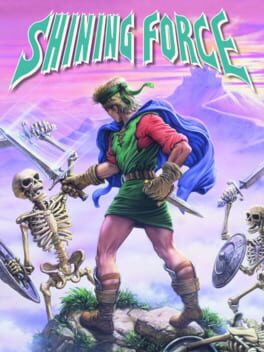
Shining Force is a turn-based tactical RPG. Battles take place in square grids, and each unit occupies 1 square. Units can belong to one of two sides: allies (controlled by the player) or enemies (controlled by the computer AI). Each unit can move up to a fixed amount of squares along the battlefield, determined by its Move statistic. Depending on its location relative to enemies and to allies, a unit also has the option to attack, cast a spell, use an item, search (if adjacent to a treasure chest), or stay and do nothing, all of which end the unit's turn. Some commands, such as equipping or dropping items, don't count as actions, and the character's turn is able to continue. The order of the turns is determined by the unit's agility score and a random seed. Units can use offensive actions, such as physical attacks or offensive magic, only on units belonging to the other side and can use supportive actions, such as healing magic, stat-enhancing magic, and items, only on units belonging to the same side.

Role-playing (RPG) / Turn-based strategy (TBS) / Tactical / Fantasy / Thriller
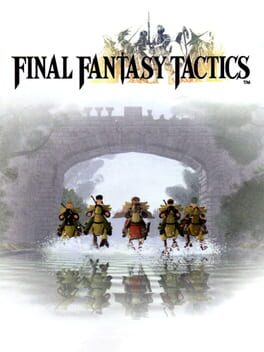
Lead epic battles in a new FINAL FANTASY world. Betrayal and darker dealings await in Squaresoft's game of war. Fight hundreds of battles across dangerous 3D terrain as an ancient blood feud awakens a deadlier foe.

Role-playing (RPG) / Strategy / Turn-based strategy (TBS) / Fantasy / Warfare
"Highlights and Key Features: - Over 40 hours of gameplay and multiple endings! - Discover powerful character classes with the new Emblem System! - Cast a wide assortment of magic spells to defeat the enemy! - Go head-to-head against a friend by using the Game Boy® Advance Game Link® cable! - All new Quest Mode enables you to discover hidden items and weapons not available in the main game. - Utilize the Exchange Mode to trade items, spell books and characters with a friend. - Save up to 3 games!"

Role-playing (RPG) / Strategy / Turn-based strategy (TBS) / Action / Fantasy
Fire Emblem: The Binding Blade is a Japanese tactical role-playing game developed by Intelligent Systems and published by Nintendo. The game was released on March 29, 2002 in Japan, is the sixth game in the Fire Emblem series, and the first of three games in the series that have appeared on Nintendo's Game Boy Advance handheld. It was the last Fire Emblem game to be released exclusively in Japan until the release of Fire Emblem: New Mystery of the Emblem. The Binding Blade was followed by a prequel, Fire Emblem: The Blazing Blade, set twenty years earlier.