Mystery box
?
Sealed
Mystery Box
Every game in your current results, in one box. Add it to a quest and each run draws a fresh game from it, revealed on release day.
Arcade
1975
This side out
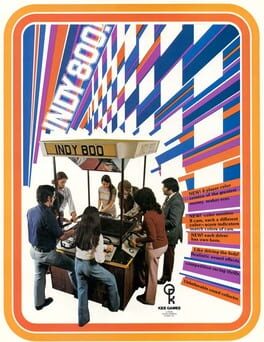
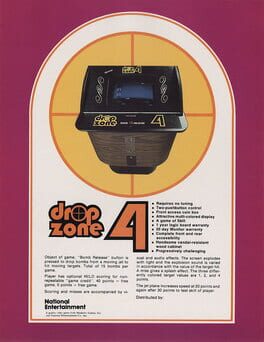
The game is housed in a large custom rectangular cabinet. Each side of the cabinet has two steering wheels and four pedals. The monitor is set in to the top face of the cabinet and looked down upon. The game uses a 25 inch full color RGB display and does not use color overlays, representing the first full color video game.
Arcade
1975
This side out
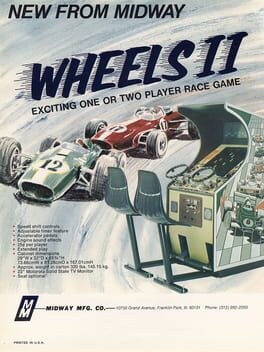
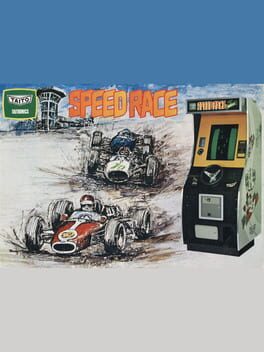
The original Speed Race and Wheels had an upright arcade cabinet, while Midway's Racer introduced a sit-down cabinet. Taito released an updated version of Speed Race called Speed Race DX in 1975. Speed Race DX is an updated version of Speed Race. The game plays mostly identical, with the player racing in a top-down view and gaining points for overtaking other cars. The cabinet is bigger and two new features have been added to the game with a gear shift lever and an in-game timer.
Arcade
1975
This side out
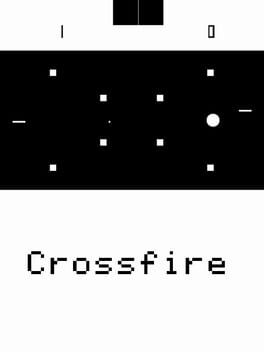
The game required two players, each with a gun, at opposite sides of the playfield. Each player had a vertical position knob (a potentiometer like Pong) and a fire button. Each gun could have one shot in the air at a time. There was a big ball, which started at the center, and there were small bumpers in the playfield that made the ball bounce. You tried to “push” the ball into your opponent’s goal line by shooting it. Each hit added a little energy and it took multiple hits to get the speed of the ball up, but then you had to watch out for rebounds off the bumpers. An interesting aspect of the game was the one-shot-at-a-time rule. If the ball was on your side of the field, then you could shoot more often than your opponent (unless, of course, you missed and had to wait for the shell to cross the entire screen). This made it possible to achieve remarkable come-backs from near-certain defeat.
Arcade
1975
This side out
Shooter / Arcade / Action / Warfare
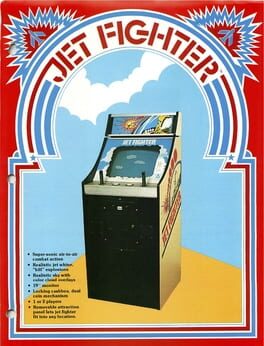
The game is housed in a custom cabinet that includes two 8-way joysticks (one per player) meant to look like older style flight sticks. Each stick has a fire button mounted on the top. The players fly in simulated jets around the screen, engaging in a dogfight and attempting to score hits on their opponent within a limited amount of time. When a player is hit, their plane spins around and an explosion is heard. After a few seconds, the plane recovers, pointing at a random direction.
Arcade
1975
This side out
Shooter / Arcade / Action / Historical
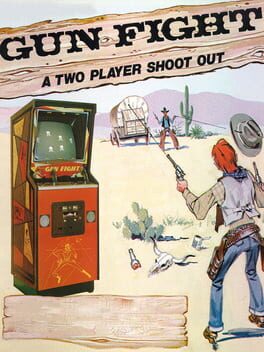
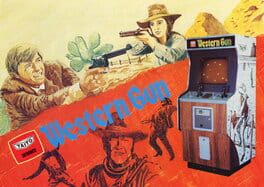
Western Gun, which served as an inspiration for Gun Fight in the USA (they're similar in gameplay and theme, but they're two different games), is a 1975 arcade shooter game designed by Tomohiro Nishikado, and released by Taito in Japan and Europe and by Midway Games in North America. It was the first video game to depict human-to-human combat, while the Midway version was also the first video game to use a microprocessor. Following its November 1975 release in North America, it went on to sell over 8,000 arcade cabinets in the United States. It was ported to the Bally Astrocade video game console as a built-in game in 1977 as well as several home computer platforms. The theme of the game involves two Old West cowboys armed with revolvers and squaring off in a duel. Whoever shoots the other cowboy first wins the duel. Unlike in a real-life duel, however, both cowboys get numerous opportunities to duel in order to score points (one point per successful draw).
Arcade
1975
This side out
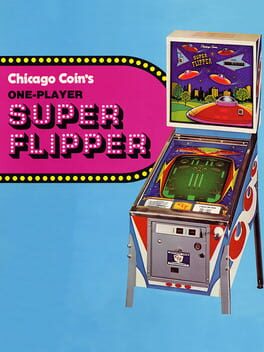
Super Flipper is a pinball game that is more of a mix between Pong and Breakout. Using flipper buttons, which move side to side and further depending on how hard you press, you keep the ball in play to score as many points as possible. Originally made in Italy where it was known as UFO before being distributed by Chicago Coin as Super Flipper in the USA.
Arcade
1975
This side out
Racing / Sport / Arcade / Party
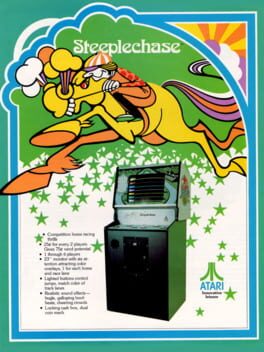
Steeplechase is a 6-player arcade game by Atari Inc., originally released in 1975 and simulating a steeplechase-style horse race. Up to six players can play against each other, each choosing a horse while the computer controls the seventh horse on the bottom. Each player's horse begins galloping, and the players must jump over obstacles in their lanes by pressing their colored buttons. The horse that successfully jumps all obstacles smoothly becomes the fastest horse and wins.
Arcade
1975
This side out
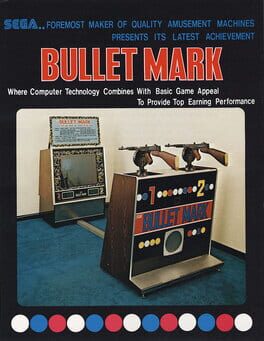
A light gun game by Sega released in 1975. The unweildy cabinet proved unpopular with distributors, leading to the development of a scaled-down version called Tracer in 1976. This game was the first Sega game to be produced in America.
Still plenty of games...